There is a particular silence that only a luxury electric sedan can make. You press the start button, nothing happens, and then the cabin wakes up around you: the screen glows, the air conditioning sighs, the seats settle into their memory position. The first time it happens, the quiet feels like a trick. The second time, it feels like the future. And then you start to wonder what all those numbers on the specification sheet actually mean.
An electric sedan’s spec sheet is a different language from a petrol car’s. There is no engine size to compare, no gearbox with six speeds, no exhaust note to argue about. Instead there are kilowatt-hours and kilowatts, charging curves and drag coefficients. Each number answers a practical question. How far will it go? How fast will it charge? How quickly will it move when you ask it to? Once you can read them, the sheet stops being marketing and starts being a map of the car.
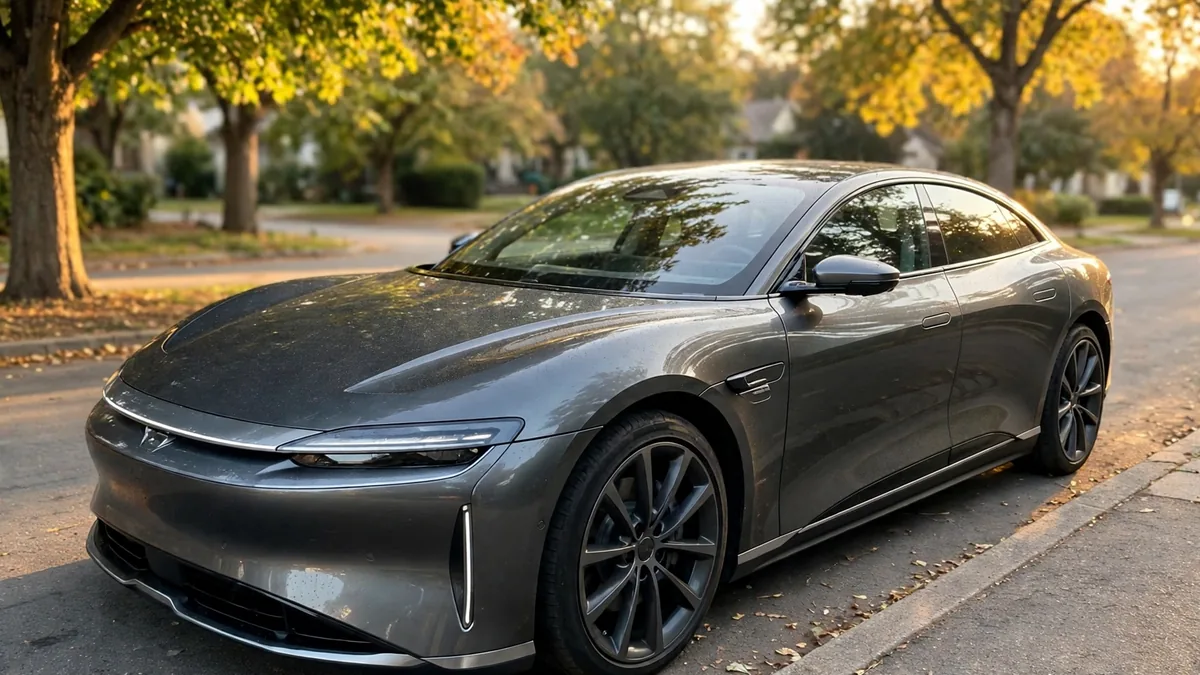
Battery Size and Range: The Two Numbers That Rule
The battery is the fuel tank, and its size is quoted in kilowatt-hours, written as kWh. A luxury electric sedan typically carries between 90 and 120 kWh, which is roughly twice the battery of a small city electric car. More kilowatt-hours means more energy on board, and more energy usually means more range, but the relationship is not a straight line. A heavy car with a big battery can travel less far than a lighter, slipperier car with a smaller one, because every kilometre costs energy to move the weight and push the air aside.
Range itself is the headline number, and it needs reading with care. The figure on the sheet is measured on a laboratory test cycle, and most drivers see ten to twenty percent less in real life, especially in cold weather or at motorway speeds. The useful question is not the laboratory number but the usable range: the distance between charges on the kind of roads you actually drive, in the weather you actually get. A sedan that keeps 450 kilometres of real range in January is more useful than one that promises 700 in a laboratory and delivers 420 in the rain.
Power, Torque, and the Feeling of Speed
Power in an electric car is quoted in kilowatts, and sometimes in horsepower for those of us who still think in the old units. A luxury electric sedan usually offers between 300 and 550 kilowatts, which is roughly 400 to 750 horsepower. But the number that matters more is torque, the twisting force that pushes you back into your seat. Electric motors make their full torque from a standstill, which is why even a large, heavy luxury sedan can sprint from zero to 100 kilometres per hour in under four seconds.
The other performance number worth knowing is the layout of the motors. A single-motor sedan drives one axle and is usually the most efficient. A dual-motor sedan drives all four wheels, which gives better grip in the wet and faster acceleration, at the cost of a little range. The fastest luxury sedans use two motors with a combined output that would have been supercar territory a decade ago.

Charging: The Number That Decides Your Week
If range decides how far you can go, charging speed decides how long you wait. The key figure is the peak charging rate, quoted in kilowatts. A luxury electric sedan typically accepts 200 to 350 kilowatts from a fast charger, which can add hundreds of kilometres of range in the time it takes to drink a coffee. But the peak is only part of the story. What matters is the charging curve: how long the car holds that high rate before it tapers off as the battery fills.
The sheet will also quote a 10-to-80-percent time, and this is the most honest charging number of all. It tells you how long a typical motorway stop takes, and on a good luxury sedan it is usually between 18 and 30 minutes. Home charging is a different world, measured in hours rather than minutes, and the number to look for there is the onboard charger’s alternating-current rating, usually 11 kilowatts, which fills a big battery overnight. The combination of the two numbers tells you the shape of life with the car: fast stops on long journeys, slow and cheap charging at home.
Efficiency and Aerodynamics
Efficiency is quoted as energy use per hundred kilometres, usually between 15 and 20 kilowatt-hours for a luxury sedan. Lower is better, and the difference between 16 and 19 is the difference between a car that sips its battery and one that gulps it. Aerodynamics does most of the work here. The drag coefficient, written as Cd, measures how cleanly the car slips through the air. A luxury electric sedan typically manages a Cd of 0.20 to 0.24, helped by flush door handles, a smooth underbody, and a long, tapered tail.

The Specification Sheet, Decoded
| Specification | What to look for | What it means on the road |
|---|---|---|
| Battery capacity | 90–120 kWh in a luxury sedan | More energy on board, usually more range |
| Range | 500–700 km quoted, expect 10–20% less in real use | How far you can really go between charges |
| Power | 300–550 kW, about 400–750 hp | Effortless overtaking and instant response |
| 0–100 km/h | Under 4 seconds on dual-motor models | The push you feel every time you pull away |
| Peak charging rate | 200–350 kW on a fast charger | How quickly a motorway stop adds range |
| 10–80% charge time | 18–30 minutes is good | The honest length of a typical charging stop |
| Efficiency | 15–20 kWh per 100 km | Lower means cheaper miles and longer range |
| Drag coefficient | Cd 0.20–0.24 | Slipperier shape, quieter and further at speed |
What a Luxury Electric Sedan Costs
A luxury electric sedan typically starts at an estimated $90,000 to $120,000, with dual-motor and long-range versions running to an estimated $130,000 to $160,000. The most powerful flagships, with the largest batteries and every option fitted, can reach an estimated $180,000 or more. The battery alone accounts for a large share of the price, and the figure that decides the cost is its size: every extra ten kilowatt-hours adds thousands of dollars.
What you are paying for, beyond the battery, is the quiet. Layers of acoustic glass, active noise cancellation, air suspension that reads the road ahead, and seats that massage you while the car drives itself down the motorway. The specification sheet will not list the silence, but it is the thing owners mention first. To see how these cars are put together, our guide to how a luxury electric sedan is made follows the build from battery cell to finished car. For the wider family, how a luxury sedan works explains the chassis and cabin, and how a luxury electric car works covers the motors and electronics they all share.
A Rare Fact Worth Knowing
Here is a detail the specification sheet never mentions. A luxury electric sedan can recover energy every time it slows down, and on a long downhill stretch it can arrive at the bottom with more range than it had at the top. Drivers in mountain country report watching the range figure climb as they descend, the car quietly turning gravity into electricity. It is the only kind of car that gets more fuel by going downhill, and it is the reason the range figure on the sheet is only half the story. The other half is written by the road.


