There is a moment, just after the door of a luxury sedan closes, when the outside world simply stops. The traffic noise fades, the engine settles to a murmur, and the cabin feels less like a car and more like a room that happens to move. That silence is not an accident. It is the product of hundreds of small decisions, each one made to remove a noise, a vibration, or a harshness before the driver ever notices it.
A luxury sedan is the most complete expression of what a car can be when comfort matters more than speed or style. It must carry four adults in real comfort, absorb a bad road without complaint, and do it all while feeling effortless to drive. The engineering that makes that possible is mostly invisible, which is exactly how its owners like it. This is how a luxury sedan works.
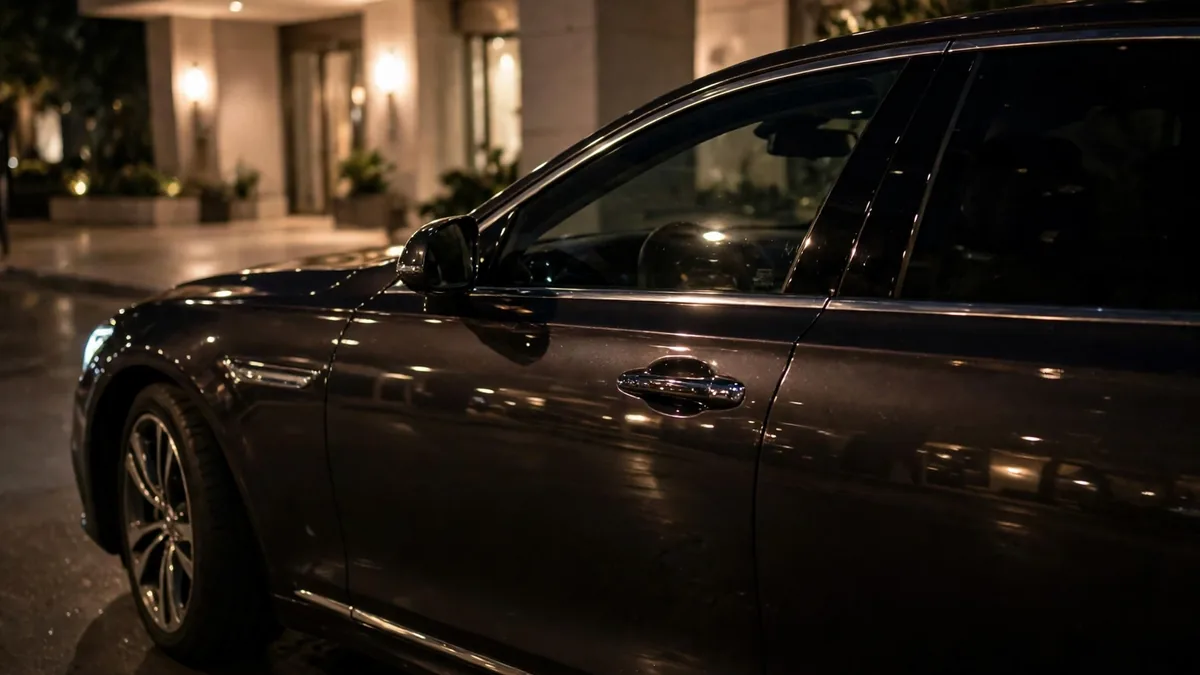
How a Luxury Sedan Works
Step 1: The engine and silent power
Most luxury sedans use a smooth six-cylinder engine, a V8, or an electric motor, and in every case the goal is the same: power without fuss. A six-cylinder engine is naturally balanced, so it runs without the tremor a four-cylinder engine makes, and a V8 adds a deep reserve of torque that lets the car accelerate without ever sounding strained. Electric versions are quieter still, with instant torque and no gears at all. The driver should feel the car move, not hear it working.
Step 2: The gearbox and seamless shifts
Power flows through an automatic gearbox with eight, nine, or ten ratios, and the ratios are spaced so closely together that a gear change is almost impossible to feel. The gearbox watches the road, the throttle, and the navigation system, and it chooses gears before the driver asks: holding a low gear on a hill, shifting early on a flat motorway, and always keeping the engine turning slowly. Some models add a torque converter that smooths the connection between engine and gearbox even further, so that pulling away from a standstill feels like gliding rather than engaging. It is a system designed to be forgotten, and it succeeds so well that most owners never think about it at all.
Step 3: The suspension and the magic carpet
The ride of a luxury sedan is its signature, and it comes from air suspension. Instead of steel springs, each wheel sits on a bag of compressed air, and a computer adjusts the pressure in each bag many times a second. When a wheel hits a bump, the air absorbs the shock before it reaches the cabin; when the car corners, the suspension firms up on the outside wheels to keep the body level. The result is a ride that owners describe as a magic carpet, and it is the single feature that separates a luxury sedan from every other car on the road.
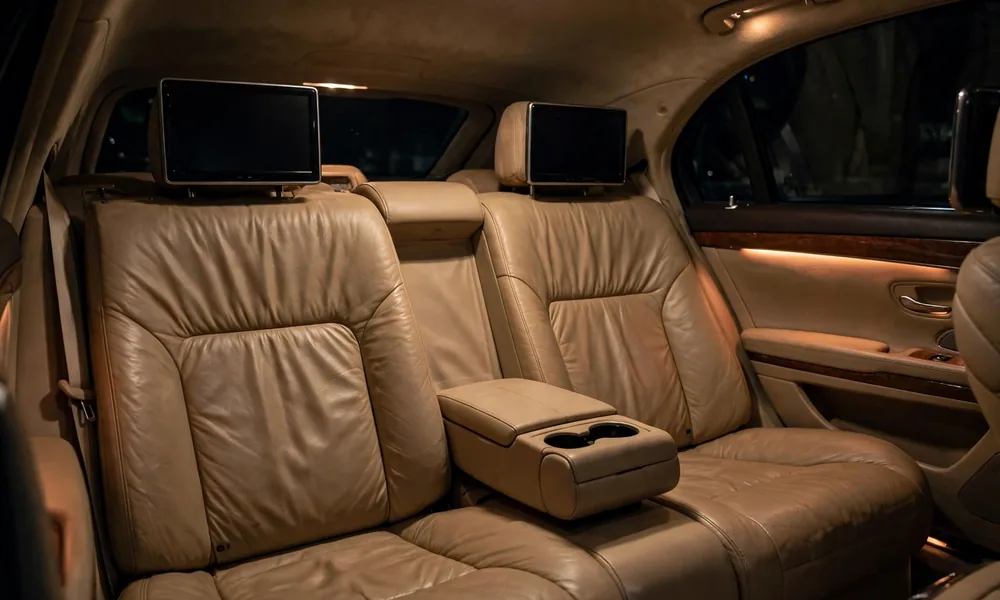
Step 4: The cabin and four seats that matter
Unlike a coupe or a grand tourer, a sedan is built around its rear seats, and in a luxury model they matter as much as the front ones. Rear passengers get legroom measured in armfuls, seats that recline and massage, their own climate controls, and sometimes a footrest that folds out of the front seatback. The cabin is finished in leather, wood, and metal, with every switch damped so it moves with a soft, precise click. Acoustic glass in every window, double door seals, and insulation in the floor and roof cut the outside world to a whisper, and active noise cancellation plays an opposing sound through the speakers to cancel the low rumble of the tyres.
Step 5: Steering, braking, and effortless control
A luxury sedan is a large, heavy car, and it must never feel like one. The steering is light at parking speed and firms up as speed rises, with an electric motor providing the assistance so precisely that the wheel feels connected to the road rather than to a computer. Some models steer the rear wheels slightly, turning them the opposite way at low speed to shrink the turning circle, and the same way at high speed to make lane changes feel more stable. The brakes are large ventilated discs with electronic assistance that blends friction braking with regenerative braking on hybrid models, so the pedal feels the same every time. Around it all sits a suite of driver assistance: adaptive cruise, lane keeping, blind-spot monitoring, and automatic emergency braking, all tuned to intervene gently, because a luxury sedan should never startle its driver.
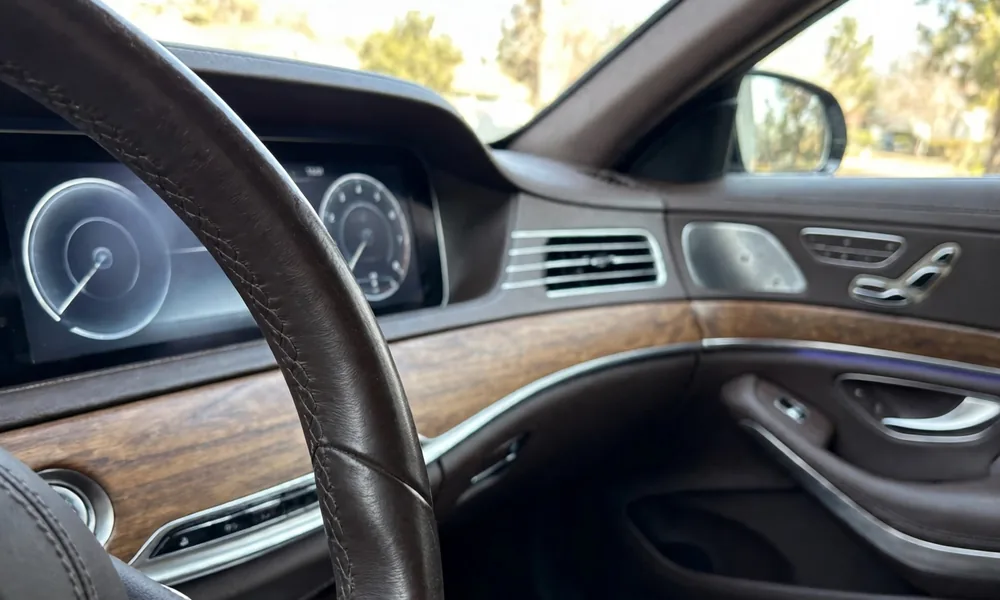
Step 6: Safety structure and quiet strength
Underneath the leather and wood is a body built like a safety cell, with high-strength steel around the cabin and crumple zones at the front and rear that absorb the energy of a crash before it reaches the passengers. The structure is stiff in the middle and soft at the ends, which is exactly what protects people, and it also makes the car quieter, because a stiff body does not flex and groan over bumps. Airbags are fitted in the front, the sides, the knees, and the curtains, and some models add a centre airbag between the front seats. The same body that keeps the cabin silent also keeps its occupants safe, and that double duty is no coincidence: a car that is built to be quiet is usually built to be strong, because both goals demand a rigid, carefully engineered shell. The stretched, chauffeur-driven cousin of this car is built on the same principles, as shown in how an armoured limousine is made, and its numbers appear in the luxury limousine specifications, while the taller alternative most buyers cross-shop is covered in how a luxury SUV is made.
Specifications
| Feature | Typical luxury sedan |
|---|---|
| Engine | Six-cylinder, V8, or electric, 300 to 500 hp |
| 0 to 100 km/h | 4.5 to 6.0 seconds |
| Top speed | 210 to 250 km per hour |
| Weight | 1,900 to 2,300 kg |
| Wheelbase | 3.0 to 3.2 metres |
| Boot capacity | 450 to 550 litres |
| Seats | Four or five, with rear legroom prioritised |
How Much Does a Luxury Sedan Cost?
A luxury sedan typically costs an estimated $90,000 to $200,000, depending on the maker, the engine, and the options. A six-cylinder model with a well-chosen specification sits near the lower end, while a long-wheelbase V8 flagship with rear executive seats, a champagne fridge, and every assistance system can reach the top of the range. The estimate is for the car alone, and running costs are modest for the class: servicing once a year, tyres that last tens of thousands of kilometres, and insurance that reflects the car’s safety record. For buyers who spend their lives in the back seat, the price is judged not against other cars but against the value of arriving everywhere rested, and on that measure a luxury sedan is difficult to beat.
A Rare Fact
The luxury sedan is the oldest surviving car shape. The word sedan comes from the sedan chair, the enclosed chair carried by servants in the seventeenth century, and the first motorised sedans borrowed both the name and the idea: an enclosed cabin that keeps its passengers separate from the weather and the work of travel. More than a century later, the shape has barely changed, because the job has barely changed. A sedan still carries people in comfort and privacy, and every new technology, from air suspension to noise cancellation, has been fitted in service of that original idea rather than in place of it.