Electric boats have moved from curiosities to serious machines in a few short years. The best electric boat brands now build craft that are quiet, clean, and fast enough for real use, from foiling day boats that fly above the water to silent tenders and workboats. The technology is still young, and the brands are still small, but the direction of travel is clear.
This list ranks ten electric boat brands by the strength of their boats, their technology, and their record on the water. It covers pure electric boat builders, not motor makers, and it weighs real delivered boats more heavily than promises. The propulsion systems underneath these boats are covered in the best electric boat propulsion systems, which explains the motors and batteries that make them work.
How the Ranking Works
Brands are ranked on the boats they have actually delivered, the originality of their engineering, and how well their boats suit their intended use. A brand with one excellent boat can outrank a brand with a wide range of mediocre ones, and a brand that has solved the hard problems, like range and charging, ranks above one that has only solved speed. Price matters too, because a brilliant boat nobody can afford changes little.
1. Candela
Candela, from Sweden, leads this list because its foiling boats solve the central problem of electric boating: range. The C-8 flies above the water on computer-controlled hydrofoils, cutting drag so sharply that it can travel far further than a conventional electric boat on the same battery. Its strength is that foiling technology, proven in commercial ferries as well as leisure boats, and a build quality that feels properly finished. Its weakness is complexity and cost: foils need care, and the C-8 is priced far above ordinary day boats.
2. X Shore
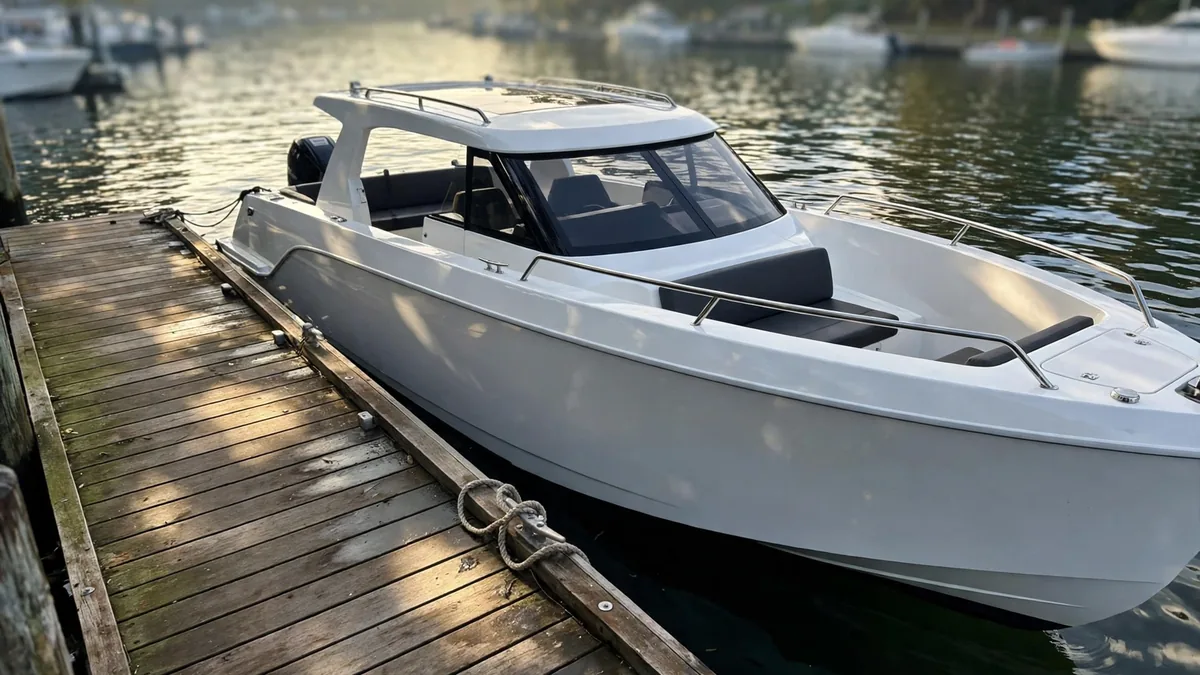
X Shore, also from Sweden, builds the Eelex 8000, an electric day boat with a clean, modern design and a strong focus on silence. Its strength is the experience aboard: no engine noise, no exhaust smell, and a hull designed for efficient cruising rather than outright speed. The brand has invested heavily in its own factory and in software, which shows in the details. Its weakness is range at higher speeds, and the company has had a difficult financial journey, which matters when you are buying a boat that needs long-term support.
3. Arc Boats
Arc, from the United States, builds the Arc One, a high-performance electric wake boat that has won attention for its pace and its technology. Its strength is performance: it is fast, it throws a proper wake for watersports, and its large battery supports a full day on the water. The brand’s engineering team comes from the electric car world, and it shows in the software and the drivetrain. Its weakness is that it is a young company with a narrow range, and its boats are priced at the top of the market.
4. Navier
Navier, from California, builds the N30, a foiling electric boat that, like Candela’s, lifts clear of the water to cut drag. Its strength is range and efficiency, with a claimed range far beyond most electric boats, and an autopilot system that handles the foiling for the driver. Its weakness is that it is still a young brand with limited deliveries, so buyers are trusting a small company with a complex machine, and service outside the United States is limited.
5. Vision Marine Technologies
Vision Marine, from Canada, takes a different approach: instead of building whole boats, it builds powerful electric outboard motors and fits them to proven hulls, including its own Phantom speedboat. Its strength is that outboards are the most practical route to electric boating, because they bolt onto boats people already own, and its E-Motion motor is genuinely powerful. Its weakness is that the boats themselves are less distinctive than the pure builders above, and the range of a high-power outboard is limited by battery size.

6. Pure Watercraft
Pure Watercraft, from the United States, also builds electric outboards, and it has partnered with established boat makers to fit them to pontoons and fishing boats. Its strength is practicality: a pontoon with a Pure outboard is quiet, clean, and cheap to run, and it suits the slow, sociable boating that most people actually do. Its weakness is performance, because pontoons are not fast, and the brand’s focus on the American market means it is less visible elsewhere.
7. Rand Boats
Rand, from Denmark, builds small, stylish electric boats for harbours and lakes, including the Picnic 18 and the Mana 23. Its strength is design and simplicity: these are easy boats to own, with solar charging options and a focus on quiet, relaxed cruising. They are also among the more affordable electric boats on this list. Its weakness is that they are small and slow, built for sheltered water rather than open sea, so they suit a narrow kind of boating, even if they suit it very well.
8. Vita Yachts
Vita, from the United Kingdom, builds the Vita Lion, an electric powerboat designed for tenders and chase boats, with a focus on performance and a supercharging network for boats. Its strength is speed and a serious approach to charging, which is the weak point of most electric boats, and its boats have been used as support craft for sailing races. Its weakness is that it is a niche brand with a small range, and its boats are expensive for their size.
9. Silent-Yachts
Silent-Yachts, from Austria, builds solar-electric catamarans, including the Silent 60, that can cruise for long distances using the sun. Its strength is independence: with enough solar panels and a large battery, the boat can travel without ever visiting a fuel dock, which is a genuine revolution for long-distance cruising. Its weakness is that the boats are large, expensive, and slow compared with conventional yachts, and their range depends heavily on the weather.
10. Sunreef Yachts
Sunreef, from Poland, builds large luxury catamarans, and its Eco range pairs electric propulsion with solar panels and wind power. Its strength is scale: these are proper ocean-going yachts with the space and comfort of a floating home, and the electric versions are among the most ambitious boats on this list. Its weakness is that the Eco models are a small part of a mostly conventional range, and the price puts them far beyond most buyers. How the motors in boats like these work is explained in how an electric boat motor works, which covers the technology under the deck.

Which Electric Boat Brand Should You Choose?
The right brand depends entirely on how you boat. For a day on the water with friends, Candela and X Shore lead, with foiling range and silence that change the experience. For watersports, Arc is the pick. For quiet lake cruising on a budget, Rand is hard to beat. And for long-distance cruising under the sun, Silent-Yachts offers something no petrol boat can match. The electric yacht world is a separate, larger market, and the best electric yacht brands, ranked covers the bigger boats for those with deeper pockets.
Electric boating is still early, and every brand on this list is betting that batteries, charging, and foiling will keep improving. That bet looks sound. The boats are already quieter, cleaner, and cheaper to run than their petrol rivals, and the gap in range is closing every year. The best time to buy an electric boat is not when it matches a petrol boat in every way, but when it matches the way you actually use one.


