An electric scooter helmet is the one piece of kit that stands between a rider and the road. Scooters are quick, quiet, and easy to ride, which makes it tempting to treat the helmet as an afterthought — but a fall at scooter speed can be just as serious as a fall from a motorcycle.
This ranking rates the helmets you will actually find on electric scooter riders, from the simplest shells to the finest smart helmets. We judged each one on impact protection, weight, ventilation, visibility, comfort over a daily commute, and how practical it is to carry and store when you are off the scooter.

How we ranked them
Protection comes first, because a helmet exists to absorb one impact. Weight comes next: a heavy helmet is a helmet left at home, and a helmet left at home protects nobody. Then ventilation, since a hot, sweaty helmet is miserable in summer traffic, and visibility, since a rider who cannot be seen is in danger whatever they wear. The best electric motorcycle helmets, ranked covers the heavier motorcycle end of the market, and this ranking is about helmets made for scooters.
10. The basic skate-style shell
The basic skate-style shell is the simplest scooter helmet there is: a hard plastic outer with a thin foam liner, a short brim, and a simple strap. It is also the least protective on this list: the thin liner absorbs less energy, the shell covers less of the head, and there is no visor, no ventilation system, and no reflective trim.
9. The vented commuter shell
The vented commuter shell adds proper air channels and a thicker liner to the basic skate shape, with a dial at the back that tightens the fit. The ventilation is the real improvement — air flows over the head instead of building up inside the shell — and the fit dial means the helmet stays put instead of wobbling at speed. The problem is the same as the basic shell: coverage is limited, there is no face protection, and the thin shell flexes more than a proper road helmet.
8. The folding helmet
Folding helmets collapse into a flat package that fits in a bag or a backpack, which solves the biggest practical problem of scooter riding: what to do with the helmet when you arrive. They are clever pieces of engineering, with hinged shells and collapsible liners, and they are genuinely portable. The trouble is the compromise: the hinges are weak points in an impact, the liner is thinner where it folds, and the fit is rarely as secure as a one-piece shell.
7. The urban road helmet
The urban road helmet brings bicycle-road-helmet design to the scooter: a one-piece shell, a proper multi-density liner, generous vents, and a peak that shades the eyes. It is light, it breathes well, and it is comfortable for an hour in traffic. The weakness is the coverage: like a bicycle helmet, it leaves the ears and the back of the head exposed, and there is no visor to keep wind, rain, and insects out of the rider’s eyes.

6. The full-face commuter helmet
A full-face commuter helmet covers the chin and jaw as well as the skull, which is where a large share of scooter injuries happen. The chin bar is the feature that matters most here: it turns a glancing fall into a survivable one.
5. The modular flip-up helmet
A modular helmet lets the rider flip the chin bar up at a stop — to talk, to drink, to breathe — and lock it down again before riding off. It is the most practical helmet for a rider who stops often, and the flip mechanism on a good one locks positively with a clear click. The weakness is the hinge: a modular helmet is never quite as strong as a one-piece full-face, and the mechanism adds weight at the front, which can strain the neck on a long ride.
4. The lightweight carbon helmet
A carbon-fibre shell cuts the weight of a full-face helmet dramatically, which changes how it feels on a long commute: less neck strain, less fatigue, and a helmet the rider forgets they are wearing. The shell is also very strong for its weight, spreading an impact over a wide area. The cost is the price — carbon helmets are the most expensive on this list — and the shell can crack rather than dent, which means any drop onto a hard surface should end the helmet’s life.
3. The smart helmet with lights
The smart helmet adds what a scooter rider needs most after protection: visibility. Integrated front and rear lights, turn signals controlled from the handlebars, and reflective panels make the rider visible from every angle in traffic. The electronics add weight and need charging, and a dead battery leaves the rider with an ordinary helmet — but on a dark winter commute, the lights are worth more than any other feature on this list.
2. The premium full-face with visor and ventilation
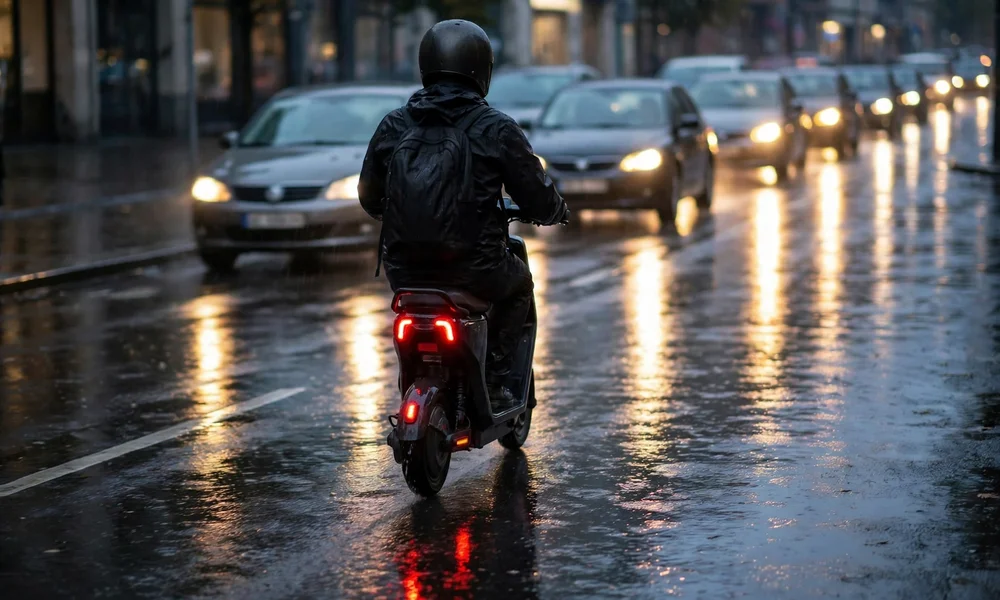
The second-ranked helmet is a premium full-face built for the scooter: a light composite shell, a wide anti-fog visor, a ventilation system that actually moves air at city speeds, and a liner that can be removed and washed. The visor is the feature that sets it apart — it keeps wind, rain, and insects out without the rider needing separate glasses — and the ventilation means it stays comfortable in summer.
1. The custom-fitted smart full-face helmet
The best electric scooter helmet is one fitted to the rider: a full-face smart helmet with a light shell, integrated lights and turn signals, a wide anti-fog visor, and a fit system that holds it snugly without pressure points. It combines the protection of a full-face shell with the visibility of a smart helmet and the comfort of a helmet shaped for one head. The best electric scooter brands, ranked covers the machines these helmets protect, and the best electric scooter accessories, ranked covers the rest of the rider’s kit.
Scooter helmet materials: what absorbs the impact
The liner is the heart of a helmet, and its material decides how much energy reaches the rider’s head. Expanded polystyrene is the standard: it crushes on impact and absorbs energy, but it only works once, and a helmet that has taken a real hit must be replaced. Multi-density liners use softer foam where the head is most vulnerable and firmer foam where the shell needs support, which spreads the load better. The shell matters too: polycarbonate is tough and cheap, fibreglass is lighter and stronger, and carbon fibre is the lightest and strongest of all.
The verdict
A scooter helmet is not an accessory — it is the one piece of kit that matters most, and the best ones are designed like the rest of the ride: with the road, the weather, and the human body in mind. If you are choosing a helmet, try it on for ten minutes before you look at anything else. The helmet will tell you more about the ride than the brochure ever will.


