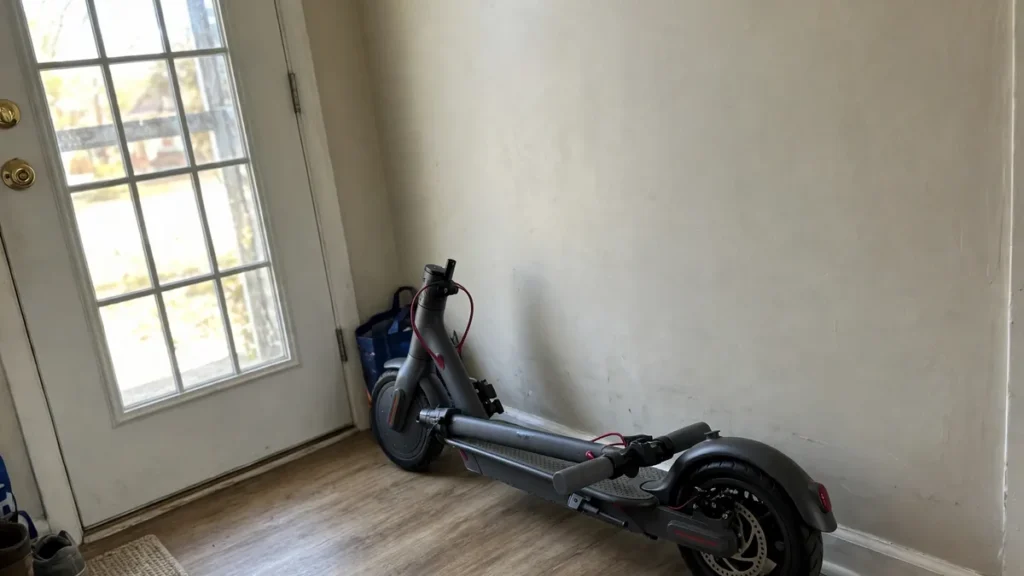
Steering an electric scooter looks like the simplest thing in the world: you turn the handlebars, the front wheel turns, and the scooter follows. Underneath that simple motion is a small mechanical system doing several jobs at once. It has to turn smoothly, hold the rider’s weight, fold away for carrying, and survive potholes, kerbs and daily folding without developing play or wobble.
Most electric scooters use direct steering, which means the handlebars are connected to the front wheel by a solid tube called the stem, with no gears or linkages in between. Turn the bars ten degrees and the wheel turns ten degrees. That direct connection is why a scooter feels so immediate, and also why it feels so twitchy at speed: every small movement of your hands goes straight to the wheel, with nothing to filter it out.
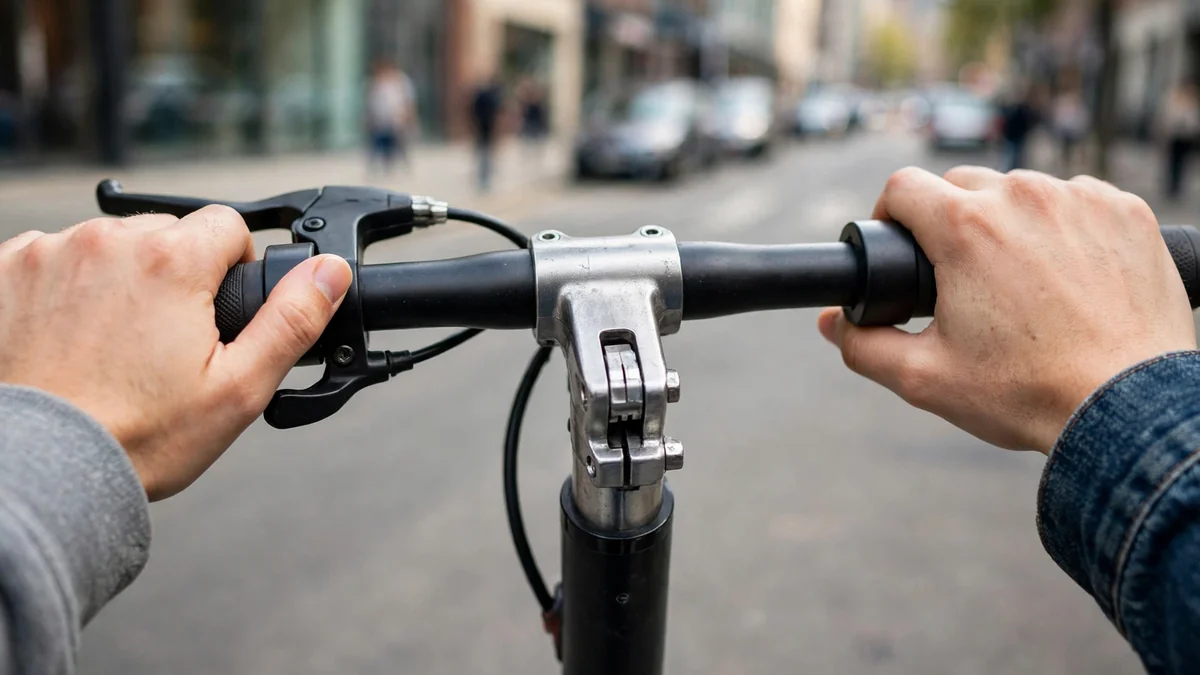
The stem and the headset
The stem is the long tube that runs from the handlebars down to the front wheel. At the top it carries the handlebar itself, with the grips, the throttle and the brake lever. At the bottom it meets the fork, which holds the front wheel axle. Between the two is the headset, a set of bearings that sits inside the top of the deck frame and lets the whole stem rotate smoothly.
The headset is the part you never see but always feel. It is usually a pair of sealed ball bearings or a set of cup-and-cone bearings, pressed into the head tube at the front of the deck. When they are new and properly adjusted, the bars turn with a light, even resistance and stay where you leave them. When they wear or loosen, the steering develops a notchy feeling, a click at the centre, or a wobble you can feel through the bars.
How the front wheel turns
Below the headset, the stem joins the fork. On most scooters the fork is a single-sided or double-sided arm that reaches down on one or both sides of the front wheel and holds the axle.
The geometry of the fork matters more than it looks. The fork is usually raked slightly forward, so the wheel sits a little ahead of the steering axis, and the axle trails behind the point where the steering axis meets the ground. That offset, called trail, is what makes the wheel want to straighten itself after a turn, and it is what keeps the scooter stable in a straight line.
The folding mechanism
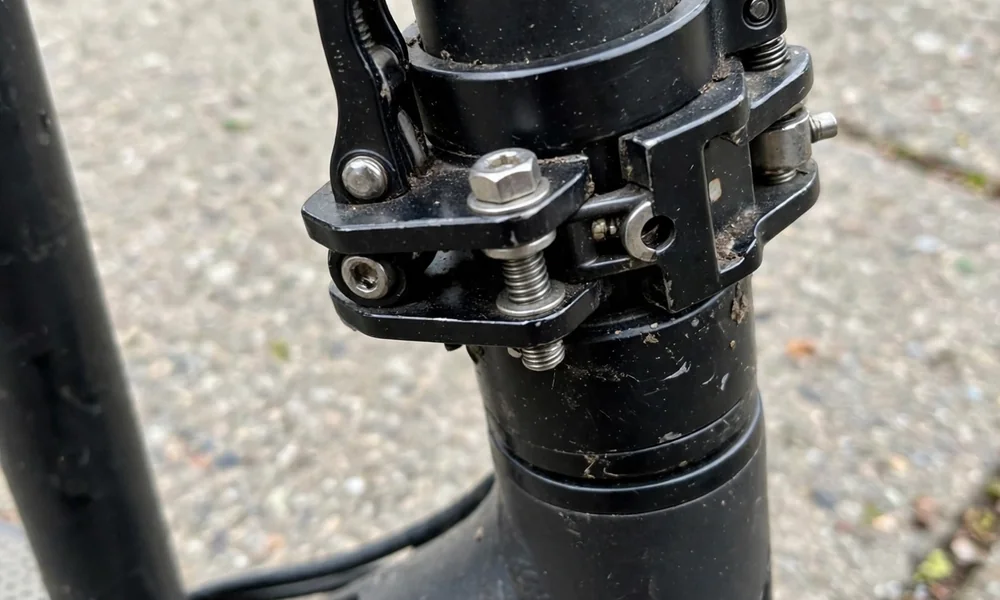
Almost every electric scooter folds, and the folding joint is built into the steering system. The stem hinges at the base, just above the headset, and a clamp or latch locks it upright for riding. To fold the scooter you release the latch, swing the stem down until the handlebars rest near the rear wheel, and the scooter becomes a long, flat package you can carry or stow.
That hinge is also the most stressed part of the whole steering system. It carries the rider’s weight every time they lean on the bars, it takes the shock of every pothole, and it is opened and closed hundreds of times. A good folding mechanism uses a solid latch with a secondary safety catch, and it locks with no play at all when closed. If the latch wears, the stem develops a small rock back and forth, and the rider feels it as a clunk every time they brake or hit a bump. How an electric scooter motor works covers the other half of the machine, the hub motor that drives the wheel the steering system aims.
Steering at speed, and why it feels twitchy
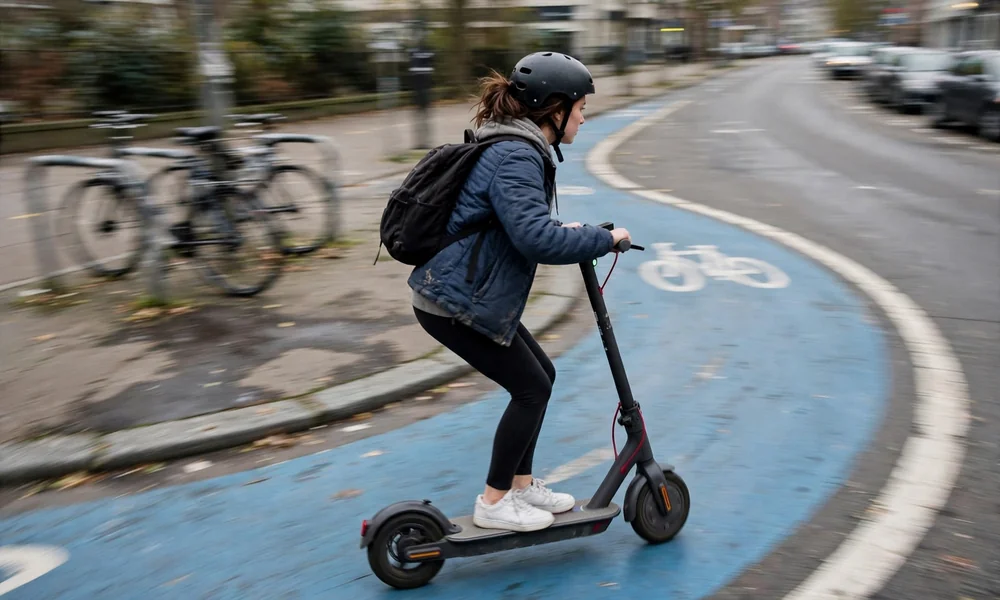
A scooter’s steering feels different from a bicycle’s, and the reason is the size of the wheels. A bicycle wheel is large, and its spinning mass acts like a gyroscope, resisting sudden changes of direction and steadying the bike. A scooter wheel is small, often eight to ten inches across, and it has far less of that steadying effect. The result is steering that responds instantly but offers little resistance, which is why a new rider’s first fast run on a scooter can feel alarming.
Speed makes it worse. At walking pace the scooter is easy to control, because the wheel is barely spinning and the rider steers with body weight as much as with the bars. At twenty miles an hour, the same small bar movement produces a much sharper change of direction, and a sudden swerve can throw the scooter off balance.
Handlebars, grips and controls
The handlebar itself is a simple crossbar, usually about fifty to sixty centimetres wide, with a grip at each end. The right grip normally carries the throttle, which the rider pushes or twists to feed power to the motor, and a brake lever sits within reach of one or both hands. A small display in the centre shows speed and battery level, and a bell is often fitted on the left.
Bar width is a compromise: wider bars give more leverage and steadier control, while narrower bars make the scooter easier to carry, fold and thread through traffic. Some scooters have folding handlebars too, with each grip folding inward so the whole package is narrower. The best electric scooter helmets, ranked is worth reading alongside this, because a twitchy steering setup is exactly the kind of thing that makes a good helmet non-negotiable.
What wears out, and what to check
Steering problems on a scooter almost always come from one of three places. The headset bearings wear first, showing up as notchiness, stiffness or a clicking feeling when you turn the bars. The folding latch wears second, showing up as play or a clunk in the stem. And the grips and bar clamps loosen third, showing up as bars that rotate in the stem or grips that slide.
Checking them takes a minute. Hold the front brake, rock the scooter gently back and forth, and feel for any knock in the stem. Turn the bars slowly from lock to lock and feel for roughness or a notch at the centre. Stand on the deck and push the bars forward and back, watching for movement at the folding hinge.How an electric scooter battery works completes the picture of the machine, covering the pack that powers the motor the steering aims.
Why direct steering wins on a scooter
Engineers have tried linked steering and even handlebar-free designs steered by leaning, but direct steering has survived because it is simple, light and honest: no cables to stretch, no linkages to wear, no electronics between the rider’s hands and the wheel, and no help either. What you put into the bars is exactly what comes out at the wheel.
That is the whole system, and it is smaller than it looks. A tube, a set of bearings, a fork, a hinge and a crossbar: five parts, doing the work of aiming a machine that carries a person at twenty miles an hour through traffic. Keep the headset tight, the hinge locked and the bars straight, and it does that work invisibly. Let any of the three wear loose, and the scooter tells you immediately, through your hands, that something needs attention.