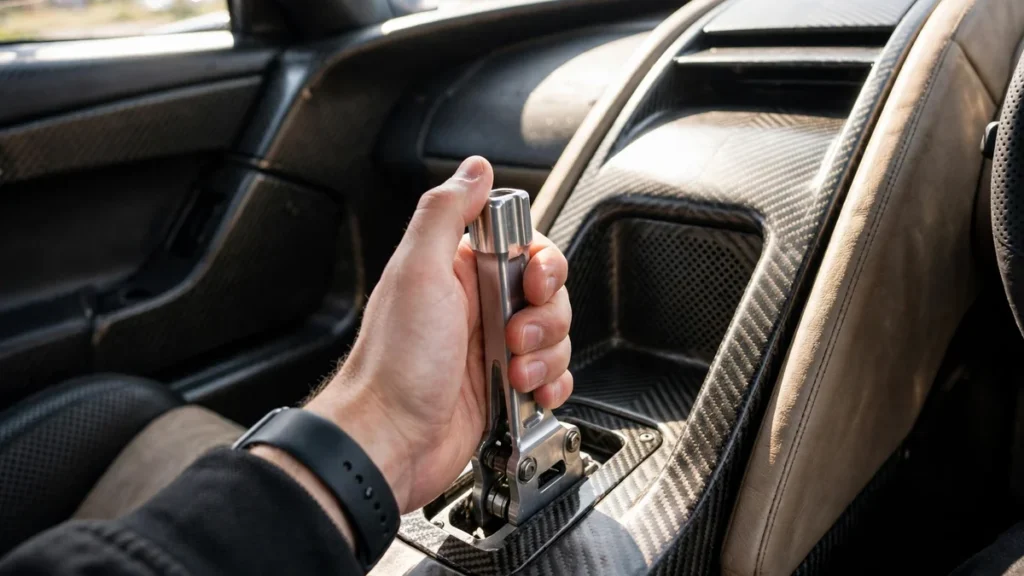
A hypercar’s interior is where the fantasy meets the driver. The bodywork wins the photographs, but the cabin is where the owner actually lives, and the best makers treat it as seriously as the engine. Some build jewellery boxes of milled aluminium and hand-stitched leather, others strip everything back to carbon and screens in the name of weight, and a few try to do both. This ranking judges cabins on craft, materials, usability, and how well the interior matches the car it sits inside.
Judging an interior is not about counting features. A hypercar cabin should be beautiful, built from materials that feel expensive, and usable at 200 miles per hour without demanding the driver’s eyes. The ten cabins below are ranked on all three, with the winners being the ones that would still impress with the badge off the steering wheel.
The 10 Best Hypercar Interiors, Ranked
1. Pagani Huayra and Utopia
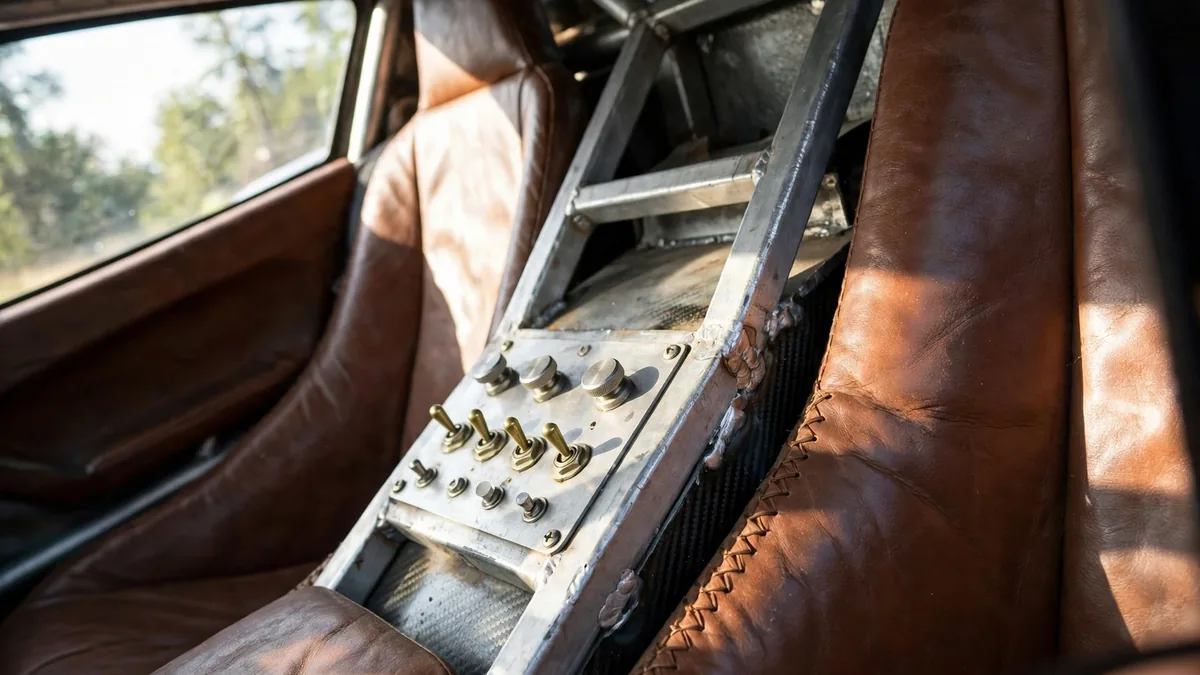
No other maker finishes an interior like Pagani. Every switch is milled from a solid block of aluminium, the gear linkage is exposed like a piece of clockwork, and the leather is stitched by hand in a workshop where one car at a time is the whole production line. The Utopia adds carbo-wood, a material Pagani invented by weaving carbon fibre with wood veneer, and an analogue cluster that looks like a watchmaker’s work. It is not the most practical cabin here, but it is the most beautiful.
2. Bugatti Chiron and Mistral
Bugatti’s approach is the opposite of Pagani’s, and almost as good. Where Pagani shows off its mechanisms, Bugatti hides them behind calm, perfect leather and a dashboard that refuses to age. The Chiron has no big touchscreen, just analogue dials and a small display that folds away, because Bugatti believes a car this expensive should still look right in fifty years. The Mistral adds a gear lever machined from a single block of aluminium, topped with the Dancing Elephant motif from the 1920s.
3. Koenigsegg Jesko and CC850
Koenigsegg interiors are exercises in carbon-fibre minimalism, and the CC850 is the best of them. The gated manual shifter, with its wooden knob, is the single most satisfying control in any modern hypercar, a deliberate piece of theatre in a car that could have been fully automatic. The Jesko’s SmartCluster screen moves with the steering wheel so the driver always sees it, and the carbon tub leaves the cabin feeling like a fighter jet. These cabins are not luxurious in the leather-and-wood sense, but they are the most honest about what the car is for, and that honesty is their charm.
4. Rimac Nevera
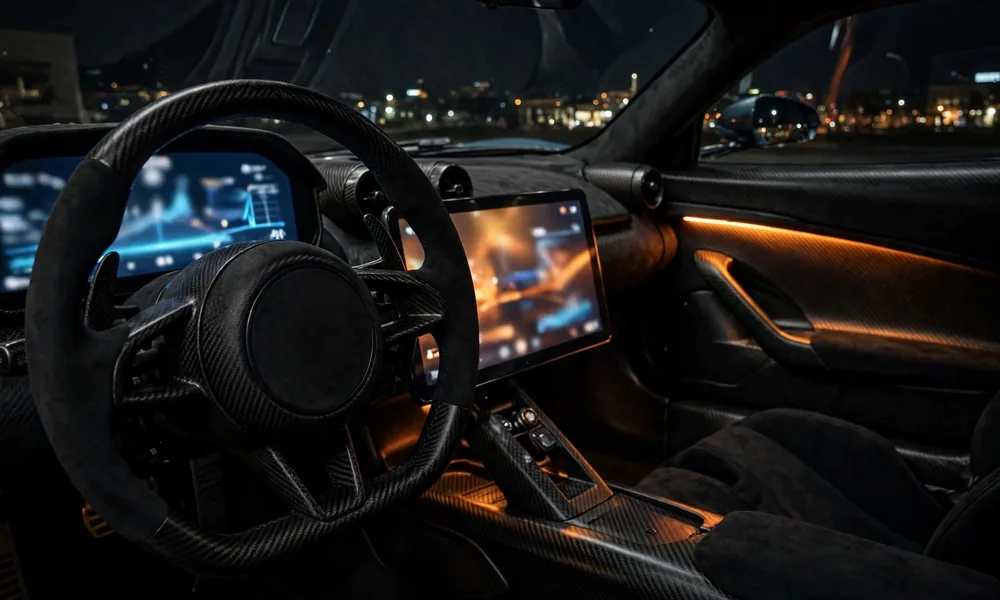
The Nevera is the most high-tech cabin on this list, and it wears its technology lightly. There are no gimmicks: a clean dashboard, proper toggle switches, a normal steering wheel, and dials that control the drive modes without a trip through a menu. The seats are trimmed in fine leather, build quality is closer to a luxury saloon than a prototype, and the car includes an artificial-intelligence driving coach that overlays the racing line on track.
5. McLaren Speedtail
The Speedtail’s cabin is built around one idea: the driver sits in the middle, with a passenger seat on either side, just like the McLaren F1. It is a layout no other maker offers, and it changes the whole experience, putting the driver on the car’s centreline with a view no offset seat can match. The materials are restrained, leather and carbon fibre rather than ornament, and the digital displays fold away when not needed. It loses points for seats less comfortable than the cars above it, but for drama, nothing else here comes close.

6. Gordon Murray T.50
The T.50 has the most driver-focused cabin in this ranking, and the most analogue. The driver sits centrally, the gearbox is a six-speed manual with an exposed linkage, and the rev counter is a large analogue dial that sweeps to 12,100 rpm, the highest of any road car. There are no drive modes to scroll through and no screens demanding attention. The materials are simple and light, because the whole car is built around weight, but the switchgear is superb.
7. Ferrari Daytona SP3
The Daytona SP3 is Ferrari’s tribute to its 1960s sports prototypes, and the cabin is deliberately spare. The seats are fixed to the chassis and the pedals adjust to the driver, which is the racing way of doing things, and the steering wheel carries most of the controls so the driver’s hands never leave it. The materials are carbon fibre and Alcantara rather than leather, and the whole cabin feels like a race car that happens to be road legal. It is the most focused Ferrari cabin in years.
8. Koenigsegg Gemera
The Gemera is the only four-seat hypercar on this list, and its cabin earns its place by being genuinely usable. Four adults fit in comfort, there is a panoramic roof, and the rear seats are as well trimmed as the fronts. The infotainment is modern and fast, the carbon-fibre structure is left visible in places, and the car still makes 1,700 horsepower. It is the cabin for the buyer who wants hypercar performance without giving up the school run. No other maker has combined this much speed with this much space.
9. Aston Martin Valkyrie
The Valkyrie’s cabin is the most extreme on this list, and the least comfortable. The driver sits reclined, feet high, in a carbon tub shaped like a Formula 1 car, and the steering wheel is a rectangular yoke covered in buttons. There is almost no storage, the seats are thin, and getting in requires flexibility. But the view through the windscreen, the sound of the Cosworth V12 behind your head, and the sense of sitting inside a racing car make it unforgettable.
10. Lamborghini Revuelto
The Revuelto’s cabin is the most theatrical here, a fighter-jet cockpit of sharp angles, Y-shaped details, and three screens including one for the passenger. The materials are leather, Alcantara and carbon fibre, the seats hold you firmly, and the driving position is low and purposeful. It loses points because the touchscreen-heavy layout can be fiddly on the move, and the cabin feels busier than the cars above it. But as a place to sit before a drive, with the V12 warming up behind you, it delivers the sense of occasion Lamborghini has always sold.
What Separates the Best From the Rest
The cabins at the top of this list share three things. First, the materials are real: milled metal, hand-stitched leather, visible carbon fibre, not plastic dressed up to look like them. Our guide to the best materials for a hypercar chassis covers the same obsession from the structure’s side, and the interior follows the same rule. Second, the controls work by touch. A hypercar seat holds you in place so your hands can find the switches without looking, and the best cabins keep the important functions on physical buttons rather than buried in a menu. That is why physical buttons in cars matter more, not less, as cars get faster.
Third, the best interiors match the car. A Pagani cabin could not belong in a Koenigsegg, and a Bugatti cabin would be wrong in a Valkyrie. The makers at the top understand that the interior is not decoration on top of the engineering. It is part of the engineering, and the cars that get it right feel complete the moment you close the door.