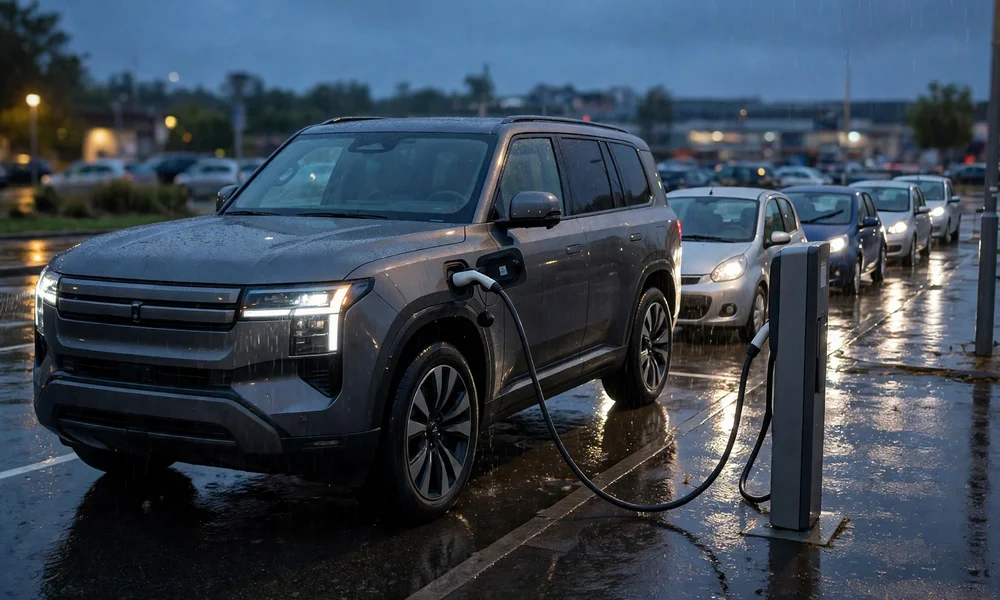
There is a size at which an electric SUV stops being a family car and starts being a problem for everyone else on the road, and we passed it some time ago. The big electric SUV, five metres long, more than two metres wide with its mirrors, weighing two and a half tonnes before anyone has loaded a suitcase, is the most wasteful shape the electric age has produced. It takes the cleanest drivetrain ever built and wraps it in the heaviest, widest, least efficient body it can carry, then asks the rest of us to share the road, the car park and the charging queue with it. The case against giant electric SUVs is not a case against electric cars. It is a case against pretending that size is a substitute for engineering.

Too big for the world it drives in
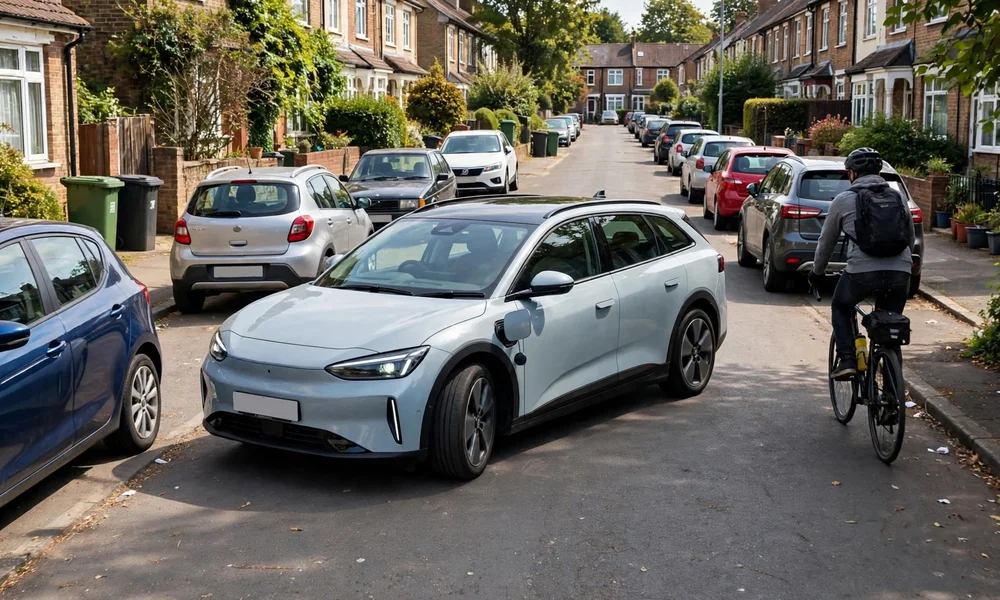
Start with the simplest fact, which is the one you can measure with a tape. A Tesla Model X is about five metres long and more than two metres wide, and a BMW iX M60 is nearly five metres long and weighs about two thousand five hundred and eighty-four kilograms. Those are not family cars. They are the size of a small van, and they are expected to thread through residential streets, multi-storey car parks and school gates designed when a large car was four and a half metres long. Every centimetre of extra width is a centimetre less clearance for a cyclist, a centimetre less room in a parking bay, and a centimetre more of a car that the driver cannot see around.
The blind spot is the part nobody wants to talk about. A tall, long bonnet and thick pillars mean the driver of a giant SUV cannot see a child standing directly in front of the car, or a cyclist close alongside it. Cameras and sensors help, and they should be fitted, but a camera is a workaround for a problem the car created for itself. A lower, shorter car does not need a camera to see the road in front of it. The giant SUV needs one because its own bodywork is in the way, and when the camera is dirty, the sensor is confused or the driver is in a hurry, the workaround fails and the physics remains.
The weight problem, stated plainly
Weight is where the giant electric SUV betrays the electric idea most completely. An electric motor is efficient, but a battery is heavy, and a heavy car needs a bigger battery to move, which makes it heavier still. The luxury electric SUV specs tell the story in their own numbers: hundred kilowatt-hour packs, two and a half tonnes of kerb weight, and range figures that look respectable only because the battery is enormous. The same money and the same chemistry in a smaller, lighter car would go further, charge faster and use less electricity per mile. We have already made the weight argument on this site, in the case against electric SUV weight, and the size argument is its twin. Weight is the symptom. Bulk is the disease.
That weight is not carried by the SUV alone. It is carried by the road surface, which wears faster under heavier vehicles, by the tyres, which shed more particles as they work harder, and by whatever the SUV hits. In a collision, mass wins. A two and a half tonne SUV hitting a one tonne hatchback, a pedestrian or a cyclist is not an equal contest, however many stars the crash test awarded the SUV’s occupants. The safety of the people inside a giant SUV has been bought, in part, with the safety of everyone outside it, and that is a trade no amount of driver assistance can make fair.
The efficiency lie
The most dishonest claim made for giant electric SUVs is that they are efficient because they are electric. They are not. They are less bad than a giant petrol SUV, which is a low bar. A big, tall, bluff-fronted SUV pushes a wall of air down the motorway, and its battery must be charged from a grid that still has to generate the electricity. The most efficient EVs of 2027 are almost all smaller, lower and lighter than the giant SUVs, and the gap is not small. The efficient cars slip through the air. The giant SUVs shove it aside, and the owner pays for the shoving at every charging stop, in time as well as money.
The counter-argument, answered honestly
The fair objection is that families need space, and they do. Three children, a dog, a pushchair and a week’s luggage do not fit in a hatchback, and nobody should have to pretend otherwise. But the giant SUV is not the only answer to that problem, and it is not even the best one. A large estate car carries the same load lower down, with better handling, better efficiency and a smaller footprint. A well-designed mid-size electric SUV, four and a half metres long rather than five, carries five people in comfort without carrying an extra half tonne of bodywork around with them. The difference between a family car and a giant SUV is not space. It is half a metre of length and a great deal of ego, and the ego is doing the driving.
What should change
The fix is not a ban, and bans on popular cars rarely work. The fix is to stop subsidising size. Tax, insurance and parking should reflect weight and footprint, so that the buyer who chooses a five-metre, two and a half tonne SUV pays for the road wear, the parking space and the charging time they actually use. Manufacturers should be pushed, by regulation and by honest labelling, to publish real-world efficiency per mile rather than hiding behind a large battery and a long range figure. And buyers should be asked the question nobody in a showroom asks: how often do you actually need the third row, the extra half metre and the extra tonne, and what would you lose if you did without them?
Most buyers, asked honestly, would admit the answer is rarely, and not much. The giant electric SUV survives because it flatters its owner and because nobody has yet made the cost of its size visible. Make the cost visible, and the market will do what markets do when the truth is on the price tag. It will choose the smaller car, and wonder why it ever needed the big one.
The verdict
Electric cars were supposed to make driving cleaner, quieter and more efficient. The giant electric SUV makes it heavier, wider and more wasteful, and then calls the result progress because the tailpipe is gone. A tailpipe is not the only thing a car leaves behind. It leaves worn roads, worn tyres, crowded car parks, longer charging queues and a road that is less safe for everyone who is not inside it. The electric age deserves better than a petrol idea with a battery in it. Buy the electric car that fits your life, not the one that dwarfs it, and leave the giants to the small minority who truly need them.


