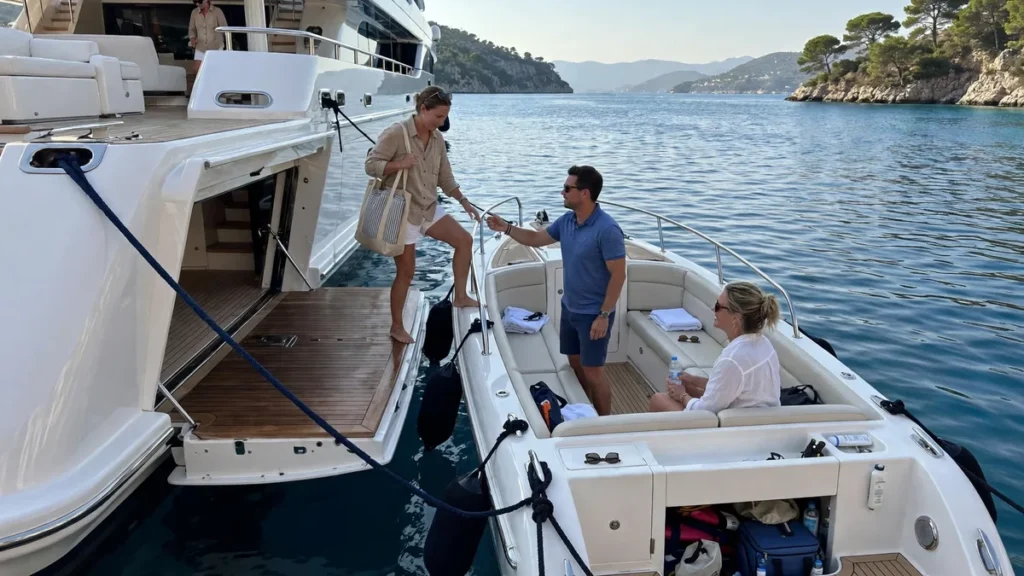
The tender garage is the superyacht’s hidden room: a floodable compartment in the hull where the tender, the jet skis, and the diving gear live, out of sight until the yacht anchors and the stern opens. A good tender garage launches a boat in minutes, keeps everything dry and secure in a seaway, and disappears completely when the yacht is under way.
This ranking rates the tender garages you will actually find on superyachts, from the simplest stern lockers to the finest floodable bays. We judged each one on launch speed, the size of tender it can carry, dryness and ventilation, ease of access for the crew, and how well it disappears into the yacht’s lines when closed.
How we ranked them
Launch speed comes first, because a tender garage exists to get the boat in the water quickly and safely. Capacity comes next: a garage that can only carry a small tender limits where the yacht can go. Then dryness, since a garage that floods with spray rots everything inside, and access, since the crew must reach the tender, the fuel, and the gear without crawling. How the superyacht tender garage is made covers the construction, and this ranking is about how well the finished garage works.
10. The open stern locker
The open stern locker is the simplest tender garage there is: a shallow recess in the transom with a cover, holding a small tender that is lifted out by a davit. It is also exposed: the tender sits in the weather, the cover leaks in heavy rain, and launching means rigging the davit and swinging the tender over the side by hand.
9. The side-loading garage
Side-loading garages open through a door in the hull side, with the tender sliding out sideways on rails. The problem is the sea itself: a side door is harder to seal than a stern door, and in any kind of swell the opening takes spray. Launching from the side also puts the tender in the path of the yacht’s roll, so the crew must time the launch between waves.
8. The fixed cradle garage
A fixed cradle garage holds the tender on a moulded cradle inside a dry compartment, with a stern door that opens and a small crane that lifts the tender out. It keeps the tender dry and out of the weather, which is a genuine improvement over an open locker, and the cradle holds the boat securely in a seaway.
7. The single floodable bay
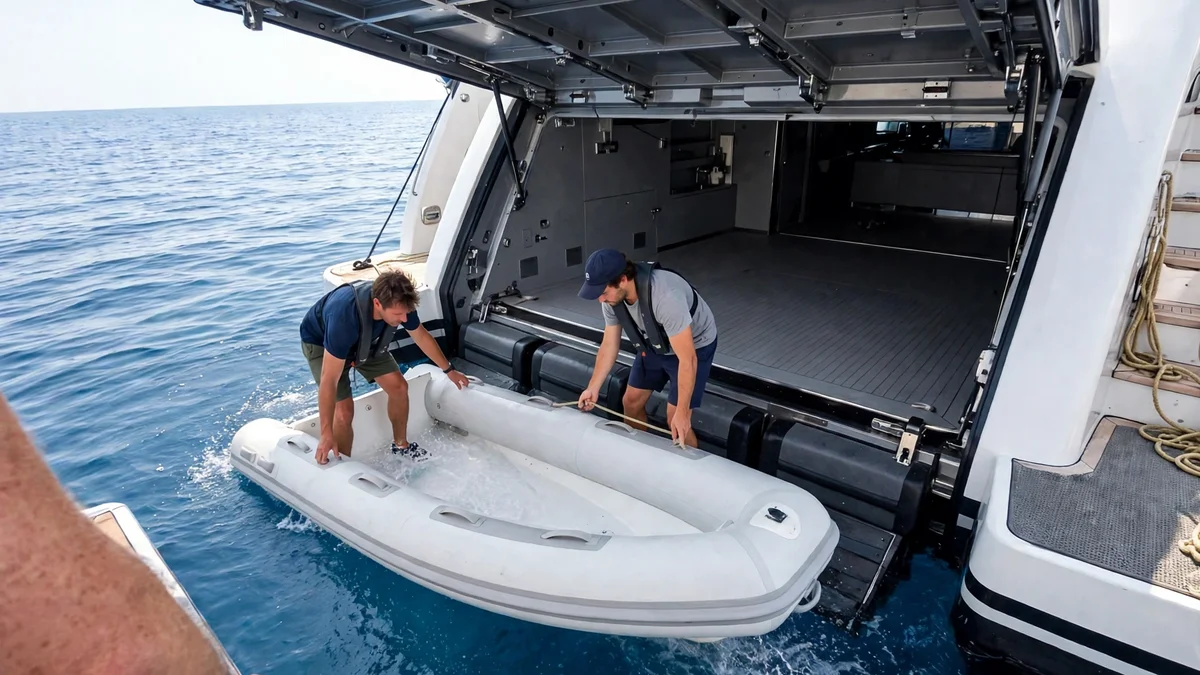
A floodable bay changes the logic completely: instead of lifting the tender out, the garage floods with seawater and the tender simply floats out through the open stern door. It is faster than any crane, it needs only one crew member to handle the lines, and it works in conditions that would make a davit launch dangerous.
6. The twin-bay garage
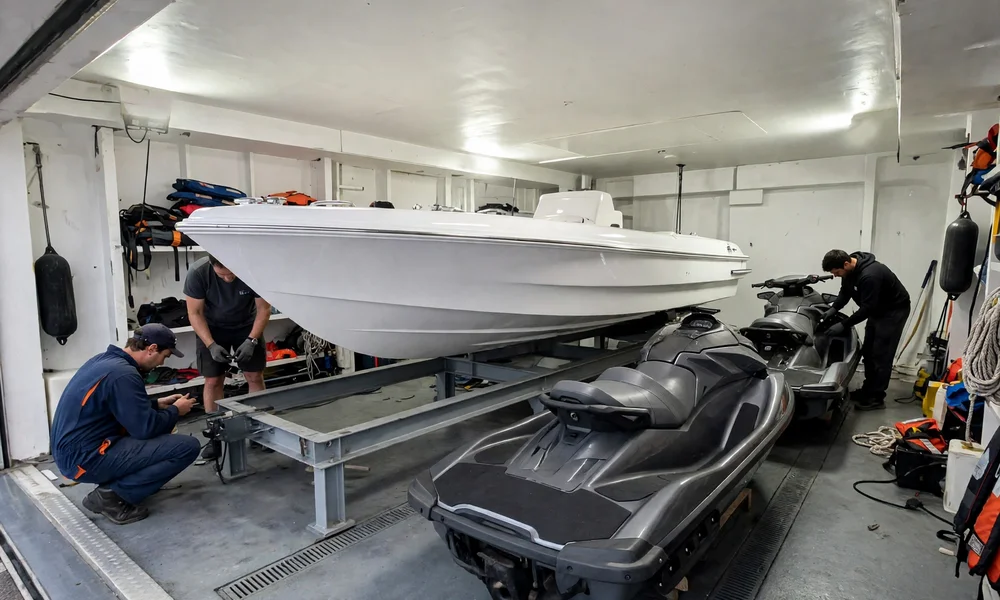
A twin-bay garage splits the space into two compartments: one for the main tender and one for jet skis, diving gear, and toys. The split matters more than it sounds — it lets the crew launch the jet skis without moving the tender, and it keeps wet diving gear away from the tender’s electronics. The cost is space: two bays need a wider stern, and the dividing wall eats into the width of each bay.
5. The stern garage with beach club
Combine a floodable tender garage with a beach club and the stern becomes the yacht’s best room: when the tender is out, the garage floor becomes a swim platform, with seating, a shower, and direct access to the water. The engineering is demanding — the same space must be a watertight garage under way and an open lounge at anchor — but the result is a stern that guests actually use.
4. The full-beam floodable garage
A full-beam garage uses the entire width of the hull, with the tender floating out through a wide stern door and space beside it for a second tender or a pair of jet skis. The width changes the launch completely: the tender can be turned inside the garage, the crew can walk around it on both sides, and the launch is a straight float-out with no manoeuvring. The cost is structural: cutting a full-beam opening in the stern demands serious reinforcement, and the door itself is a large, heavy, precision piece of engineering.
3. The garage with integrated crane and rails
The third-ranked garage pairs a floodable bay with a rail system and a small integrated crane, so the tender can be launched by floating out in calm water or lifted out when the sea is up. The rails guide the tender straight out through the stern door, the crane takes over when floating is not safe, and the crew can switch between the two without re-rigging anything.
2. The convertible garage and guest suite
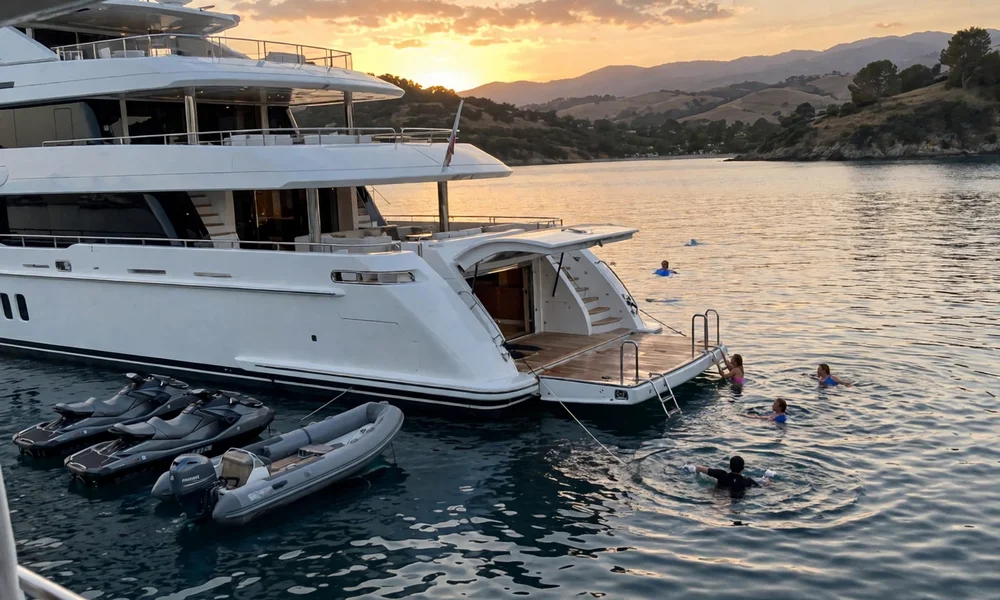
The second-ranked garage is a transformer: a floodable tender bay that converts, once the tender is out, into a guest space with seating, a bar, and panoramic views through the open stern door. The conversion is engineered rather than improvised — fold-down furniture, hidden lighting, and a deck that drains and dries in minutes. Guests step from the salon into a room that was, an hour earlier, a garage.
1. The custom full-beam floodable garage
The best superyacht tender garage is one designed for the yacht and the tender together: a full-beam floodable bay, custom-fitted, with the tender, the jet skis, and the diving gear each in their own place, rails and a crane for every sea state, and a stern door that seals so well the garage stays bone dry under way. It launches in minutes, it holds the largest tender the yacht can carry, and it disappears into the yacht’s lines when closed. Luxury electric yacht specs, explained shows how the finest yachts are put together, and the best electric boat brands, ranked covers the builders who get the details right.
Tender garage engineering: what keeps it dry
The stern door is the heart of a tender garage, and its seal is the difference between a dry garage and a damp one. A good door uses a multi-stage seal with a compression gasket and a secondary drainage channel, so spray that gets past the first seal is caught and pumped away before it reaches the garage floor. The flood valves matter just as much: they must open quickly to flood the bay for launch, close positively to keep the sea out under way, and fail safe so a power loss leaves them closed. Ventilation is the quiet third element — a garage that cannot breathe grows mould on upholstery and corrodes electronics, so the best garages have forced-air drying that runs after every launch.
The verdict
A tender garage is not a storage room — it is the yacht’s front door to the sea, and the best ones are designed like the rest of the yacht: with the water, the weather, and the crew in mind. If you are choosing a superyacht, watch a tender launch before you look at anything else. The launch will tell you more about the yacht than the brochure ever will.