Twelve cylinders in a row, or two banks of six leaning into each other, has always been the engine layout of excess. A V12 does not exist because a car needs twelve cylinders. It exists because an engineer wanted smoothness no smaller engine could offer, a sound no exhaust system could fake, and power delivered with a kind of effortless calm.
This list is not a ranking of raw power alone. A modern turbocharged V12 makes more power than any of these, but power is cheap now. What earns a place here is influence: engines that changed what a supercar could be, engines that defined a brand for a generation, and engines that drivers still talk about decades after the last one left the factory.
Every engine below was built for a purpose beyond moving a car from one place to another, and each one teaches something about why the V12 refuses to die.
1. Ferrari Colombo V12 — the engine that started it all
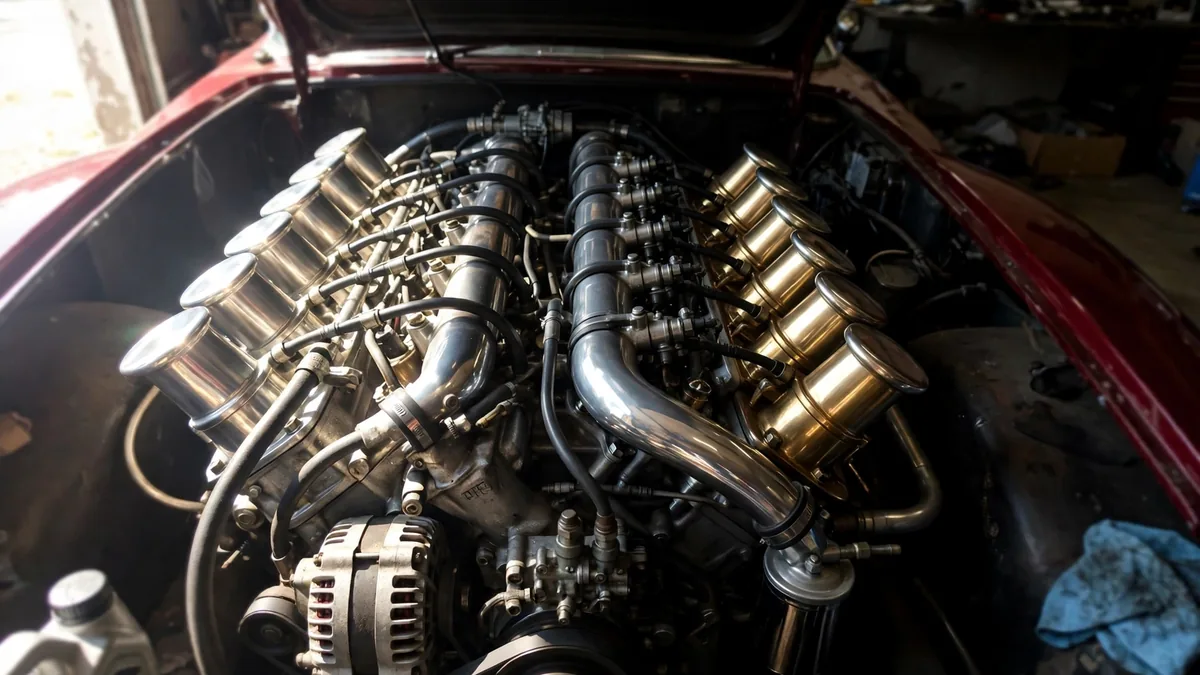
Gioacchino Colombo designed this engine in the late 1940s, and it powered almost every Ferrari road car for the next four decades. It began as a tiny 1.5-litre unit and grew, version by version, to more than 5 litres, but the recipe never changed: a compact sixty-degree V12, light, high-revving, and beautifully balanced. In the 250 GTO it made around 300 horsepower, which was enormous for the early 1960s, and the car it powered became the most valuable Ferrari ever built. What makes the Colombo special is not one single version but the whole family.
2. Lamborghini Miura V12 — the transverse rebel
When Lamborghini built the Miura in the mid-1960s, its engineer Giotto Bizzarrini designed a 3.9-litre V12 and mounted it sideways, behind the driver, in a car that looked like nothing else on the road. The transverse mounting was a gamble, taken to keep the car short and balanced, and it worked well enough to create the modern supercar. The Miura’s V12 made around 350 horsepower in its earliest form and more in later versions, but the number is not the point.
3. McLaren F1 BMW S70/2 — the greatest road-car engine ever made
Gordon Murray wanted an engine for the McLaren F1 that was light, naturally aspirated, and powerful enough to make his car the fastest in the world. BMW’s motorsport division answered with the S70/2, a 6.1-litre V12 making 627 horsepower, with a gold-lined engine bay to keep the heat in check. The F1 held the naturally aspirated production-car speed record for years, and the engine is the reason why. Building an engine like this takes a particular kind of obsession, and our look at how a hypercar V12 engine is made shows the machining, balancing, and testing that goes into every unit.
4. Ferrari F50 F130B — a Formula 1 engine for the road
The F50’s engine was derived directly from Ferrari’s Formula 1 programme, a 4.7-litre V12 that was bolted straight to the car’s carbon-fibre chassis as a stressed member, exactly as a racing engine would be. It made 513 horsepower and revved to 8,500 rpm, and because it was part of the structure, the driver felt every vibration and every change in load through the seat. There is no sound deadening, no compromise, and no pretending the car is anything other than a racing machine that happens to be road legal.
5. Ferrari Enzo F140 — the V12 that became a dynasty
The Enzo’s 6.0-litre V12, codenamed F140, made 651 horsepower when it arrived in 2002, and it was so good that Ferrari kept developing it for two more decades. Versions of the F140 powered the 599, the F12, the LaFerrari, and the 812 Superfast, each one more powerful than the last, with the final 812 Competizione version revving to 9,500 rpm. It sounds like a racing engine at full throttle and behaves like a luxury car at low speed, and that split personality is why it lasted. When a single engine family can serve a flagship hypercar and a grand tourer, it has earned its place in history.
6. Lamborghini Aventador L539 — the last of the line
The Aventador’s 6.5-litre V12 was Lamborghini’s first all-new V12 in nearly fifty years, and it was also the last naturally aspirated V12 the company would build. It made 690 horsepower at launch and 759 in the final Ultimae version, revving to 8,700 rpm with a violence that no turbocharged engine can imitate. Its successor, the Revuelto, keeps a V12 but adds hybrid assistance, which makes the Aventador the end of an era rather than just another model. The way that hybrid successor works is explained in how the Lamborghini Revuelto V12 works, and the contrast with the Aventador shows exactly what was lost and what was gained when electricity joined the V12.
7. Aston Martin Valkyrie Cosworth V12 — the loudest goodbye
Cosworth built the Valkyrie’s 6.5-litre V12 to rev to 11,100 rpm, higher than any road-car engine before it, and the result is an engine that sounds less like a car and more like a racing machine from another era. It makes around 1,000 horsepower on its own, before a small electric motor adds more, and it does so without a turbocharger in sight. The Valkyrie was designed with Formula 1 thinking, and the engine is the purest expression of that: light, extreme, and built for revs rather than torque. If the V12 has a final chapter, this is how it should read — not quiet and efficient, but as loud and as fast as engineering allows.
8. Mercedes-Benz M120 — the quiet giant
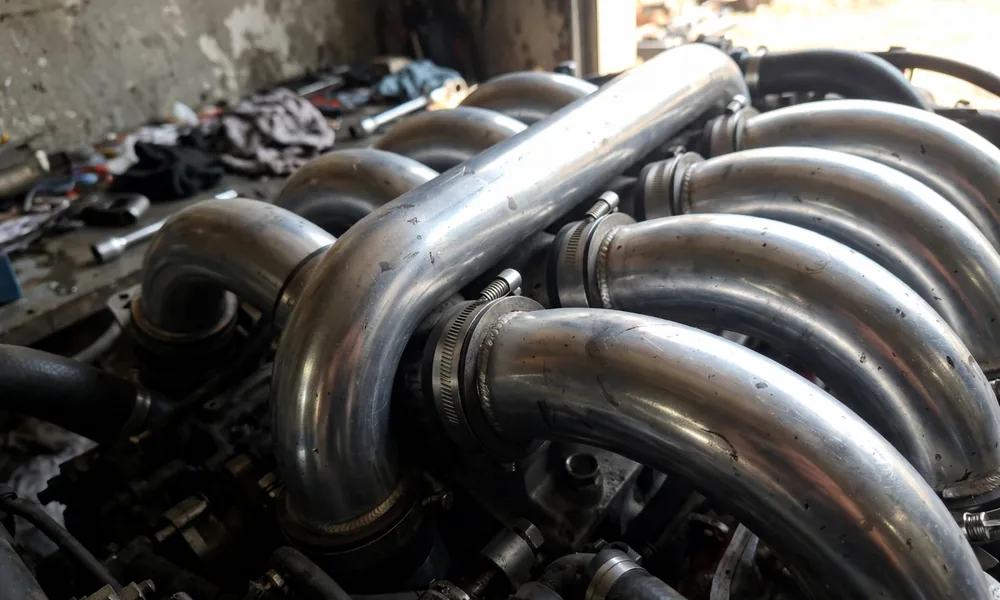
The M120 is the least glamorous engine on this list, and that is exactly why it belongs here. Mercedes built this 6.0-litre V12 for its big saloons and coupes in the 1990s, and it was so smooth and so strong that Pagani chose it for the Zonda, where a twin-turbocharged version eventually made more than 700 horsepower. The M120 was never designed to be a supercar engine, which is what makes its second life so remarkable. It was engineered for silence and durability, for carrying heavy luxury cars without ever feeling strained, and those same qualities made it a perfect foundation for a hypercar.
The Takeaway
The best V12s share one trait: they were built by people who believed an engine should have a character, not just an output. The Colombo gave Ferrari its identity, the Miura gave Lamborghini its nerve, the S70/2 gave the McLaren F1 its soul, and the Cosworth V12 gave the Valkyrie its voice. Even the giants of forced induction have never quite replaced what a great naturally aspirated V12 does to a driver. Forced-induction flagships have their own engineering marvels, and our look at the Bugatti W16 engine specs shows what happens when an engine is built purely for maximum power. That is why, even as the industry moves on, the greatest V12s will keep their place at the top of every list that matters.