The helm station is where a yacht is actually driven, and on a superyacht it is a room in its own right. The best helm stations give the captain a clear view in every direction, screens that can be read in bright sun, controls that fall to hand without looking, and a chair that stays comfortable through a long watch. The worst are cramped, cluttered, and designed to be photographed rather than used. A helm station is not a dashboard; it is a workplace, and it should be judged as one.
This ranking judges eight yacht helm stations on visibility, screen layout, control ergonomics, seating, and how well the station works in bad weather and at night. A helm that is beautiful but forces the captain to hunt for a control scores lower than a simpler one that stays practical when the sea gets rough. The best helm stations are designed with the captain in the room from the start, not fitted around a styling idea.
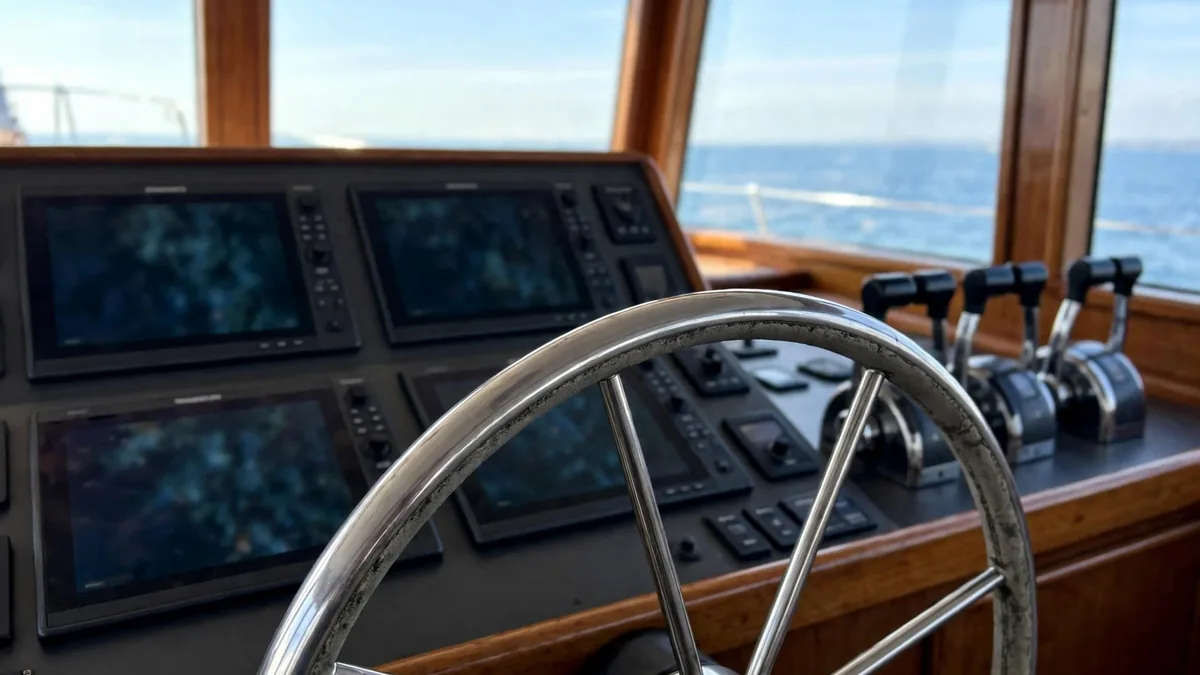
1. Flying Fox — the most complete bridge on the water
The Flying Fox takes the top place because its helm station is the most complete on this list. The 136-metre yacht has a wide bridge with a full-width window, a central helm position, and screens arranged in a clean arc so the captain can read every display with a small turn of the head. The throttles and steering controls sit exactly where the hands expect them, and the watch-keeping chairs are comfortable for hours. The bridge has room for the captain, the officer of the watch, and a lookout without anyone crowding, and the wings outside give a clear view down the sides of the yacht. The station is designed to be worked in, and it shows.
2. Octopus — the best helm for an explorer
Octopus earns second place as the best helm for an explorer yacht. The 126-metre expedition yacht was built for remote water, and its bridge reflects that: tough, practical, and laid out for long watches in bad weather. The windows are large and heated to stop fogging, the screens are bright enough to read in tropical sun, and the controls are oversized so they work with gloves on. The bridge carries the navigation, communication, and research systems in one room, which suits a yacht that spends months away from port. It is not the prettiest bridge here, but it is the one most likely to be trusted in a storm.
3. Kismet — the best helm with a view
Kismet takes third place on the strength of its views. The bridge sits high in the yacht with floor-to-ceiling windows on three sides, so the captain can see the bow, the horizon, and the anchorage without standing. The helm position is centred and raised slightly, which gives a clear line of sight over the foredeck, and the screens are set low so they never block the view. The space is calm and light, with pale wood and a clean console, and the seating is arranged so a guest can watch the yacht being driven without getting in the way. The view is the point, and nothing in the room fights it.
4. Dilbar — the grandest bridge afloat
Dilbar, at 156 metres, has the grandest bridge on this list, and it ranks fourth on sheer scale. The bridge is a large, high-ceilinged room with a wide window, a central helm, and enough space for a full bridge team to work without crowding. The consoles are finished in the yacht’s classic style, with polished wood and generous lighting, and the equipment is the best available, from radar to dynamic positioning. The size is the point: several officers can work at once, which matters on a yacht of this scale, and the bridge never feels cramped even with a full watch on duty.
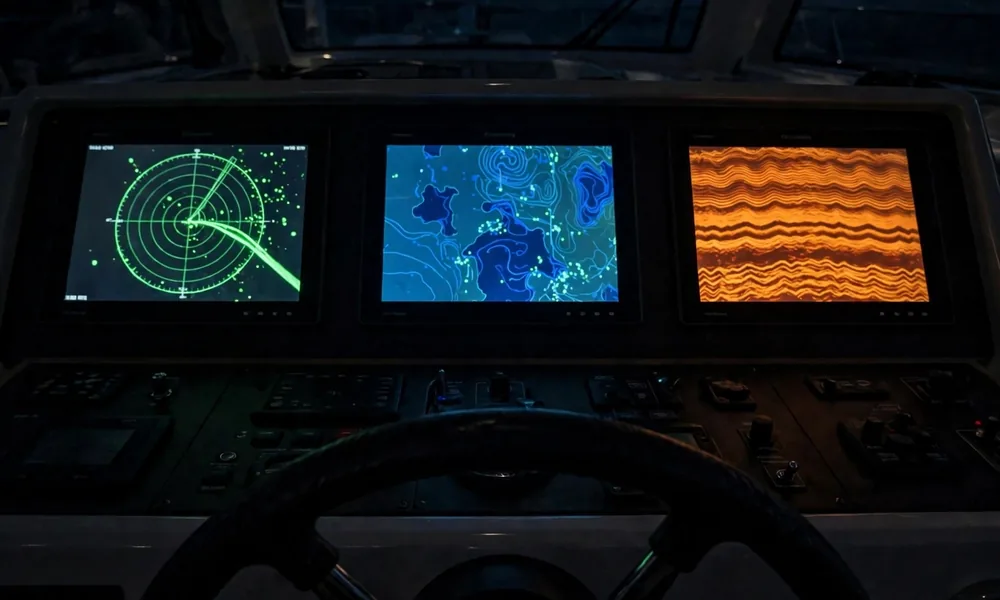
5. Aviva — the most inventive helm layout
Aviva earns fifth place with the most inventive helm layout here. The 98-metre yacht has a bridge that opens onto an aft deck, so the captain can step outside for a clear view of the stern during manoeuvres. The helm console is slim and modern, with touchscreens that can be reconfigured for different jobs, and the seating is arranged so the captain and the officer of the watch sit side by side. The bridge feels more like a modern control room than a traditional wheelhouse, and the layout works well for a yacht that spends much of its time at anchor with guests aboard.
6. Amadea — the best helm and chart-room combination
Amadea takes sixth place with the best helm and chart-room combination on this list. The bridge is a bright, well-proportioned room with a clear helm position and screens along the console, and it opens directly onto a chart room where passage planning happens away from the driving position. The flow between the two spaces is the best here: the captain can plan, drive, and hand over the watch without crossing the yacht. The equipment is modern and well maintained, and the seating is comfortable for long watches. The bridge itself is a little smaller than the top five, but the way it connects to the chart room makes the whole working area feel larger than it is.
7. Artefact — the quietest bridge at sea
Artefact earns seventh place as the quietest bridge on this list. The 80-metre hybrid yacht is designed around silence, with electric propulsion and extensive sound insulation, and the bridge benefits directly: there is no engine vibration underfoot and no hum through the walls. The bridge is a calm, light-filled room with a good helm position and clear screens, finished in pale wood and natural fabrics. The windows look out over the water, and the station is comfortable for long, quiet watches. The bridge is smaller than the others here, but the silence is something no larger room can buy.
8. Savannah — the most practical small bridge
Savannah closes the list with the most practical small bridge of the eight. The 84-metre hybrid yacht has a bridge that is compact but well thought out, with a clear helm position, screens that are easy to read, and throttles that fall naturally to hand. The bridge opens onto side decks that work as lookout positions in good weather, and the hybrid propulsion keeps the yacht quiet at anchor, which suits early morning departures. The bridge is smaller than the others here, but the layout is honest and the station is easy to work, which earns it the final place.
The Takeaway
The best yacht helm stations are the ones designed as workplaces, not showpieces, and the Flying Fox leads because it treats visibility, screens, and controls as one connected system. Octopus follows on practicality in bad weather, and Kismet on views, but every helm on this list shares the same idea: the captain should be able to see, reach, and read everything without thinking about it. The lesson for anyone planning a yacht is to put the captain in the design room early. The bridge itself is explained in our guide to how a yacht navigation bridge is made, and the autopilot that shares the helm in our guide to how a yacht autopilot works. For the interiors around the bridge, see our ranking of the best luxury yacht interiors ranked.


