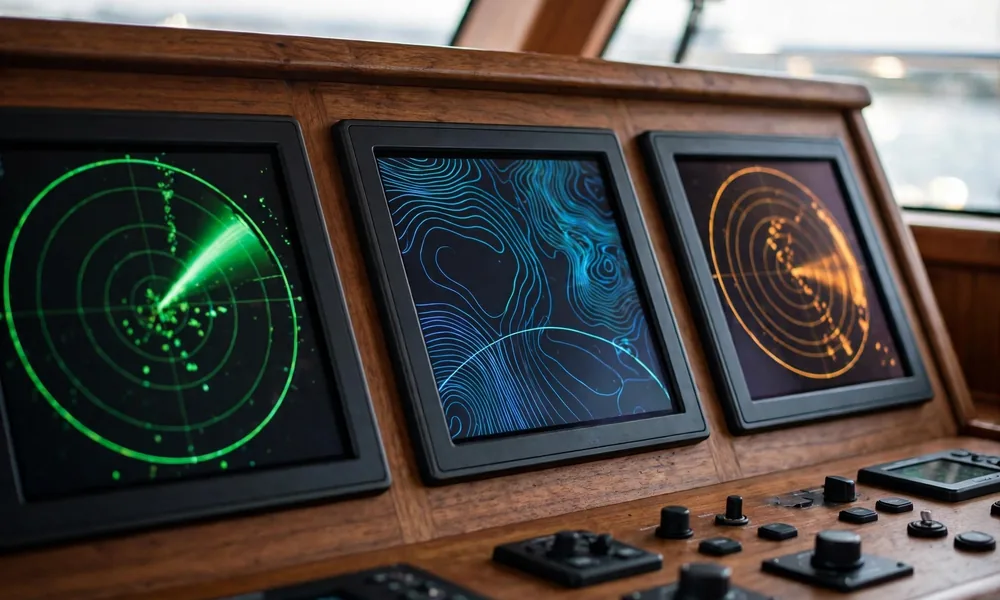
At night, far from shore, the bridge of a yacht is a quiet room of glowing screens. The captain stands at a console that looks more like an aircraft cockpit than anything from the age of sail, watching radar sweep the horizon, a chart plotter trace the route, and a depth sounder read the water below. Every decision about where the yacht goes next is made here, and every system on board reports to this room.
A yacht navigation bridge is not bought off a shelf. It is designed for one specific yacht, fitted into a space shaped by the naval architect, and built from consoles, screens, and electronics that must work together flawlessly for years at sea. Salt air, vibration, and the constant motion of the hull all fight against it. Building one means combining joinery, glasswork, wiring, and software into a room that must feel calm even when the weather outside is not. Here is how a yacht navigation bridge is made, step by step.

How a Yacht Navigation Bridge Is Made
Step 1: Designing the layout with the captain
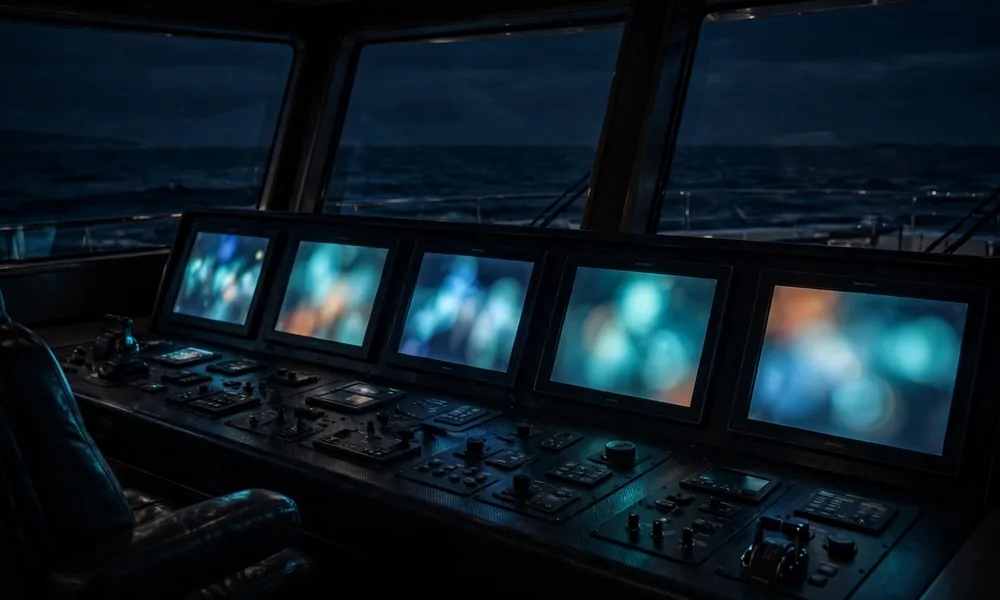
The build begins with the people who will use the room. The captain and the crew sit with the designer to decide where the helm goes, how many screens they need, where the radio sits, and how far the watchkeeper must reach for the throttle. Visibility is the first rule: from the helm, the captain must see the bow, both sides of the yacht, and the horizon without standing up. The layout is drawn in three dimensions, and a full-size mock-up is often built in plywood so the crew can sit in it and test the reach of every control before a single real panel is cut. Night watchkeeping is planned at the same time, with screen positions chosen so no bright display shines directly into the helmsman’s eyes.
Step 2: Building the consoles and joinery
The consoles are the furniture of the bridge, and on a good yacht they are built like fine cabinetry. Marine plywood or composite cores are shaped into desks and pedestals, then finished in veneer, leather, or painted panels that match the rest of the yacht. Inside, the consoles hide a tangle of wiring, cooling fans, and power supplies, all arranged so a technician can reach them without dismantling the room. The joins are sealed against moisture, because a bridge that looks beautiful but lets in damp will destroy its own electronics within a season.
Step 3: Fitting the glass and the windows
The windows of a bridge are structural, not decorative. Laminated, often heated, glass panels are fitted into frames that must keep out driving rain and green water while surviving the flex of the hull. The glass is tilted slightly to cut glare from the instruments at night, and the frames are bonded with marine sealants that stay flexible for years. Wipers, washers, and demisters are fitted at the same time, because a window you cannot see through is worse than no window at all. The view from the helm is the whole point of the room, and everything else is arranged around it.
Step 4: Installing the navigation electronics
With the structure ready, the electronics go in: radar, chart plotters, depth sounders, automatic identification systems, radios, and the autopilot. Each screen is mounted on a bracket that damps vibration, and each is wired into a network that lets every display share data with every other. The radar antenna goes up on the mast, the GPS antennas are placed where nothing blocks the sky, and the depth transducer is fitted through the hull below the waterline. The system is then configured so the captain can call up any combination of radar, chart, and engine data on any screen, and so that a failure in one display never takes the others with it.
Step 5: Wiring power, backup, and communications
A bridge that goes dark is a danger, so the power system is built with redundancy. The consoles run from the yacht’s main electrical system, backed by an uninterruptible supply that keeps the navigation running if the generators fail, and a separate emergency battery for the radio and the navigation lights. Cables are run in dedicated trays, labelled at both ends, and separated so that power cables do not interfere with the delicate data lines. The communications suite is fitted alongside: satellite links, VHF and HF radios, and the intercom to the engine room, so the bridge can reach the shore and the crew at any moment. The engine the bridge commands is a machine in its own right, as covered in the cruise ship engine specs explained article.
Step 6: Sea trials and calibration
The finished bridge is tested at sea, not in the yard. The yacht is taken out and the crew run through every system: the radar is checked against known targets, the autopilot is asked to hold a course in a swell, the compass is swung and corrected, and the depth sounder is compared with the chart. The helm response is tuned, the screens are dimmed and checked for night vision, and the watchkeepers practise the drills they would use if a screen failed mid-passage. Only when the captain is happy with every reading does the bridge get signed off. The propeller the helm ultimately drives is a precision component too, as described in the yacht propeller specs explained article, and the deck beneath the bridge is finished to the same standard, as covered in the yacht teak deck specs explained article.
Yacht Navigation Bridge Specs
| Specification | Typical figure |
|---|---|
| Main displays | Three to six multifunction screens |
| Radar range | Up to 48 nautical miles or more |
| Chart system | Electronic charts with GPS positioning |
| Glass | Laminated, often heated, anti-glare |
| Backup power | Uninterruptible supply plus emergency battery |
| Build time | Several weeks to months, depending on size |
What a Yacht Navigation Bridge Costs
A yacht navigation bridge is estimated to cost roughly 150,000 to 800,000 dollars to build and fit out, though the exact figure is an estimate and varies with the size of the yacht, the number of screens, and whether the electronics are from a single maker or a mix of systems. The radar and the satellite communications are usually the most expensive single items. For a superyacht, the bridge can cost more than a small house, yet it is a small share of the yacht’s total price, and it is the room the crew use more than any other.
A Rare Fact About the Yacht Navigation Bridge
Here is a detail most people never hear: many yacht bridges have a secret of their own, a small red light mode that turns every screen and lamp red at night. White light destroys night vision for up to half an hour, while red light leaves it almost untouched, so a watchkeeper stepping out onto a dark deck can still see the horizon and the running lights of other vessels. The rule is so important that crews will cover a forgotten white phone screen with their hand rather than let it flash across the bridge.