There is a small sound, somewhere between a click and a sigh, that every foldable phone makes when it opens. It is the sound of a hinge doing something no other part of a phone is asked to do: folding a sheet of glass in half, hundreds of times a day, without breaking it, without letting dust in, and without ever feeling loose in the hand. The hinge is the most mechanically ambitious part of the modern smartphone, and its specification sheet reads more like a watchmaker’s notebook than a phone brochure.
A foldable phone is really two devices joined at a spine. On one side sits the battery and the main board; on the other, the cameras and a second battery. Between them runs a flexible display that must bend to a precise radius, again and again, while the hinge holds the two halves at exactly the angle the user left them. Get the hinge wrong and the phone creaks, the crease deepens, dust creeps in and the screen dies. Get it right and the whole thing feels like a single piece of engineering.
The numbers that decide which outcome you get are rarely printed on the box. Fold ratings, torque, drop tests and ingress protection live in datasheets and durability reports, and they are worth reading, because a foldable phone is bought for years, not months, and its hinge is the part that decides how long those years last.
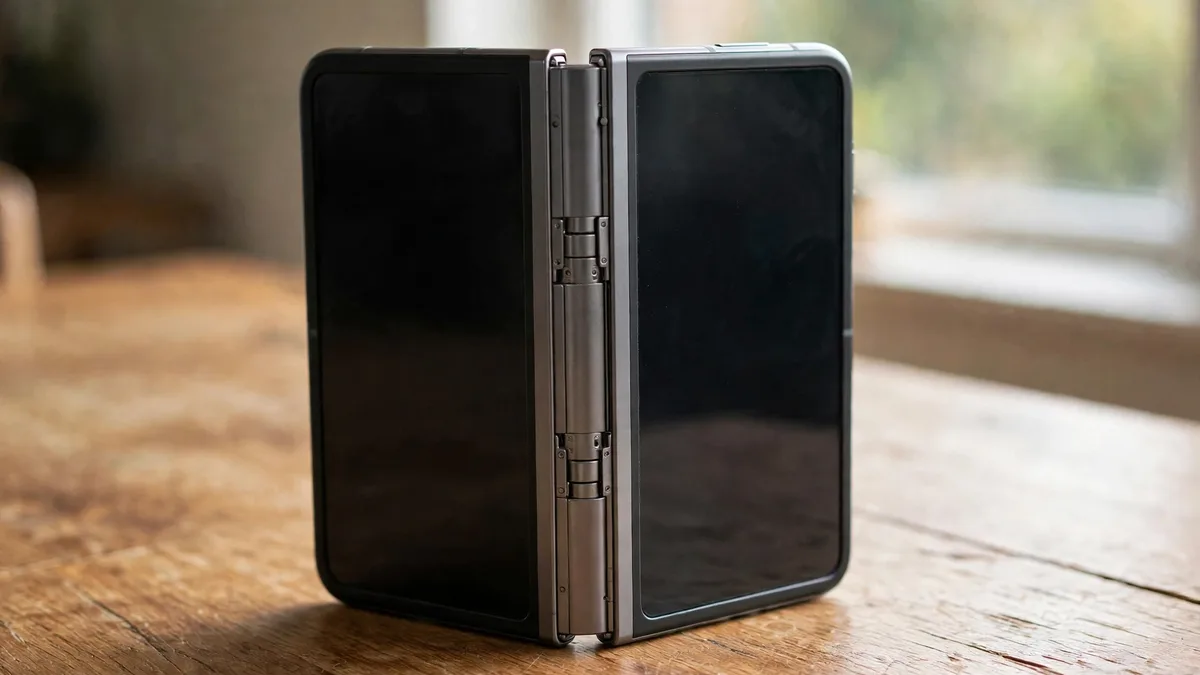
Fold Rating: The Headline Number
The fold rating is the number of times a manufacturer claims the hinge and screen can fold before failing, and it is the single most quoted figure in foldable specifications. Early foldables were rated for around 200,000 folds, and newer designs claim 400,000 or even 500,000 folds. At 100 folds a day, 200,000 folds is roughly five and a half years of use; 500,000 folds stretches that to well over a decade.
Torque and the Free-Stop Angle
Torque is the resistance the hinge offers as it moves, and it is what makes a foldable feel expensive or cheap. Too little torque and the phone flops open or shut under its own weight; too much and opening it feels like prising apart a jammed drawer. Good hinges use a cam and spring mechanism that gives a smooth, even resistance through the whole arc, with a satisfying snap as the phone reaches fully open or fully closed.
The free-stop angle is the range over which the hinge holds its position, typically from around 75 degrees to 115 degrees, which is the range that lets the phone stand on a table like a tiny laptop for video calls.
Bend Radius: Why the Crease Exists
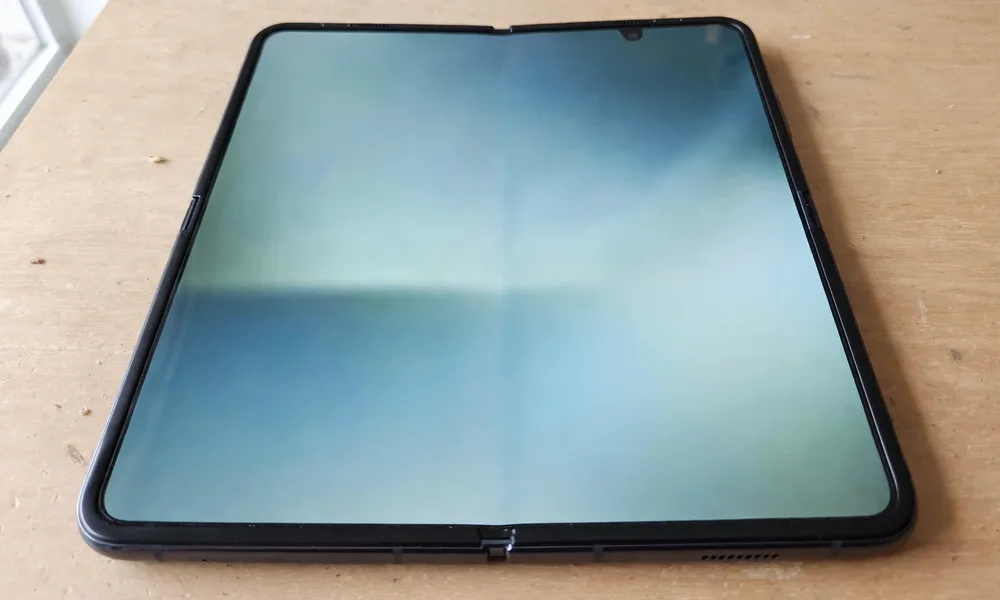
Bend radius is the radius of the curve the flexible display makes when the phone is closed, and it is the number that decides how visible the crease will be. A tighter bend, of one or two millimetres, lets the phone close flat with no gap, but it stresses the display more with every fold. A wider bend, of three to five millimetres, is kinder to the screen but leaves a small wedge-shaped gap when the phone is closed.
Modern hinges solve this with a teardrop or waterdrop shape: the display does not fold in a simple U but curves into a droplet, so the two halves of the screen never press directly against each other. The result is a phone that closes flatter, with a shallower crease and a longer screen life, and it is the reason the latest foldables look so much cleaner at the spine than the first generation did.

Materials: Steel, Titanium and Liquid Metal
The hinge is machined from some of the hardest materials in the phone. Stainless steel is the traditional choice, strong and cheap to machine. Titanium, which is lighter and stronger for its weight, has appeared in premium hinges, and some designs use a zirconium-based alloy, often called liquid metal, for the smallest gears, because it can be moulded into complex shapes that would be difficult to cut.
Dust, Water and the Drop Test
Ingress protection is the hinge’s weakest area, because a moving joint is hard to seal. Most foldables are rated IPX8 for water, meaning they survive immersion, but they carry no dust rating at all, which is why the specification reads IPX8 rather than IP68. The gap is filled by brushes, seals and swept-volume designs that push dust out of the hinge as it moves, but sand remains the foldable’s natural enemy, and manufacturers are frank about it.
Drop testing is the other half of durability. A foldable is tested for drops from around one to one and a half metres onto hard surfaces, and the hinge is usually the part that absorbs the shock, flexing slightly to protect the screen.
What It Costs
A foldable phone with a flagship hinge typically costs between 1,000 and 1,800 dollars, with the most advanced models estimated at the top of that range. The hinge itself is one of the most expensive components in the device, with estimates for the hinge assembly alone running into the tens of dollars per unit, far more than any part of a conventional phone. That cost is the reason foldables remain premium devices, and it is also the reason the price falls slowly: each generation of hinge is more complex than the last, even as manufacturing improves.
The honest way to read the price is as a trade. You are paying for a phone that becomes a tablet, and the hinge is what makes that transformation possible. If the fold rating, the torque and the sealing are right, the premium buys years of use. If they are wrong, it buys a repair bill.
A Rare Fact
The first folding phone was not a smartphone at all. In 1996, Motorola’s StarTAC, a tiny flip phone, folded shut with a hinge and a spring, and it sold in the tens of millions. Its hinge did a far simpler job than today’s designs: it carried no display, no flexing glass, only a microphone and a speaker wire. Yet the engineering idea was the same, and the StarTAC’s satisfying snap became the sound every foldable hinge since has tried to reproduce, now with gears, cams and liquid metal doing the work that a single spring once did.
Read the hinge specification before you buy the phone. The fold rating tells you how long it will last, the torque tells you how it will feel, the bend radius tells you how the crease will age, and the sealing tells you what it fears. Everything else about a foldable is a normal phone. The hinge is the part that is not normal at all.
For how the hinge is actually built, see how a foldable phone hinge is made. For the flexible display it protects, read OLED display panel specs explained, and for the metal frame around it, see how a smartphone titanium frame is made.


