Tap a key on a modern phone and you feel a small, sharp click under your thumb, even though nothing moved. That feeling is made by a haptic motor, a part smaller than a coin that has quietly become one of the most important components in your pocket. It is the reason a touchscreen can feel like a real keyboard, and the reason a silent alarm can wake you without waking anyone else.
A haptic motor does one simple thing: it shakes, but it shakes with extraordinary precision. It can fire a pulse that lasts eight thousandths of a second, stop dead, and fire again before your brain has registered the first one. The difference between a cheap buzz and a good haptic is the difference between a phone vibrating on a table and a fingertip feeling a button that is not there. Engineers measure that feeling in numbers: frequency, acceleration, rise time and power all decide whether a vibration feels crisp or mushy.
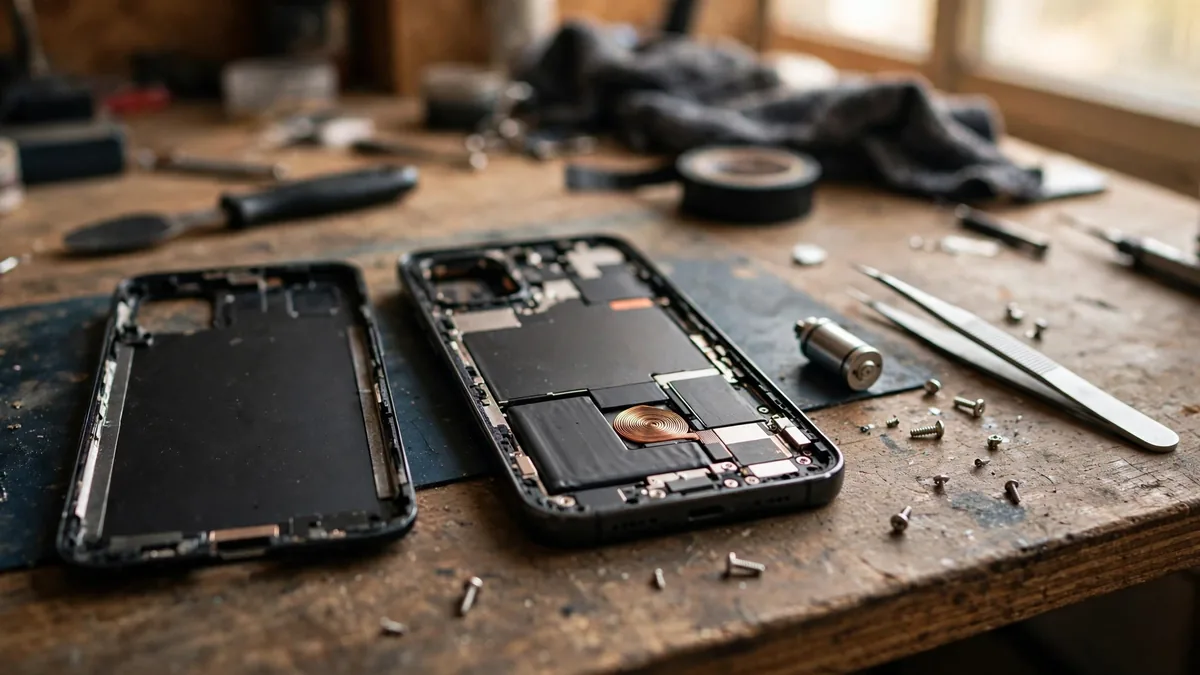
The Key Specs, in One Place
Before the details, here are the numbers that matter most when you compare haptic motors.
| Specification | Typical figure | What it means |
|---|---|---|
| Motor type | ERM, LRA or piezo | Spinning weight, linear shake, or crystal bend |
| Resonant frequency (LRA) | About 170 to 235 Hz | The frequency where the shake is strongest |
| Acceleration (LRA) | About 1.5 to 3.0 G | How hard the vibration pushes |
| Rise time | About 10 to 30 ms | Time to reach full strength |
| Braking time | About 10 to 30 ms | Time to stop cleanly after a pulse |
| Shortest crisp pulse | About 8 to 15 ms | The shortest tap you can feel clearly |
| Size (LRA) | About 10 x 10 x 3.5 mm | Smaller than a fingernail |
| Weight | About 1 to 3 g | Light enough to hide anywhere |
| Drive voltage | About 1.8 to 3.0 V RMS | Low voltage, safe inside a phone |
| Power per pulse | About 50 to 150 mW | Far less than the screen or radio |
| Lifetime | Over 1 million cycles | Years of taps, buzzes and alarms |
The motor type is the first thing to understand, because it decides everything else. The oldest kind is the ERM, or eccentric rotating mass: a tiny motor with an off-centre weight that spins and wobbles. It is cheap and strong, but slow to start and slow to stop, so the buzz feels loose. The LRA, or linear resonant actuator, is the modern standard: a small mass on a spring that slides back and forth in a straight line, driven by a coil, starting and stopping in milliseconds. The third kind, the piezo actuator, bends a ceramic crystal to make a click, and it is the fastest of all, though more expensive.
Resonant frequency is the LRA’s most important number. Every spring-and-mass system has a natural frequency where it shakes hardest, and for a phone LRA that is usually between about 170 and 235 hertz. Drive it at that frequency and you get the strongest vibration for the least power; drive it far away and the shake fades. Rise time and braking time are what separate a click from a buzz: a cheap motor takes 50 milliseconds or more to spin up and the same to spin down, while a good LRA reaches full strength in about 10 to 30 milliseconds and stops just as fast, because the driver actively brakes it. The same care with small motors shows up across gadgets, from the stabiliser in a drone gimbal to the hinge in a folding phone, where the foldable phone hinge has to move with the same precision, thousands of times a day.
How a Haptic Motor Works
A haptic motor turns electricity into movement, and then into feeling. The path from a tap on glass to a tap on skin has five steps, each timed to the millisecond.
Step 1: The touch is detected
It starts with the touchscreen, which senses your finger through a grid of capacitive sensors. The processor works out what kind of feedback that touch should get: a light tick for a key, a firm thud for a long press. The whole decision takes a few milliseconds.
Step 2: The driver builds the waveform
The haptic driver, a small chip next to the motor, builds the electrical waveform for that exact feeling. A key press might be a single 12-millisecond burst at the resonant frequency. A long press might be a stronger pulse that ramps up and then stops dead. The driver shapes the voltage over time, like a musician shaping a note, because the shape of the wave is the shape of the feeling.
Step 3: The coil pushes the mass
In an LRA, the waveform flows through a copper coil, which creates a magnetic field that pushes a small mass on a spring. The mass slides back and forth along one axis, about a millimetre in each direction, dozens of times a second. In an ERM, the current spins a motor instead, and the off-centre weight makes the whole motor wobble.
Step 4: The driver brakes the motor
Without braking, the spring in an LRA would keep oscillating after the pulse ends, like a bell after it is struck. The driver brakes it by sending a short burst of current in the opposite direction, timed to cancel the remaining movement. This active braking is what lets a phone fire two taps a tenth of a second apart without them blurring together.
Step 5: Your skin reads the signal
The last step happens in your hand. Your skin is packed with mechanoreceptors that are exquisitely sensitive to vibration, especially at frequencies around 200 hertz, which is no coincidence: it is close to the resonant frequency of most LRAs. Your brain reads the strength, length and rhythm of the pulse and turns it into meaning: a key pressed, a message arrived, a button that is not really there. The autofocus mechanism in a camera does something similar at a smaller scale, and the camera autofocus motor has to move a lens with the same speed and silence.
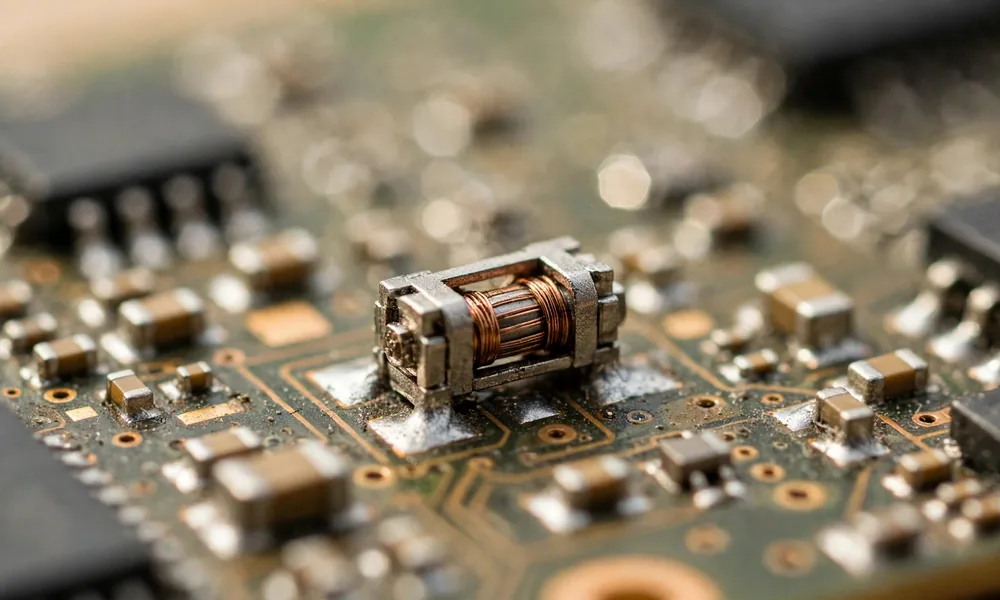
What One Costs
A basic ERM motor of the kind used in budget phones costs only a few cents in volume, which is why it is still everywhere. A good LRA of the kind in a flagship phone costs an estimated $1 to $3, and the largest, most precisely tuned ones can cost more. The driver chip adds roughly another dollar, and the engineering time to tune the waveforms for a whole phone is worth far more than the parts themselves.
A Rare Fact
The same technology that makes your phone buzz is used to let surgeons feel what their instruments are touching during remote operations, and to let astronauts feel the surface of a distant planet through a robotic arm. Researchers have even built haptic gloves that let a person feel a virtual object that is not there at all. Your phone’s little click is the simplest version of that idea.

So the next time your phone clicks under your thumb, pay attention to what you are feeling. A sharp, short tap means an LRA driven at its resonant frequency and braked in milliseconds. A long, loose buzz means an old spinning motor doing its best.


