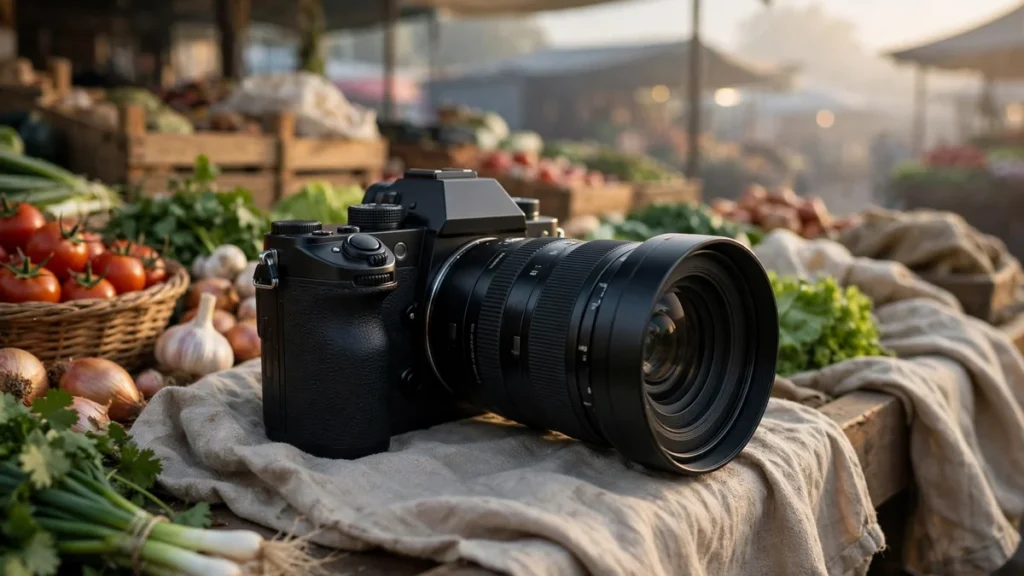
On a factory bench, a camera smaller than a matchbox is held in a clamp while a technician tightens a screw the size of a grain of sand. The camera has already been dropped from a height, frozen overnight and held under water, and it is about to be dropped again.
That testing is the whole story of how a luxury action camera is made. It begins as a sensor, a processor and a lens, and it ends as a sealed little box that can be soaked, shaken and frozen and still record. From the first solder joint to the last drop test, this is how it comes together.

Step 1: The sensor and the processor are made and joined
The camera starts with its sensor, a chip about the size of a fingernail that turns light into an electrical signal. The sensor is made in a clean room, where the air is filtered and workers wear suits, because a speck of dust on a sensor is a spot on every photograph the camera will ever take. It arrives at the camera factory already sealed in its package, and it is soldered onto the main circuit board by machine, along with the processor, the memory and the radio chips.
Step 2: The lens is ground, coated and set
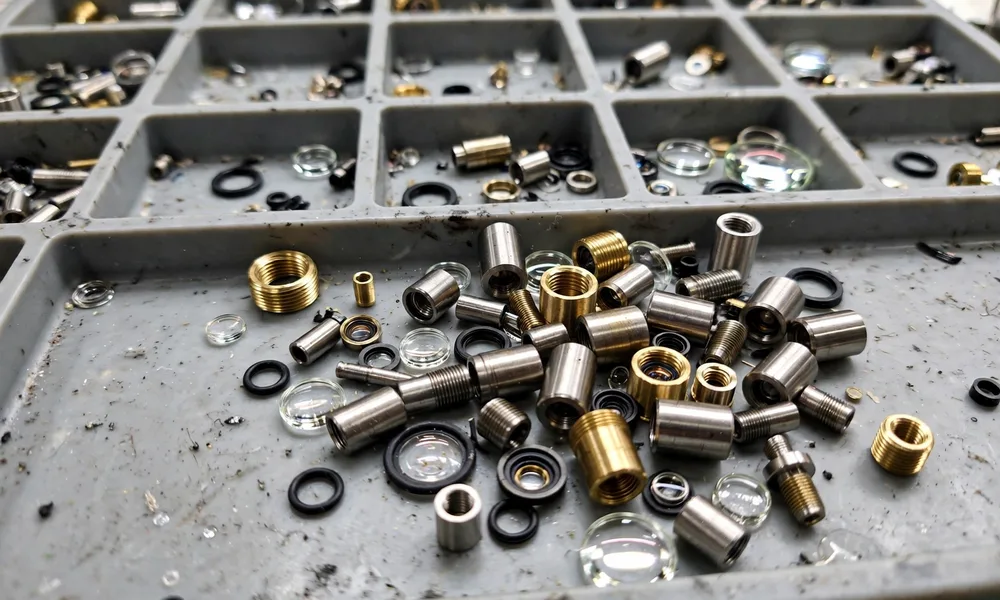
The lens is a small stack of glass elements, each one ground and polished to a curve measured in microns, then coated to resist scratches and water. The elements are made on their own line, where glass is cut, ground against a spinning lap, polished until it is optically perfect, and coated in a vacuum chamber. A coated lens beads water instead of letting it sheet across the glass, which is why footage from a wet camera stays clear.
The elements are stacked into a metal barrel and set into the front of the camera by hand, with the focus fixed so that everything from close up to the horizon is sharp. The lens is then tested by photographing a chart: a computer reads the image and checks the sharpness at the centre and the corners. A lens that is soft at the edges is pulled and rebuilt. The sealed body that will protect this lens is the subject of the guide to how a luxury action camera works, where the lens, the sensor and the processor work together in the field.
Step 3: The shell is moulded, sealed and fitted
The body of a luxury action camera is a single sealed shell, moulded from tough plastic around an aluminium frame. The frame gives the camera its strength, and the plastic gives it its grip and its seal. The buttons are fitted next, each one sealed with a rubber gasket, and the battery door and memory card door are fitted with their own seals.
Sealing is the step that makes or breaks the camera. A bead of adhesive is laid around the shell’s seam, the two halves are pressed together in a jig, and the joint is cured. Then each camera is pressure-tested in a small chamber, where the air pressure is raised and a sensor watches for leaks. A camera that leaks is opened, resealed or scrapped. The full range of toughness and image quality that the finished camera must meet is set out in the guide to luxury action camera specifications explained.
Step 4: The screen, battery and buttons go in
With the shell sealed, the screens are fitted: a touchscreen on the back and a small display on the front, each one covered in toughened glass and bonded to the body so water cannot creep behind it. The touchscreen is tested by tapping it with wet fingers, because a screen that only works when dry is useless on a camera built for rain. The battery, a removable cell of about 1,900 milliamp-hours, is slotted into its hatch, and the contacts are checked for a firm, clean connection.
Step 5: The camera is dropped, frozen and soaked
Now comes the punishment. A sample of every batch is dropped onto concrete from shoulder height, frozen overnight in a cold chamber, and held under water in a pressure tank that imitates a dive to ten metres. The cameras are then opened, dried and tested again, and the seals are inspected for any sign of water. It is a slow, expensive way to make a camera, and it is the reason a luxury model survives what destroys a cheap one.
Every camera, not just the samples, gets a shorter version of the same treatment: a drop onto a padded surface, a spray of water, and a shake test that imitates a ride down a mountain trail. The gyroscope and the stabilisation are checked by moving the camera on a rig while it records, and the footage is watched for smoothness. A camera that stutters on the rig will stutter on a bike, so it never leaves the factory. The same small-chip thinking that steadies this camera also steadies a flying one, as described in the guide to how a luxury drone is made.
Step 6: Software, calibration and the box
The last step is software. Each camera is loaded with its firmware, the program that runs the menus, the stabilisation and the video compression, and it is calibrated: the sensor’s colours are tuned against a chart, the gyroscope is zeroed, and the lens distortion is measured and corrected in software. Two cameras from the same line should produce footage that looks like it came from the same camera, and the calibration is what makes that true.

At a glance
| Part | How it is made | Why it matters |
|---|---|---|
| Sensor | Made in a clean room, soldered, pixel-tested | Clean pictures with no spots or dead pixels |
| Lens | Glass ground, coated, stacked, chart-tested | Sharp from corner to corner, water beads off |
| Shell | Moulded around aluminium, sealed, pressure-tested | Waterproof to about ten metres, no case needed |
| Screens | Toughened glass, bonded, tested wet | Works with wet fingers in the rain |
| Battery | Removable cell, contacts checked | Swapped in seconds on a long day |
| Testing | Dropped, frozen, soaked, shake-tested | Survives the day that destroys a cheap camera |
A luxury action camera typically costs an estimated $400 to $600, and mounts, spare batteries and a protective case add more. The price is not mostly in the parts, which are small, but in the making: the clean-room sensor, the coated lens, the sealed shell and the testing that drops, freezes and soaks every batch. A cheap camera skips the testing, and it shows the first time it meets a rock.
A rare fact: the lens coating on a luxury action camera is applied in a vacuum chamber, one layer of molecules at a time, and the whole coating is thinner than a soap bubble. The machine that applies it costs more than the factory’s assembly line, and it is the same kind of machine that coats the mirrors of telescopes. It is a strange thought, that the glass on a camera built to be dropped on a mountain is finished by a process borrowed from astronomy, but it is the reason the lens survives sand, salt and a hard landing without scratching.
So the next time a little black box rides out a crash on a helmet and keeps recording, remember the bench, the clamp and the screw the size of a grain of sand. A luxury action camera is not poured out of a mould.