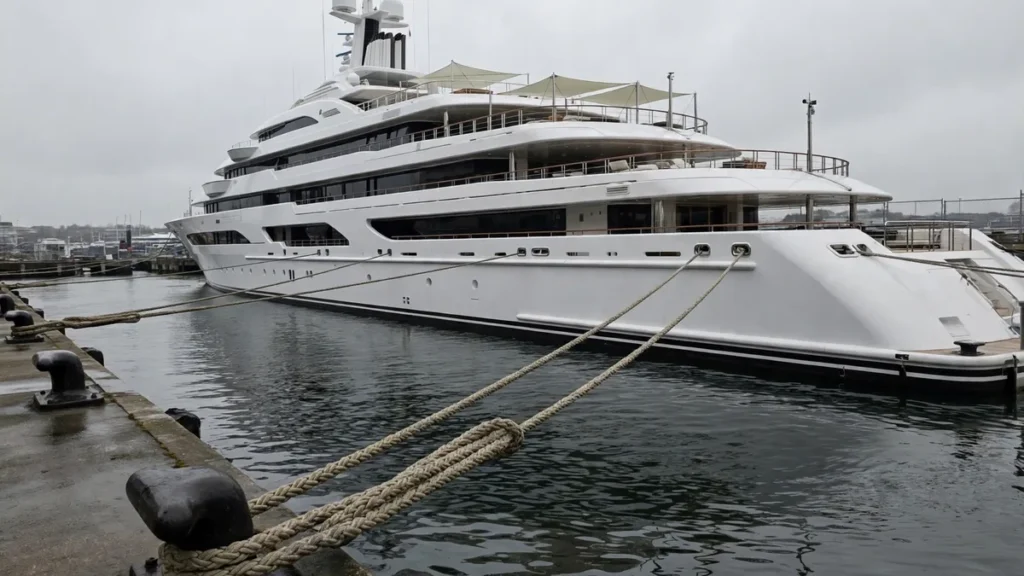
A superyacht gliding sideways into a tight marina berth looks like it is breaking the rules of the sea. The bow slides left, the stern stays put, and the whole vessel eases into a gap barely wider than itself, without a tug in sight and without the captain raising his voice.
The trick is a propeller you cannot see. This is how a luxury bow thruster is made, from a hole cut through the bow to a tunnel, a propeller and a motor that can push a hundred tonnes of yacht sideways.

How It’s Made
Step 1: The tunnel is planned and cut
Every bow thruster begins on paper, long before the hull is finished. Naval architects choose a spot near the bow, low enough that the tunnel stays underwater at any load, and far enough forward that the push turns the yacht instead of shoving it. The tunnel must be round, smooth and exactly the right size, because a rough tunnel wastes thrust and makes a humming noise that guests can hear in their cabins.
Once the hull is built, the tunnel is cut through it. Workers mark the circle on both sides of the bow, cut carefully, and fit a glass fibre or steel tube between the openings. The tube is bonded and faired into the hull until the join is invisible, then painted inside with antifouling paint so weed and barnacles cannot grip it.
Step 2: The propeller is cast and balanced
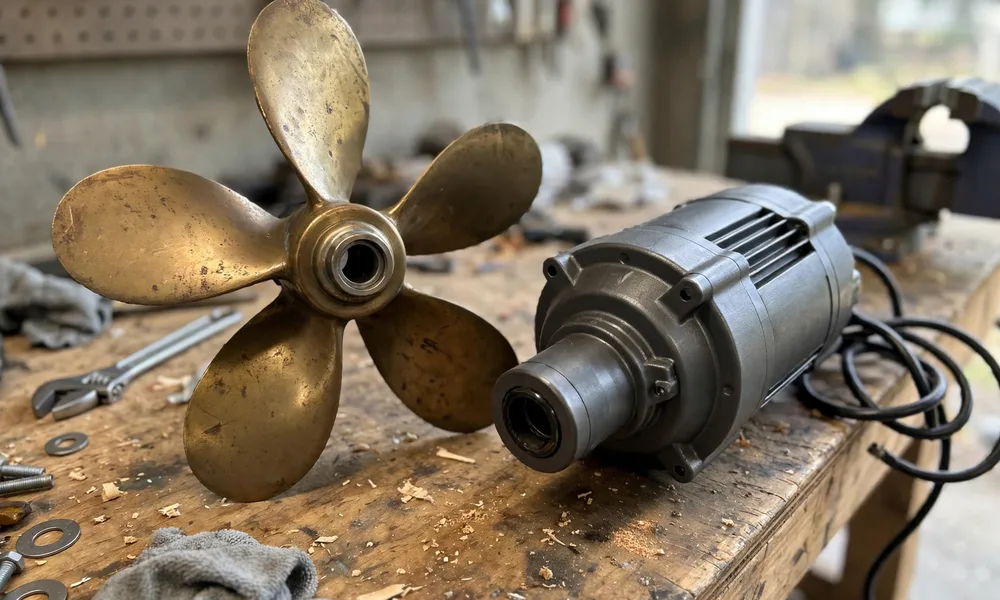
The propeller is the heart of the thruster, usually a bronze casting. Molten bronze is poured into a mould shaped like four or five curved blades, left to cool, then machined until every blade matches the others to a fraction of a millimetre. A blade even slightly heavier than its sisters will shake the whole bow when it spins.
Each propeller is balanced on a rig, spun slowly while sensors watch for wobble, and trimmed until it runs true. The blades are then polished, because a smooth blade pushes water cleanly and a rough one churns it into bubbles. Some luxury thrusters use folding blades, which tuck away when not in use so they do not drag.
Step 3: The motor and gearbox are built
Behind the propeller sits the motor, usually an electric motor sealed inside a waterproof pod on a luxury yacht. It is wound with copper, fitted with bearings that take the sideways load of the propeller, and tested on a bench where it runs for hours at full power. Electric motors are popular here because they start instantly, run quietly, and need no exhaust.
The motor turns the propeller through a gearbox, a small set of gears trading speed for torque, because a thruster propeller must turn slowly and push hard rather than spin fast. The gearbox is oil filled, sealed against seawater, and fitted with a clutch so the propeller can freewheel when off. Motor and gearbox together are heavy, so they are lifted into place with a small crane.
Step 4: The thruster is installed in the tunnel
With the tunnel ready, the thruster unit is lowered into the bow and bolted to strong frames inside the hull. The fit must be exact: the propeller needs only a few millimetres of clearance around its tips, so a unit even slightly off centre will scrape the tunnel wall every time it spins. Workers use laser lines to line it up before the bolts are tightened.
Cables and pipes run back through the yacht, heavy power cables to the motor and cooling lines carrying heat away. The installation is sealed, and the compartment is painted and fitted with a hatch so a mechanic can reach the motor without taking the bow apart. A dry, tidy thruster room is the sign of a well built yacht.
Step 5: The controls and sensors are wired
A bow thruster is driven from the bridge, usually with a small joystick the captain pushes left or right. The joystick talks to a control box near the thruster, which feeds power to the motor in smooth steps instead of one sudden surge. Sudden full power would jolt the yacht and strain the propeller shaft, so the controller ramps up gently.
Sensors watch over the system. One measures motor temperature and shuts the thruster down if it gets too hot, another watches battery voltage, and a third counts running time, because most thrusters are only meant to run for a few minutes at a time. The bridge gets a simple display of thrust, temperature and warnings, so the captain always knows what the hidden propeller is doing.
Step 6: The thruster is tested in the water
The final test happens afloat, in open water away from other boats. The captain pushes the joystick and the bow swings sideways, first gently and then at full thrust, while engineers watch the bow and listen for vibration. The thruster must push evenly both ways, stop quickly when the joystick is released, and run quietly enough not to be heard from the saloon.
Then the yacht is taken into a marina for a real berthing trial, sliding into a tight space using only the thruster and the main engines. If the bow answers the joystick promptly and the yacht holds its line in a crosswind, the thruster is signed off, the tunnel given its final coat of antifouling paint, and the yacht handed to its owner.
| Spec | Detail |
|---|---|
| Tunnel | Round tube through the bow, faired smooth and painted against fouling |
| Propeller | Cast bronze, four or five blades, balanced and polished, sometimes folding |
| Motor | Sealed electric motor in a waterproof pod, instant start and quiet running |
| Gearbox | Oil filled gears trading speed for torque, with a clutch for freewheeling |
| Controls | Bridge joystick with a controller that ramps power up gently |
| Testing | Open water thrust trials, then a real berthing trial in a marina |
The hardest part of building a luxury bow thruster is the noise. A thruster that hums or rattles is heard through the hull in the forward cabins, often the guest cabins, so every part is balanced, every mounting cushioned, and the tunnel smoothed until water flows through silently. A thruster that pushes hard and says nothing is the mark of a good build.
What One Costs
A luxury bow thruster typically costs an estimated $15,000 to $80,000 installed, set mostly by yacht size and thrust needed. A small electric unit for a modest yacht sits near the bottom of the range, while a large hydraulic thruster for a superyacht costs far more. For the bridge it is driven from, how a luxury ship bridge is made follows the helm and its instruments, and the carbon fibre yacht hull specifications show what the tunnel is cut through.
A Rare Fact
A bow thruster can push a superyacht sideways at about walking pace, even though the yacht weighs hundreds of tonnes. The trick is that water is heavy, and a propeller throwing a column of water out of the tunnel gets an equal push back, like a rocket, only slower and quieter.
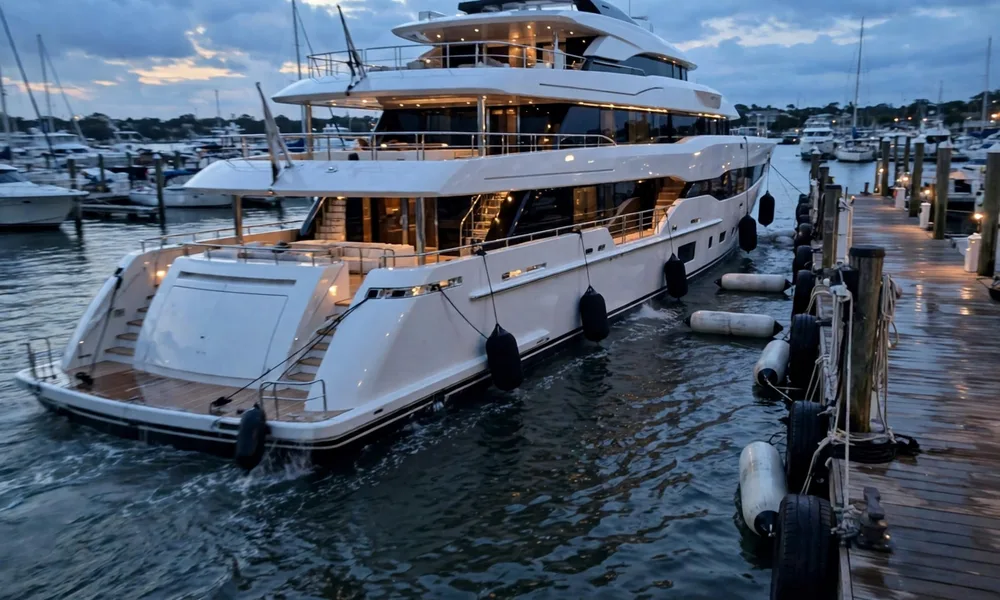
A luxury bow thruster is a hole, a propeller and a motor that let a giant yacht behave like a small boat in a tight spot. It is planned on paper, cast in bronze, balanced to a hair, then spends its life hidden underwater, waiting for the moment the captain needs to slide sideways. For the garage that holds the tender behind it, how a luxury yacht garage works explains the other hidden space in the stern.