A yacht garage is the busiest room on a superyacht, and the least glamorous. It holds the tender that carries guests ashore, the jet skis, the diving gear, the kayaks and the spare parts, and it has to launch them all into the sea and get them back again, safely, in weather that would keep a small boat in harbour.
The garage is also a machine in its own right, with a door that opens onto the sea, a crane that lifts tonnes over open water, and a floor that drains itself dry. This is how a luxury yacht garage works.
How It Works
Step 1: The garage is built into the hull with a sea door
The garage starts as a space carved into the hull, usually low down near the stern, where the water is closest and the deck above can carry a crane. The opening is closed by a sea door, a large steel panel that seals flush with the hull when the yacht is under way, keeping the sea out and the lines of the yacht clean.
When the yacht anchors, the door opens, sometimes swinging down to become a loading platform, sometimes sliding up into the deck above, and the garage becomes a small dry dock at the waterline. The door is driven by hydraulic rams, sealed with heavy rubber gaskets, and tested to hold back the sea in a storm, because a leaking sea door is a serious problem for any yacht.
Step 2: The tender is launched by crane or slipway
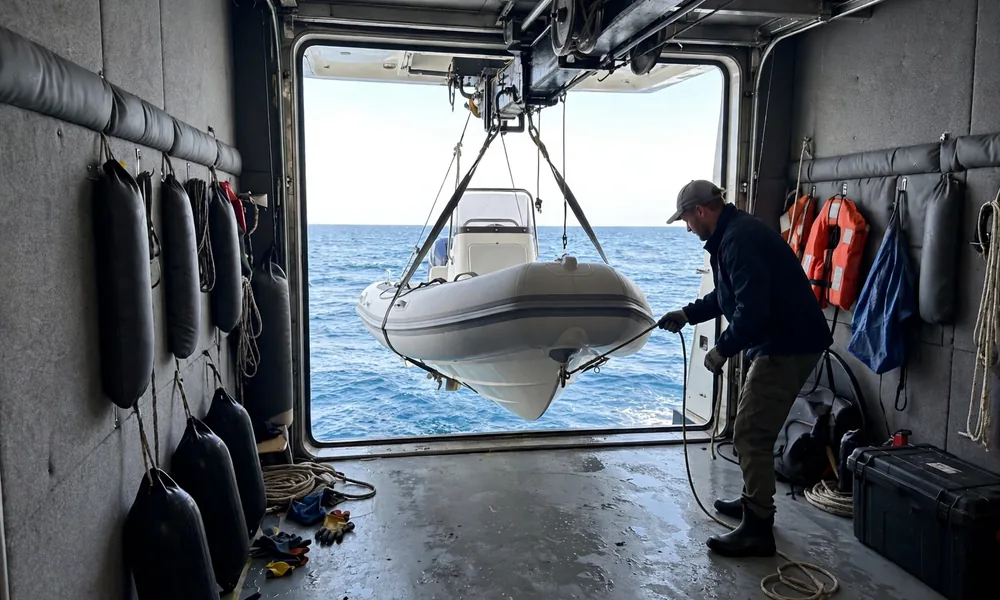
Launching the tender is the garage’s main job, and there are two ways to do it. On larger yachts a hydraulic crane lifts the tender from its cradle, swings it out over the water and lowers it gently onto the sea, with the crew guiding it by hand and by radio. On smaller yachts the tender sits on a slipway, a set of rails that run down to the water, and it is winched down into the sea.
Step 3: Cradles, chocks and lashings hold everything still
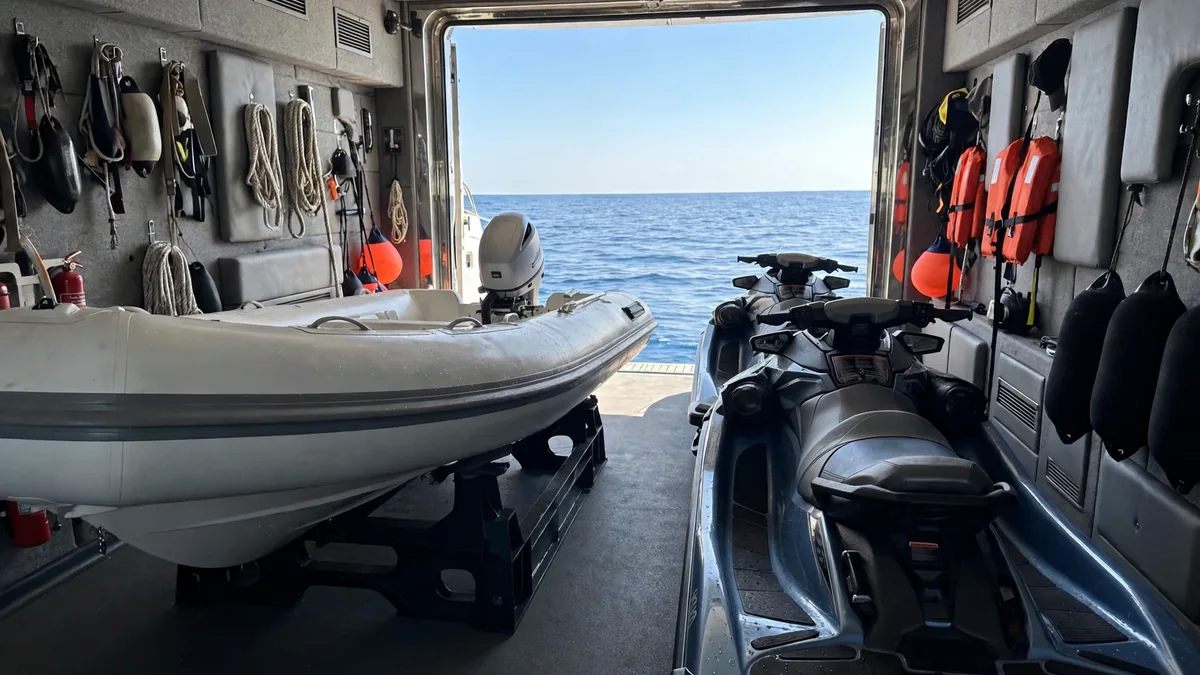
Once the tender is back aboard, it has to stay put, and the garage is built to hold it. The tender sits in a cradle shaped to its hull, with padded chocks under the keel and lashings that run from the deck to strong points on the boat, tightened until nothing can shift in a roll. Jet skis sit in their own smaller cradles, and kayaks and paddleboards hang from racks on the walls.
Every item has its own marked place, painted on the floor or labelled on the rack, so the crew can stow the garage in the dark and in a hurry. A loose jet ski in a storm would do serious damage to the hull and to everything around it, so the lashings are checked before every departure, and again after the first hour at sea. The crew mark every lashing point with paint, so a new crew member can stow the garage correctly on their first day, and a quick walk around the room is enough to confirm that everything is secure.
Step 4: The floor drains, washes and dries itself
A garage that launches boats is a wet room, and its floor is built to cope. The deck is slightly sloped toward large scuppers, so seawater runs out on its own, and a washdown system lets the crew hose the whole room clean with fresh water after a launch, washing away the salt before it can corrode the equipment.
Step 5: Fuel, charging and maintenance happen in the same room
The garage is also the yacht’s small workshop for its toys. A fuel station with its own tanks and vapour extraction lets the crew refuel the tender and the jet skis safely, with fire suppression overhead and no smoking anywhere near the room. Electric toys charge from dedicated outlets, and a workbench with tools sits at the back for repairs.
Step 6: The garage is closed, sealed and checked before sailing
The last job before the yacht gets under way is the closing of the garage. The crew check that every item is lashed, every locker is shut, and the floor is dry, then the sea door is closed and its seals are checked, and the crane is stowed and locked in its own cradle. A sensor on the door reports its state to the bridge, so the captain knows the garage is sealed before the yacht moves. If a sensor shows the door is not fully sealed, the bridge sounds an alarm and the yacht stays at anchor until the crew have found and fixed the fault.
At sea the garage is checked again on the crew’s rounds, listening for anything that has worked loose and watching for water where it should not be. A well-run garage is silent and dry, and the crew take pride in keeping it that way, because the tender it protects is the yacht’s only way ashore.
| Spec | Detail |
|---|---|
| Location | Low in the hull near the stern, close to the waterline |
| Sea door | Hydraulic steel door, sealed flush with the hull when under way |
| Launching | Hydraulic crane or slipway winch for the tender, guides and fenders |
| Stowage | Shaped cradles, padded chocks and lashings for tender and jet skis |
| Floor | Sloped non-slip deck with scuppers, washdown and oil separator |
| Services | Fuel station, charging points, workbench and dive compressor |
The hardest part of a yacht garage is that it has to be two rooms that hate each other: a dry, safe store for expensive boats and toys, and a wet, open dock that lets the sea in. The sea door, the drains and the cradles are the compromise that makes both possible, and when they work well, the garage feels like nothing more than a tidy workshop, with the ocean waiting just outside the door.
What One Costs
A luxury yacht garage typically costs an estimated $400,000 to $1.5 million to build and fit out, and the price is set mostly by the sea door, the crane and the tender itself rather than the size of the room. A compact garage with a slipway and a small tender sits near the bottom of the range, while a large garage with a heavy crane, a big tender and a fleet of jet skis costs far more. The tender alone can cost more than the garage around it, and how a yacht tender works explains the boat that lives inside it, while how a luxury yacht helipad is made shows the other launch and landing space on the same yacht.
A Rare Fact
Some superyacht garages hide a second use: when the tender is away, the empty garage can be flooded to knee depth and turned into a private plunge pool or a dive platform, with the sea door acting as the edge of the pool and the crew watching from the deck above.
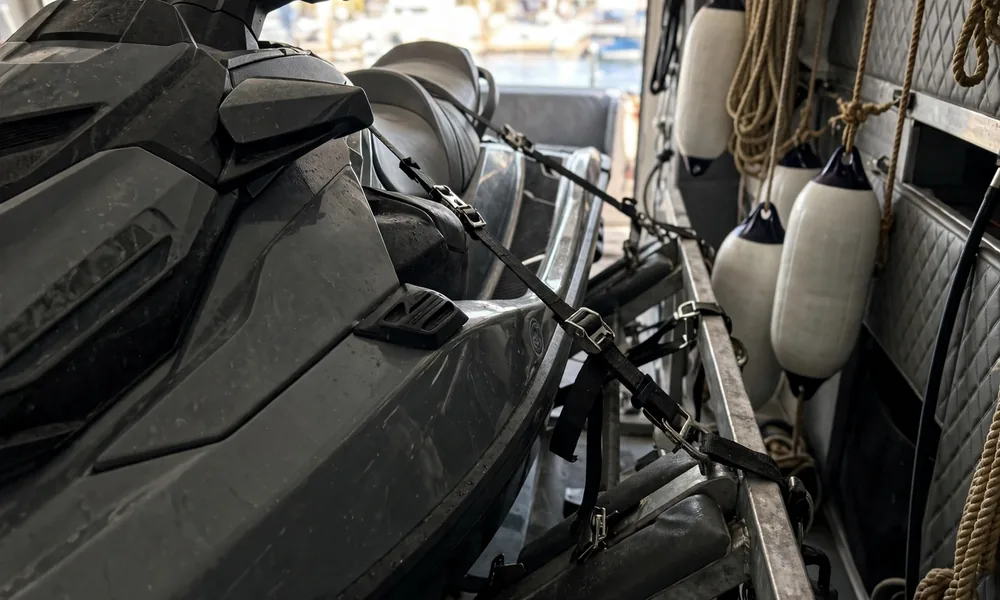
A luxury yacht garage is a sea door, a crane and a set of cradles, built to launch boats into the ocean and bring them home again without a scratch. It is the hardest-working room on the yacht, and the one the guests almost never see. For the system that keeps it steady while a tender is lifted over open water, how a yacht stabilizer works explains the fins below the hull that calm the whole vessel.