A luxury camera does something remarkable: it catches a moment that will never happen again and keeps it forever. A child’s laugh, a mountain at dawn, a street in the rain, all of it frozen in a single frame. The best cameras do this so well that the photograph feels more real than the memory, with colours, details and light that the eye alone could never hold onto.
Inside a luxury camera there is no magic, just light, glass and a sensor that counts photons with extraordinary care. Here is how a luxury camera works, from the light entering the lens to the photograph appearing on the screen.

How It Works
Step 1: The lens and the light
Everything starts with the lens, a tube of precisely ground glass elements that bends light and focuses it onto the sensor. A luxury lens is made from special glass, with coatings that cut reflections and flare, and it is assembled by hand in a clean room where a speck of dust can ruin the whole thing. The aperture, a set of blades inside the lens, opens and closes to control how much light gets through, like the pupil of an eye. A wide aperture lets in lots of light and blurs the background, while a narrow one keeps everything sharp from front to back.
Step 2: The sensor and the image
Behind the lens sits the sensor, a chip covered in millions of tiny light-sensitive points called pixels. When light hits a pixel, it creates a small electrical charge, and the stronger the light, the bigger the charge. A luxury full-frame sensor is about the size of a 35mm film frame, much larger than the sensor in a phone, which is why it captures more light, more detail and less noise in dark conditions. The sensor reads its pixels in a fraction of a second, turning a scene of light into a grid of numbers.
Step 3: The shutter and the timing
The shutter controls how long the sensor is exposed to light. A fast shutter, like 1/4000th of a second, freezes a bird in flight, while a slow shutter, like a full second, turns a waterfall into a soft blur. Luxury cameras use an electronic shutter with no moving parts for silent shooting, or a mechanical shutter with curtains that sweep across the sensor with remarkable precision. The full specifications of a luxury camera explain how shutter speed, aperture and sensitivity work together, and why changing one means changing the others too. Getting the timing right is the heart of photography.
Step 4: The autofocus and the eye
Modern luxury cameras focus with a system that is almost alive. Hundreds of focus points cover the sensor, and a processor tracks eyes, faces, animals and vehicles, holding them sharp even as they move across the frame. Some cameras can focus on a bird’s eye in flight, or a person’s eye through a crowd, in a few hundredths of a second. The lens moves its glass elements with tiny, silent motors, and the camera checks and corrects the focus many times a second. The story of how a luxury laptop works shows the same kind of thinking in a different machine, with a processor doing thousands of small jobs at once so the user never has to wait.
Step 5: The processor and the picture
Once the sensor has captured the light, a powerful processor turns the raw numbers into a photograph. It corrects the colours, removes noise, sharpens the details and applies the photographer’s chosen style, all in a fraction of a second. The processor can shoot ten or twenty frames a second, tracking a moving subject the whole time, and it can record video in resolutions so high that a single frame looks like a photograph. The full specifications of a luxury smartphone show how the same ideas appear in a phone, though a dedicated camera still wins on sensor size, lens quality and control. The finished image is saved to a memory card, ready to be shared or printed.
Step 6: The stabilisation and the hand
A luxury camera also fights the shake of the photographer’s own hands. A stabilisation system moves the sensor, or elements in the lens, in the opposite direction to any movement, cancelling out the wobble and letting the photographer shoot sharp images at slow shutter speeds without a tripod. Some systems give five or six extra stops of steadiness, which means a shot that would need a tripod can be taken handheld in dim light. It is a quiet piece of engineering, invisible in use, that makes the difference between a blurred photograph and a keeper.

Camera Specifications
| Specification | Typical Luxury Camera |
|---|---|
| Sensor | Full-frame, 45 to 60 megapixels |
| Lens mount | Interchangeable, metal bayonet |
| Shutter speed | 1/8000 to 30 seconds |
| Autofocus points | 500 to 1,000, eye and subject tracking |
| Video | 8K video, 30 frames per second |
| Stabilisation | In-body, 5 to 6 stops |
| Battery life | 400 to 700 shots per charge |
The Price
A luxury camera body costs an estimated $4,000 to $7,000, and a good lens can cost as much again, with professional lenses running to an estimated $2,000 to $3,500 each. A single battery charge can last a full day of shooting, and a spare fits in a pocket. A full kit, with two or three lenses, memory cards and a bag, can reach an estimated $10,000 to $15,000. Running costs are low, with only the occasional sensor clean and a new battery every few years, but photographers often spend far more on lenses over time than they ever spent on the camera itself.
A Rare Fact
Some luxury lenses are made from glass that takes months to cool. The glass is melted, poured and then left to cool so slowly that it does not crack or develop tiny stresses inside, because even a small flaw would bend the light and soften the photograph. A single large lens element can take weeks to make, and the whole lens is assembled by a small team of specialists who test every element by hand. It is slow, patient work for a machine that captures moments in a thousandth of a second.
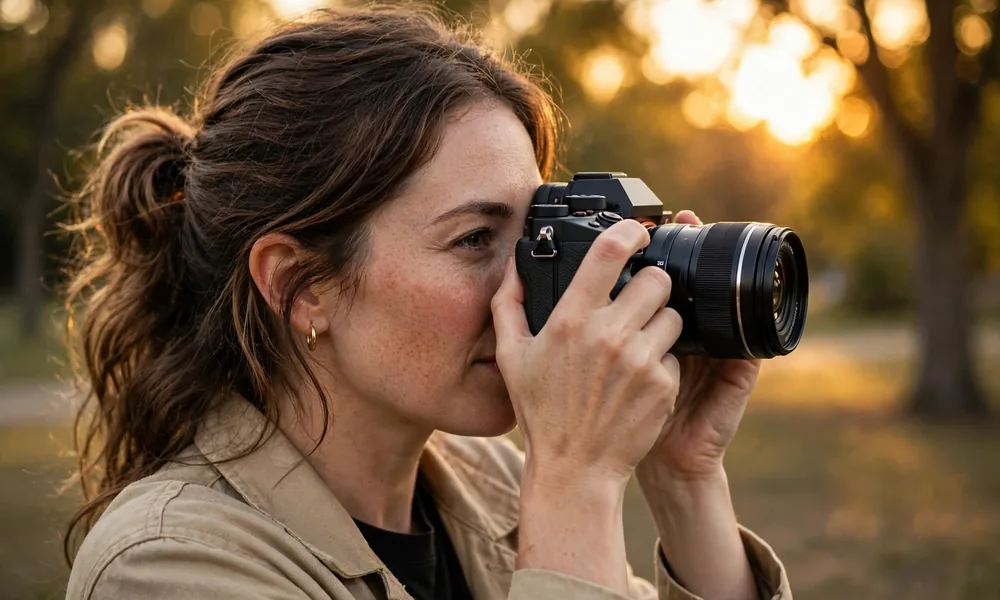
Photographers often say the camera matters less than the eye behind it, and there is truth in that. But a good camera removes the obstacles between seeing and keeping: it focuses fast enough, it handles dim light well enough, and it stays out of the way while the photographer works. The best photographs still come from patience, from waiting for the light and the moment to meet, and a luxury camera simply makes sure that when the moment arrives, nothing is lost.
A luxury camera works because it respects light. Its lens gathers it, its sensor counts it, its shutter times it and its processor turns it into a picture. There is no shortcut to a good photograph, just glass, patience and engineering working together in a box small enough to carry anywhere. When the shutter clicks and the image appears on the screen, a moment that is already gone is kept safe, and that is why people still carry cameras in a world full of phones.