A headrest looks like the simplest part of a luxury car seat, a small cushion on two metal posts, and most passengers never give it a second thought. They lean back, it meets the back of the head, and the journey goes on without anyone noticing it was there at all.
That invisibility is the point. A luxury headrest is shaped, padded and stitched to hold the head in exactly the right place, to soften a sudden stop, and to match the leather around it stitch for stitch. This is how one is made, from a bare steel frame to the finished cushion on the seat.
How It’s Made
Step 1: The steel frame is bent and welded
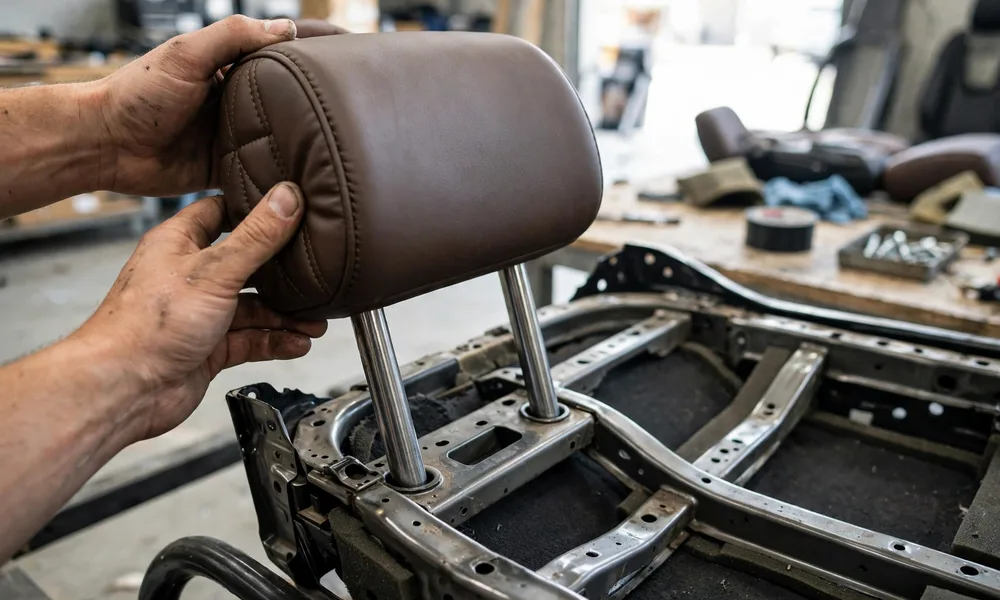
Every headrest starts as steel. Two posts are cut from hollow steel tube, bent to the gentle curve the seat needs, and welded to a small cross frame that will carry the padding. The bend matters more than it looks, because it sets the angle at which the cushion meets the back of the head.
The frame is then checked against a template and tested for strength, since it must hold firm in a rear impact and keep the head from snapping back. Once it passes, the bare steel is coated against rust and set aside, a skeleton waiting for its soft layers. The posts are made in pairs, left and right, because a headrest that leans even slightly to one side will be noticed every time the driver glances in the mirror.
Step 2: The foam is moulded to the shape of a head
Next comes the foam, and it is not a single block. A firm foam core gives the headrest its shape and its crash protection, while a softer outer layer makes it comfortable to lean against for hours. The two are moulded together in a heated press that holds the curved shape as the foam sets.
Each mould is shaped for a particular seat, with a wider lower section that supports the neck and a crown that cradles the head without pushing it forward. The foam is trimmed by hand after moulding, and any piece with a lump, a hollow or a torn edge is thrown away.
Step 3: The leather is cut and matched
The leather arrives as full hides, and a cutter lays them out under bright light to find the cleanest, most even sections. The headrest needs only a small piece, so the best grain goes to the front face, the part a passenger’s head actually touches, while plainer sections are kept for the back. A single headrest uses so little leather that the cutter can afford to be picky, choosing only the smoothest stretch of the hide for the face.
Each panel is cut with a steel die or a sharp knife, and the pieces are matched so the grain runs the same way across the front and the sides. A headrest cut from two hides that do not match will show a faint line in sunlight, and in a luxury cabin that is enough to reject it.
Step 4: The cover is stitched and piped
Stitching is where the headrest starts to look like luxury. A sewer joins the panels on an industrial machine, keeping the seams straight and the stitch length even, and adds the piping cord that outlines the cushion and gives it a tailored edge. In many cars the stitching is a contrast colour, which shows every wobble.
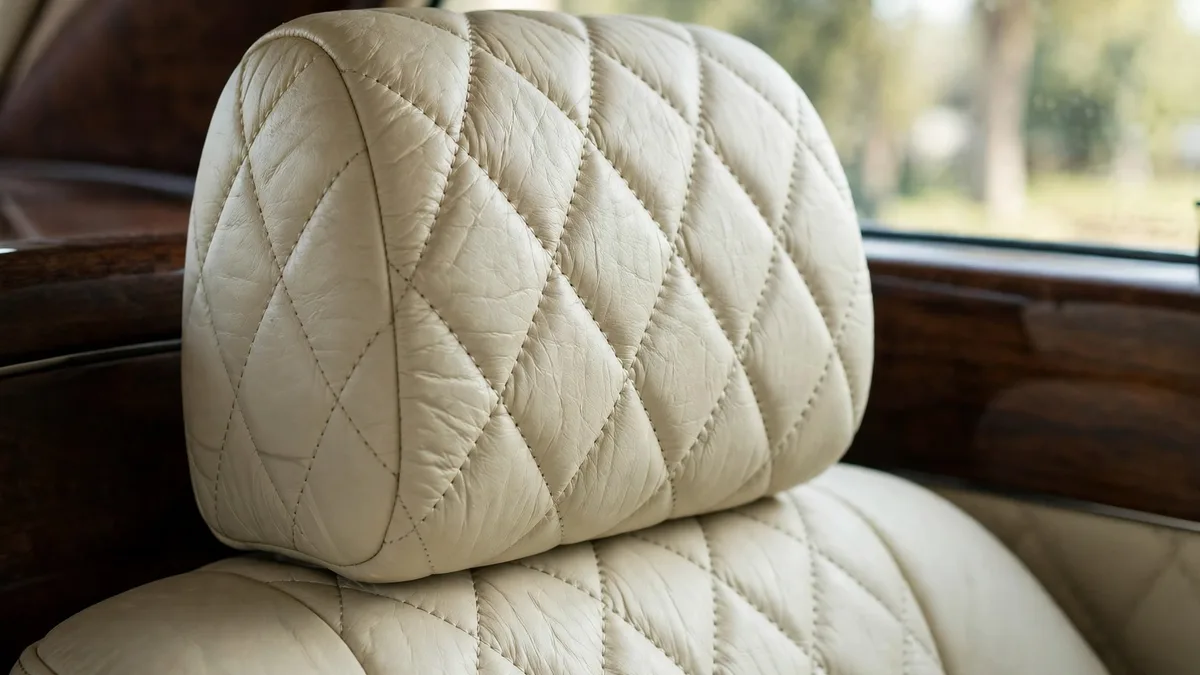
Quilted headrests take longer, with the diamond pattern stitched through the leather and a thin padding layer before the panels are joined. The finished cover is turned right side out and checked under light, and any stitch that wanders is unpicked and done again. The thread itself is chosen to match the seat exactly, and on some cars it is waxed so the stitches stay tight through years of sun and cleaning.
Step 5: The cover is pulled over the foam and fitted
Fitting the cover is skilled hand work. The leather is warmed so it stretches, then pulled over the foam core and worked into the curves with palms and small tools, so there are no wrinkles at the corners and no loose skin on the face. The posts slide through slots in the back of the cover.
Once the cover sits tight, the underside is closed with clips or a stitched seam, and the headrest is pressed and smoothed one last time. It should feel firm when pushed and soft when leaned on, with the leather taut like a drum skin but never stretched thin.
Step 6: The headrest is tested, adjusted and matched to the seat
The last step is testing. The headrest is slid onto its seat, raised and lowered through its full range, and checked for a smooth action with no rattle. The height lock must hold under a sharp push, and the tilt, where the seat offers it, must stay where it is set. A headrest that slips down on its own is worse than useless, so the lock is tested with a sharp tug before the seat leaves the bench.
Finally the headrest is held beside the seat it will live on, and the colour, grain and stitching are compared in daylight. Only when the two match perfectly does the headrest leave the bench, ready to be fitted to the car and forgotten about by everyone except the person leaning on it.
| Spec | Detail |
|---|---|
| Frame | Bent hollow steel tube posts welded to a cross frame, rust coated |
| Padding | Firm moulded foam core with a softer outer layer, hand trimmed |
| Cover | Matched-grain leather, piped edges, contrast stitching or diamond quilting |
| Adjustment | Height slide with locking notches, tilt on some models, no rattle |
| Safety role | Limits head movement in a rear impact to reduce whiplash injury |
| Matching | Colour, grain and stitching checked against the seat in daylight |
The hardest part of making a headrest is its size. A seat has room for thick padding and broad panels, but a headrest must do the same job in a cushion barely wider than a hand, holding the head safely while still feeling soft, and matching the leather around it exactly.
What One Costs
A replacement luxury car headrest typically costs an estimated $400 to $2,500, set mostly by the leather, the stitching and whether it carries heating, speakers or powered adjustment. A plain leather headrest sits near the bottom, while a quilted one with built-in speakers costs far more. The seat it sits on is the bigger investment, and how a luxury car seat works explains the motors and air bladders hidden inside it, while how luxury car leather is made follows the hides from tannery to cabin.
A Rare Fact
Some luxury headrests hide small speakers inside the foam, so the driver can hear navigation prompts and phone calls close to the ear without filling the whole cabin with sound, and the speakers are tuned so the passenger beside them barely hears a thing.
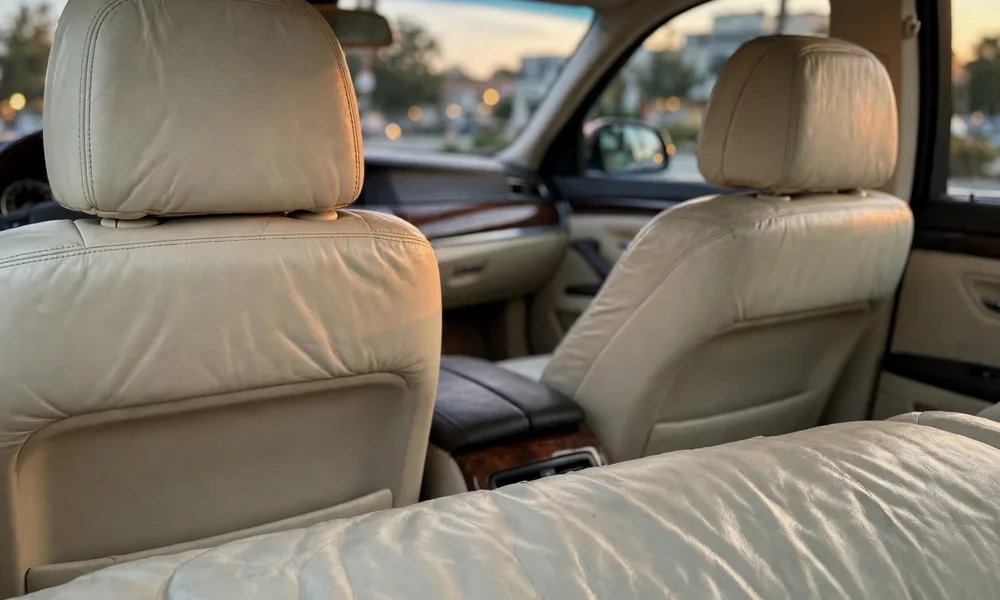
A luxury car headrest is a bent steel frame, a two-layer moulded foam core, matched-grain leather stitched and piped by hand, and a height lock tested until it never rattles. It is the smallest upholstered part in the cabin, and the one your neck notices first. The wheel in front of the driver gets the same treatment, and how a luxury steering wheel works shows what hides inside the rim.