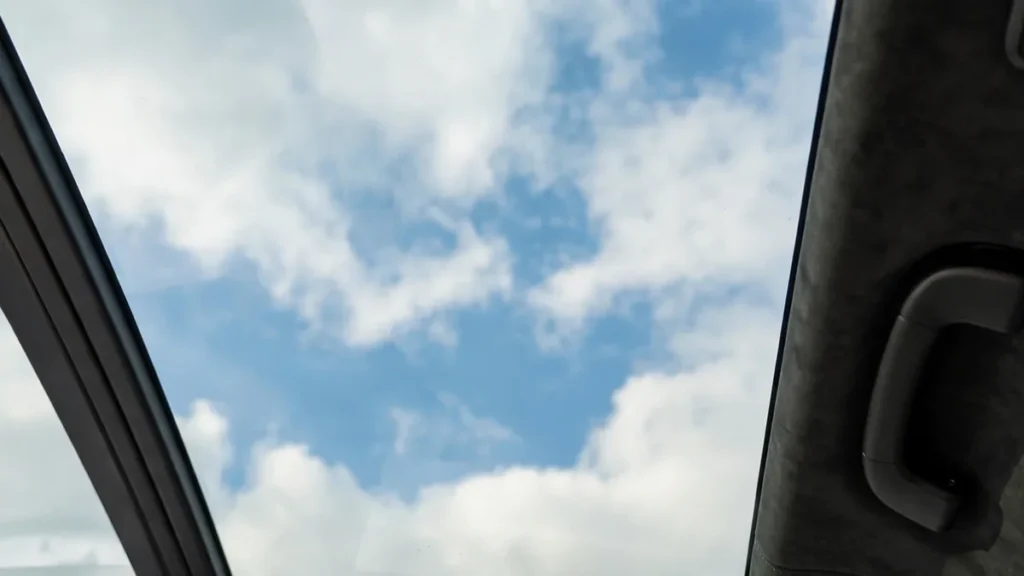
A luxury car sunroof turns a closed cabin into an open sky, and it does it with a single touch. You press a button, a blind slides away, a glass panel glides back, and suddenly the car feels bigger, lighter and closer to the world outside. On a summer evening the air comes in, on a winter morning the sun warms the seats, and on a rainy night the glass keeps the weather out while the rain patters above you.
Behind that simple movement is a careful machine. The glass must slide smoothly, seal tightly, drain away rain and stop at once if a hand gets in the way, and it must do all of that in a roof that also has to be strong in a crash. This is how a luxury car sunroof works, from the motor that moves it to the seal that keeps the rain out.
How It Works
Step 1: The motor drives the glass along rails
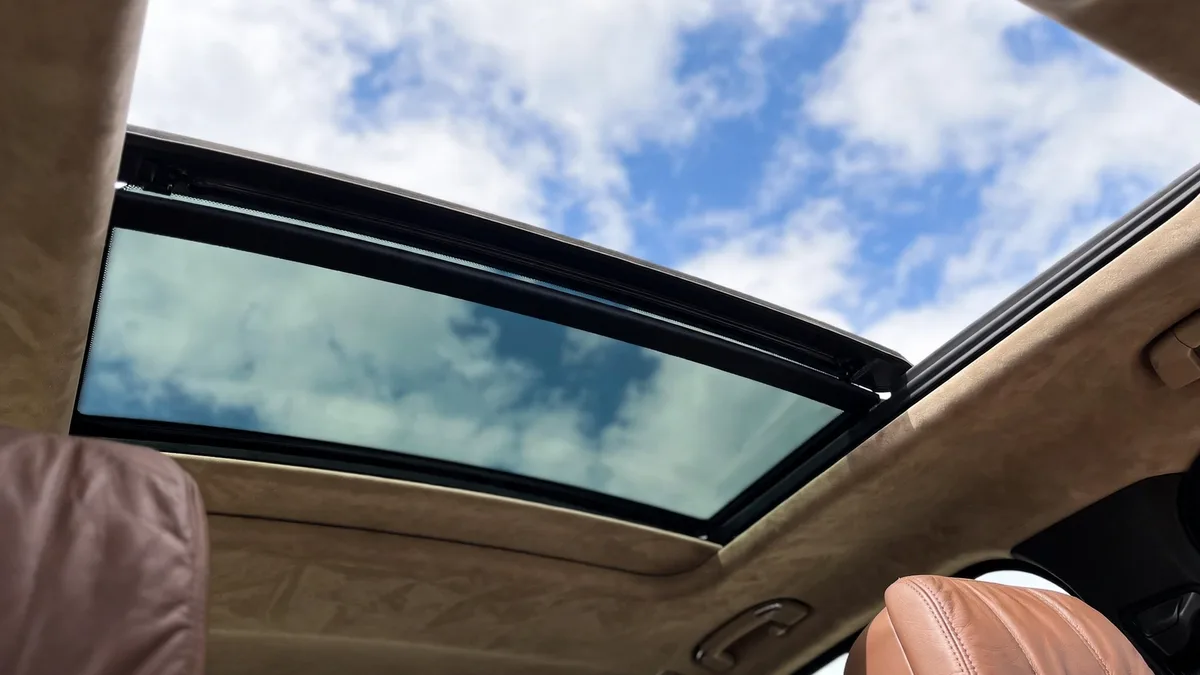
The sunroof glass sits in a frame with rails on either side, and a small electric motor drives it along those rails with a cable, like a curtain on a track. The motor is strong enough to move the heavy glass, but gentle enough to stop if it meets resistance, and it is mounted in the roof where it can be heard only as a soft hum. The rails are greased and fitted with felt strips, so the glass slides without a rattle.
Step 2: The glass tilts up for fresh air
The first movement most drivers use is the tilt, where the back edge of the glass lifts up like a vent. The motor drives the glass up by a few centimetres, letting stale air out and fresh air in without the wind noise of a fully open roof. The tilt is quiet, it works at motorway speed, and it is the position many owners leave the roof in on a long drive.
Step 3: The glass slides back to open the sky
When you want the full sky, the glass slides back over the rear part of the roof, or down inside it, opening a wide hole above the cabin. The motor pulls the glass along the rails, and a wind deflector pops up at the front edge, a small mesh screen that breaks the airflow and stops the buffeting that makes an open roof noisy. Without the deflector, the cabin would thump with wind at speed.
The glass moves slowly enough to be safe and fast enough not to try your patience, taking a few seconds from shut to fully open. It can stop at any point along the way, so the driver can open it a crack on a cool day or all the way on a warm one, and it stays where it is put, held by the motor and the rails.
Step 4: The blind slides away and back
Under the glass sits a blind, a fabric panel that slides across the roof to block the sun. The blind is driven by its own motor or by hand, and it moves on the same rails as the glass, gliding smoothly across the opening. When the sun is strong, the blind closes and the cabin stays cool, and when the sky is clear, the blind slides away and the glass lets the light in.
Step 5: The seal and drains keep the rain out
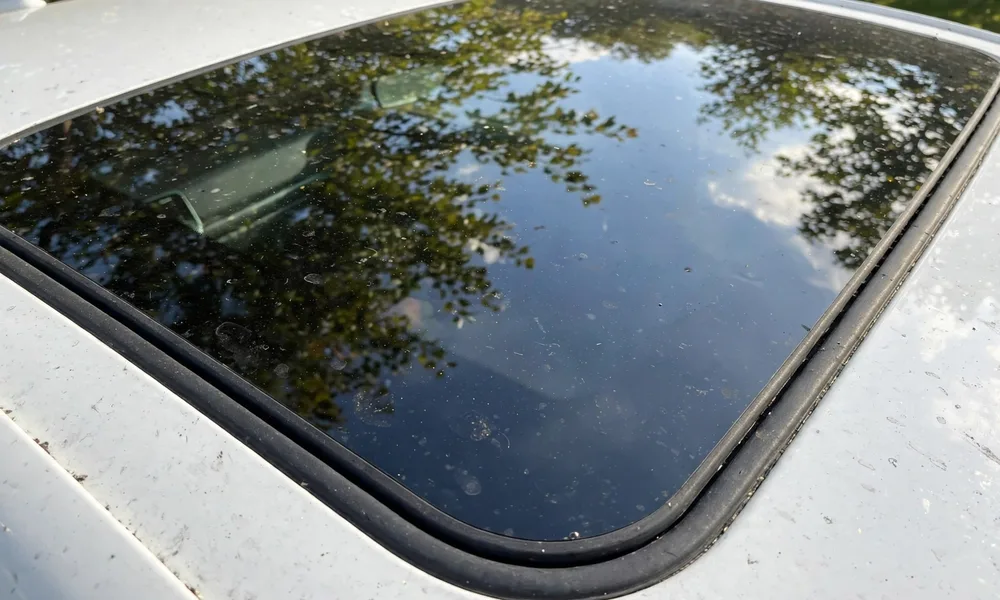
The most important job of the sunroof is keeping the rain out, and it does it with a rubber seal and a set of drains. The seal runs around the edge of the glass, pressing against the roof frame when the roof is shut, and it is shaped to squeeze water away from the opening. The seal is made from soft rubber that stays flexible in cold weather, because a seal that hardens in winter will leak in spring.
Any water that does get past the seal is caught in a channel around the frame and carried away by four drain tubes, one at each corner, that run down through the pillars of the car and out underneath. The drains are tested by pouring water into the channel and watching it come out below, because a blocked drain will fill the roof and drip onto the seats.
Step 6: The safety sensor stops the glass
The last part of the job is safety. The sunroof has a pinch sensor that watches the motor, and if the glass meets resistance, a hand, a head or a bag, the motor stops at once and reverses, opening the roof again. The sensor is tested with a soft block placed in the path of the glass, and the force is measured to make sure it is gentle enough not to hurt a child.
| Spec | Detail |
|---|---|
| Glass | Toughened glass panel that slides and tilts on rails |
| Motor | Electric motor with a cable drive and position memory |
| Wind deflector | Mesh screen that pops up to stop wind buffeting |
| Blind | Fabric panel that slides across to block sun and heat |
| Seal | Soft rubber seal around the glass that squeezes water away |
| Drains | Four drain tubes that carry water down and out of the car |
The hardest part of making a luxury car sunroof work is the balance between openness and dryness. The roof must open wide enough to make the cabin feel like the outdoors, yet seal tightly enough that no rain ever gets in, and it must do both through years of sun, frost and dust, without ever rattling, sticking or leaking. A roof that leaks ruins the car, and a roof that sticks ruins the day, so the makers test the seal and the motor until the roof feels like a window in the sky. The glass, the rails and the seal work together every time the button is pressed, and the driver only ever sees the sky.
What One Costs
A luxury car sunroof typically costs an estimated 1000 to 2500 dollars as an option, set mostly by the size of the glass, the motor, the blind and the sealing. A small tilt roof sits near the bottom, while a full panoramic roof that stretches over both rows costs far more. The same care runs through the rest of the cabin, and the way a luxury car convertible roof is made shows how an open top car is built, while the way a luxury car headrest is made explains the part you lean on under the glass.
A Rare Fact
Some luxury sunroofs can close themselves when it rains. A sensor on the windscreen feels the first drops, and the roof slides shut on its own while the car is parked, so the seats stay dry even if the owner forgot the roof was open.

A luxury car sunroof works by turning a hole in the roof into a window on the sky: a motor slides the glass, a deflector calms the wind, a blind tames the sun, and a seal with four drains keeps the rain outside. It is a roof with a large job, opening the cabin to the world and closing it again at a touch. The same quiet engineering runs through the rest of the cabin, and the way a luxury car infotainment is made shows how the screen beside the roof switch is built to the same careful standard.