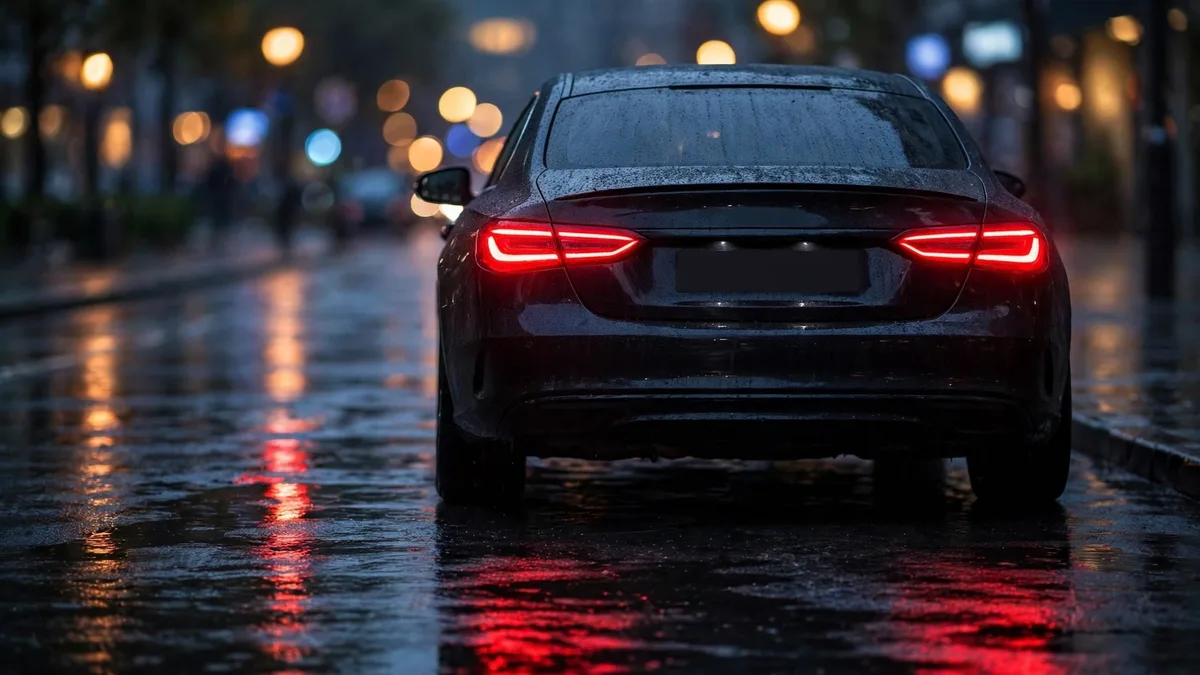
A luxury car taillight is the part of the car that talks to everyone behind you, and it does it without a word. In daylight it is a slim red strip, at night it glows, when you brake it flares bright, and when you turn it flashes in a neat sweep. Other drivers read those signals in a split second, and they trust them with their lives, so the light must be bright, clear and instant, every single time.
Behind the red lens is a small world of light. There are no old bulbs to burn out, only rows of tiny LEDs, a guide that spreads their light evenly, and a brain that decides how bright each one should be. This is how a luxury car taillight works, from the first LED to the brake light that warns the car behind.
How It Works
Step 1: The LEDs light up in rows
The heart of the taillight is a row of light emitting diodes, small chips that make light when current flows through them. They are mounted on a circuit board inside the lamp, dozens of them in a line, and each one is chosen to give the same red colour and the same brightness. A single dim LED would show as a dark spot in the strip, so the chips are sorted and matched before they are fitted.
The LEDs switch on in a fraction of a second, far faster than an old bulb, and that speed matters. At motorway speed, a brake light that lights up a fifth of a second sooner gives the driver behind several metres of extra warning, and that distance can be the difference between a near miss and a crash.
Step 2: The light guide spreads the glow
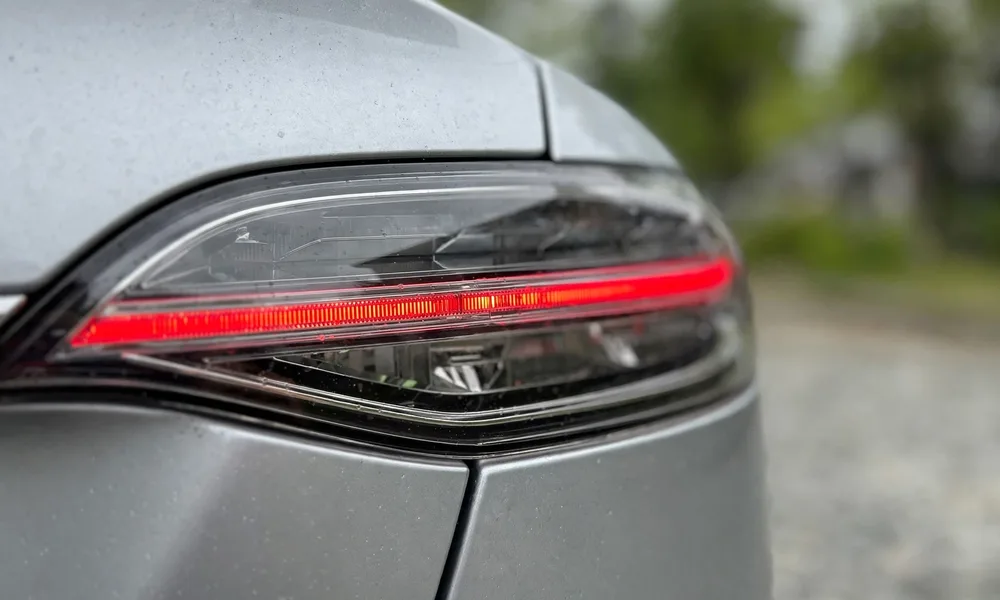
The LEDs themselves are small points of light, but the taillight must glow as one smooth strip, so their light is fed into a clear plastic guide. The guide is shaped with tiny ridges that catch the light and spread it along its length, turning a row of bright dots into an even red line. The shape is worked out on a computer and then tested in the dark, because a guide that leaks light in one place will show a bright patch.
The lens over the guide is moulded from red tinted plastic, polished to a clear shine. It protects the LEDs from rain and dust, and it shapes the light so it can be seen from the side as well as from behind. A lens that clouds over with age would dim the whole lamp, so the plastic is coated to resist sun and scratches.
Step 3: The brake light flares brighter
When you press the brake pedal, a signal runs from the pedal to the taillight, and the LEDs are driven harder, flaring from a soft glow to a bright warning. The change is instant, and the brightness is set by law, bright enough to be seen in full sun, but not so bright that it dazzles at night. The lamp is tested in a dark room with a light meter, to make sure the flare is even across the whole strip.
Step 4: The indicator sweeps across
The indicator is the most theatrical part of the lamp. Instead of flashing on and off, the LEDs light up one after another in a sweep, running from the inside of the car to the outside, in the direction of the turn. The sweep is timed to be easy to read at a glance, and it is repeated until the driver cancels the signal or the wheel straightens.
Step 5: The lamp checks itself for faults
Every time the car starts, the taillight runs a quiet self check. The circuit board measures the current through each group of LEDs and compares it with what it expects, and if a group draws too little current, the car knows an LED has failed. A warning appears on the dashboard, telling the driver which lamp needs attention, and the remaining LEDs are driven a little harder to keep the light bright.
Step 6: The seal keeps the rain out
The last part of the job is keeping the weather out. The lens is sealed to the housing with a gasket and glue, and the whole lamp is tested in a rain chamber, sprayed with water from every angle while the lights run. Any lamp that lets in even a drop is rejected, because water inside a lamp will fog the lens, corrode the board and kill the LEDs.
The wiring is sealed too, with a connector that clicks into the car body and a vent that lets the lamp breathe without letting water in. When the lamp is finally bolted to the car, it is washed, dried and lit one last time, and only a lamp that glows evenly, brakes brightly and sweeps cleanly is allowed to leave the factory.
| Spec | Detail |
|---|---|
| LEDs | Matched red LED chips on a circuit board, fast to light |
| Light guide | Clear plastic guide that spreads light into a smooth strip |
| Brake light | LEDs driven harder on braking for a bright warning |
| Indicator | LEDs sweeping outward in the direction of the turn |
| Self check | Circuit board that spots a failed LED and warns the driver |
| Seal | Gasket and glue that keep rain and dust out of the lamp |
The hardest part of making a luxury car taillight work is the balance between brightness and beauty. The lamp must be bright enough to be seen in full sun and at night, yet slim enough to look like a strip of jewellery on the back of the car, and it must do all of that for years without a single LED fading or a single drop of water getting in. A lamp that is bright but ugly ruins the car, and a lamp that is pretty but dim endangers it, so the makers tune the light until it is both.
What One Costs
A luxury car taillight typically costs an estimated 600 to 1800 dollars for one lamp, set mostly by the number of LEDs, the light guide, the control board and the sealing. A simple LED lamp sits near the bottom, while a lamp with sweeping indicators and a full width light bar costs far more. The same care runs through the front of the car, and the way a hypercar headlight works shows how the lights ahead are built, while the way a luxury car display works explains the screen that warns you if a lamp fails.
A Rare Fact
Some luxury taillights can greet their owner. When the car is unlocked at night, the rear lights run a short welcome sweep, a wave of red light that crosses the back of the car and then settles, a small piece of theatre that also proves every LED is working.

A luxury car taillight works by turning tiny LEDs into a clear voice: a soft glow at night, a bright flare when you brake, a sweep when you turn, and a quiet self check that never stops watching. It is a small lamp with a large job, speaking to every driver behind you. The same quiet engineering runs through the rest of the car, and the way a luxury car sound system works shows how the cabin speaks to the people inside.


