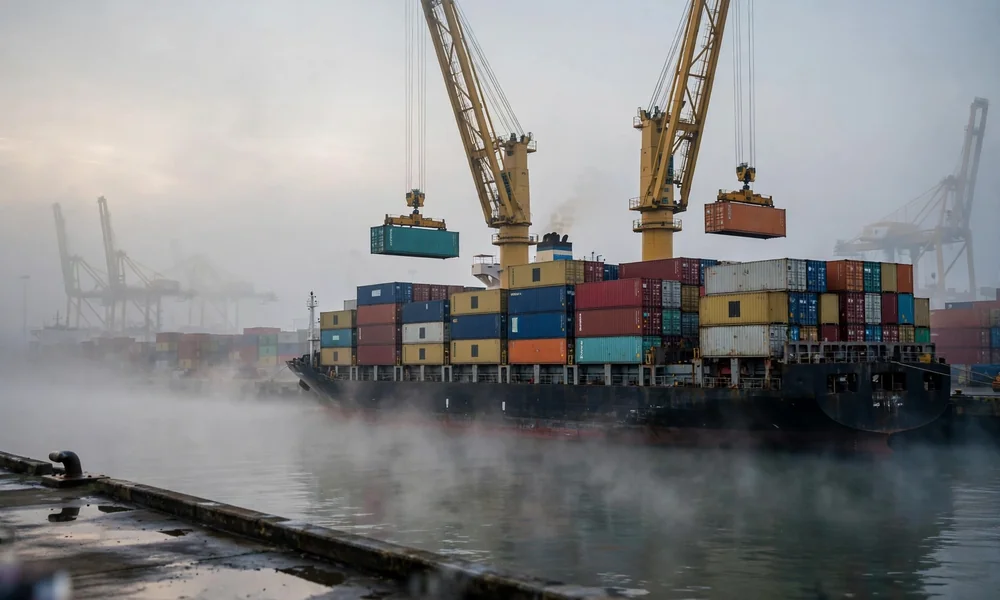
Somewhere in the middle of the Pacific, three days from any port, a ship longer than four football pitches is moving twenty thousand steel boxes toward a harbour it will reach next week. There is no drama on board. A luxury container ship is not luxurious in the way a yacht is. Its luxury is scale, reliability, and a crew of twenty running a vessel that carries the shopping of a nation.
The ship works as a single system, and every part of it depends on every other part. The engine provides the power, but the hull shape decides how much of that power becomes speed. The stowage plan decides whether the ship stays stable, and the ballast system corrects it when the plan changes. The bridge decides the course, but the reefer plugs below deck decide whether the frozen food arrives frozen. No single machine on board matters as much as the way they all work together.
This is the story of that system, from the engine room at the bottom of the ship to the bridge at the top. This is how a luxury container ship works, as one whole machine rather than a collection of parts.
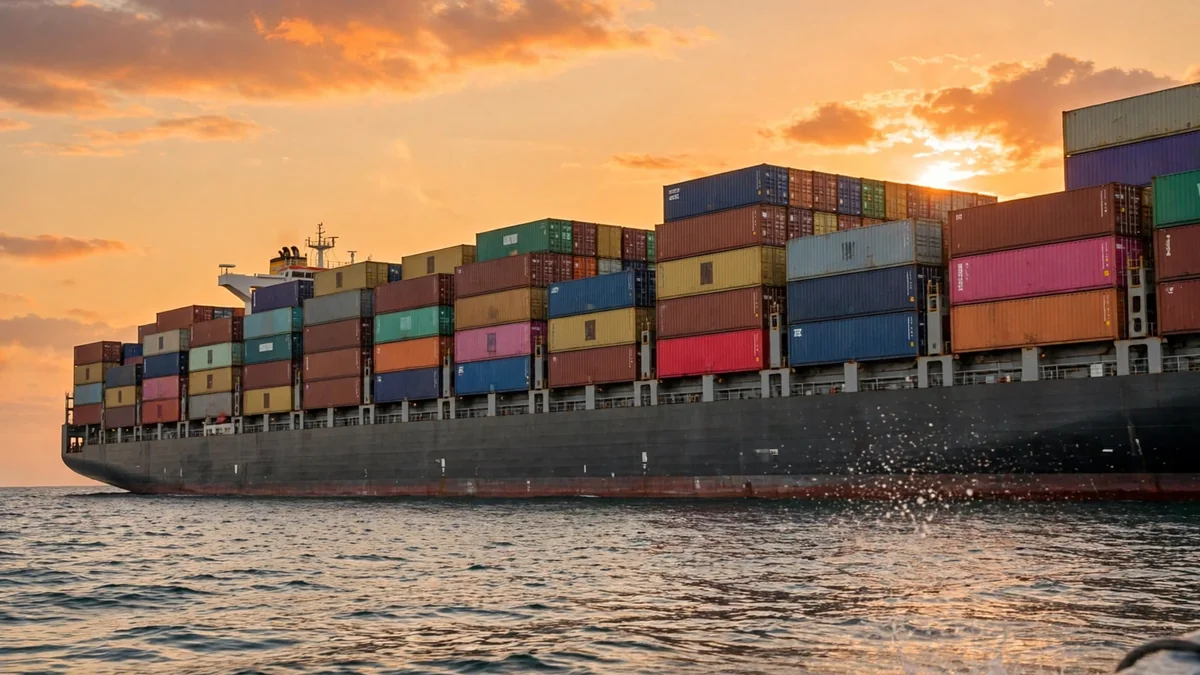
How a luxury container ship works
Step 1: The engine and the propeller
The heart of a container ship is a single enormous two-stroke diesel engine, often as tall as a three-storey building, turning a propeller wider than a house. The engine runs at low speed, around a hundred revolutions a minute, and drives the propeller directly, without a gearbox, which makes it both efficient and reliable. At full power it can push the ship to more than twenty knots, but most of the time it runs slower, at an economical speed that saves fuel across a voyage of many thousands of miles. The same blend of power and careful handling defines how a luxury tugboat works, where a small boat uses its engines to move ships far larger than itself.
Step 2: The bridge, navigation, and the route
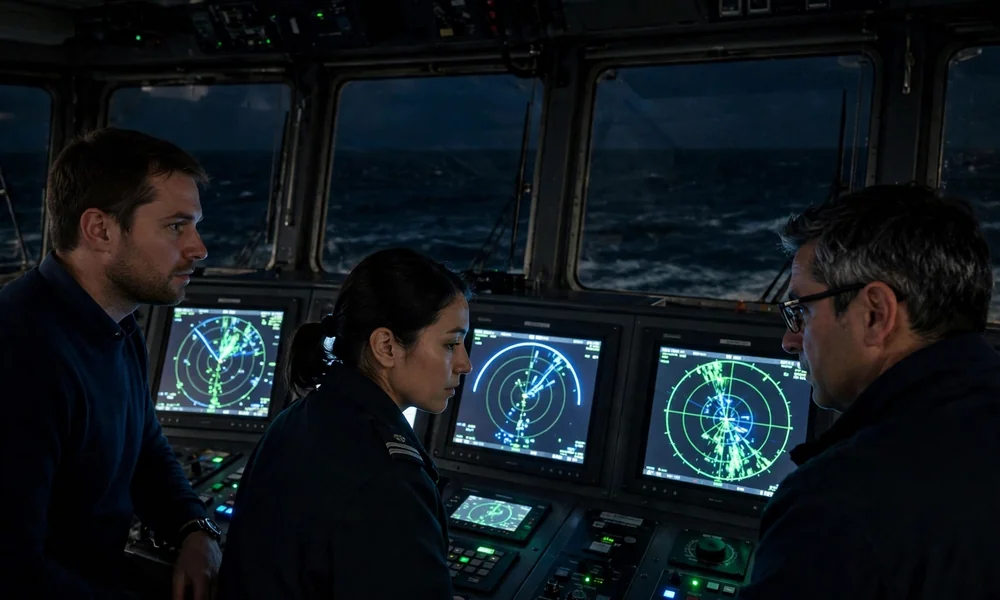
High above the containers, the bridge is the brain of the ship. The captain and the watch officers steer by electronic charts, satellite navigation, and radar, plotting a course that avoids storms, shallow water, and heavy traffic while keeping the fuel burn as low as possible. Modern bridges are fitted with automatic identification systems that show every nearby vessel, and with weather routing services that suggest a new course when a storm moves across the planned track. The bridge also controls the ship’s speed, slowing down when the schedule allows it, because a small reduction in speed saves a large amount of fuel.
Step 3: Stowage, stability, and the ballast system
Below the bridge, the containers themselves are the cargo and the challenge. Each box weighs up to thirty tonnes, and where it sits decides whether the ship stays upright. Heavy boxes go low, light boxes go high, and the stowage plan is worked out by computer before a single box is loaded, with the ship’s stability calculated at every stage. As boxes are loaded and unloaded, the crew pumps seawater in and out of ballast tanks low in the hull, trimming the ship so it sits level and steady. The build that creates this vast, careful structure is told in how a luxury container ship is made, from the first steel plate to the day the first box is loaded.
Step 4: Power for the reefers and the cargo that must stay cold
Many of the boxes on a container ship are reefers, refrigerated containers carrying food, medicine, and other goods that must stay at an exact temperature for weeks. Each reefer plugs into the ship’s electrical system, and a large ship can carry thousands of them at once, drawing more power than a small town. The ship’s generators, driven by auxiliary engines, supply that power around the clock, and the crew monitors every reefer’s temperature from a central panel, with alarms that sound the moment one drifts out of range. The reefer system is one of the quietest, most reliable parts of the ship, and also one of the most important.
Step 5: Life on board and the small crew
A ship that carries twenty thousand boxes is run by a crew of around twenty people, and their working life is a study in self-reliance. The crew works in watches, four hours on and eight hours off, around the clock, maintaining the engine, checking the cargo, standing watch on the bridge, and cooking, cleaning, and repairing everything the ship needs. The same self-reliance shapes every working vessel in the harbour, including the one described in how a luxury barge works, where a small crew moves a heavy load with simple, dependable machines.
Step 6: Arrival, the port, and the turnaround
The voyage ends the way it began, in a port, and the turnaround is a race against the clock. Giant quay cranes lift boxes off the ship and load new ones at a rate of dozens an hour, while bunker barges pump fuel into the ship’s tanks, supply boats deliver food and spare parts, and the crew inspects the hull, the engine, and the lashings. The captain takes the ship out with the tide, the pilot boat drops away, and the vessel settles back into its steady rhythm for another week at sea, carrying a new load of boxes to a harbour on the other side of the world.
Specifications
| Specification | Typical figure |
|---|---|
| Length | 300 to 400 metres |
| Capacity | 15,000 to 24,000 containers |
| Main engine | Single two-stroke diesel, direct drive |
| Top speed | 22 to 25 knots |
| Crew | Around 20 people |
| Reefer plugs | 1,000 or more |
| Estimated price | From around $150,000,000, an estimate |
The price of a luxury container ship is an estimate, because each ship is built to the route and the cargo it will carry. A well-equipped luxury container ship typically starts from around $150,000,000, and a very large vessel with the biggest capacity, the most reefer plugs, and the latest fuel-saving systems can cost $200,000,000 or more. It earns that money back one box at a time, across a working life of twenty-five years or more.
A rare fact
Here is a detail that surprises visitors to a container port: the ship’s engine is so large that its pistons are big enough for a person to climb inside, and engineers do exactly that during maintenance, standing inside the cylinder to inspect and clean it. The engine’s cylinders are each about a metre across, and when the ship is in port the crew opens them up, climbs in with lamps and tools, and works inside the very heart of the machine.
A finished container ship is a machine that makes the modern world possible, and most of the people who depend on it will never see it. Every box on board is a promise kept: a factory’s order, a shop’s stock, a family’s weekly shop, carried across an ocean by twenty people and one great engine.