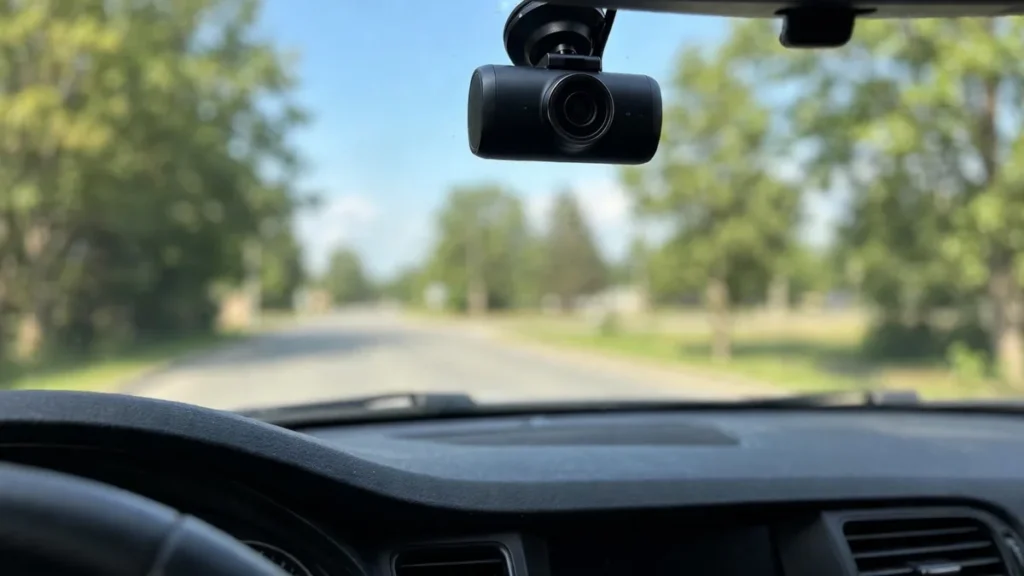
It sits behind the windscreen, smaller than a matchbox, and most passengers never notice it at all. Yet a luxury dashcam watches every kilometre of every journey, recording the road ahead in sharp detail through rain, glare and the dark of a country lane. When something goes wrong, it is the one witness that never blinks, never forgets and never argues.
A cheap dashcam is little more than a phone camera glued to a suction cup. A luxury one is a different kind of machine altogether. It is built to survive a boiling dashboard in summer and a frozen windscreen in winter, to keep recording when the car hits a pothole, and to save the vital seconds before a crash even if the power is cut. Here is how a luxury dashcam is made, from a bare circuit board to a small black box that guards its driver.
How It’s Made
Step 1: Choosing the lens and the sensor
Every dashcam begins with two choices that decide everything else: the lens and the image sensor. Luxury makers pick a wide glass lens, usually covering around 140 to 170 degrees, so the camera sees not just the car ahead but the pavements and junctions at the edges of the road. The glass is coated to cut glare from low sun and to resist scratches, because a scratched lens turns night footage into a blur of light. Behind the lens sits a large image sensor, often the same kind used in good phones, with big light-gathering pixels that keep the picture clear after dark.
Step 2: Building the circuit board
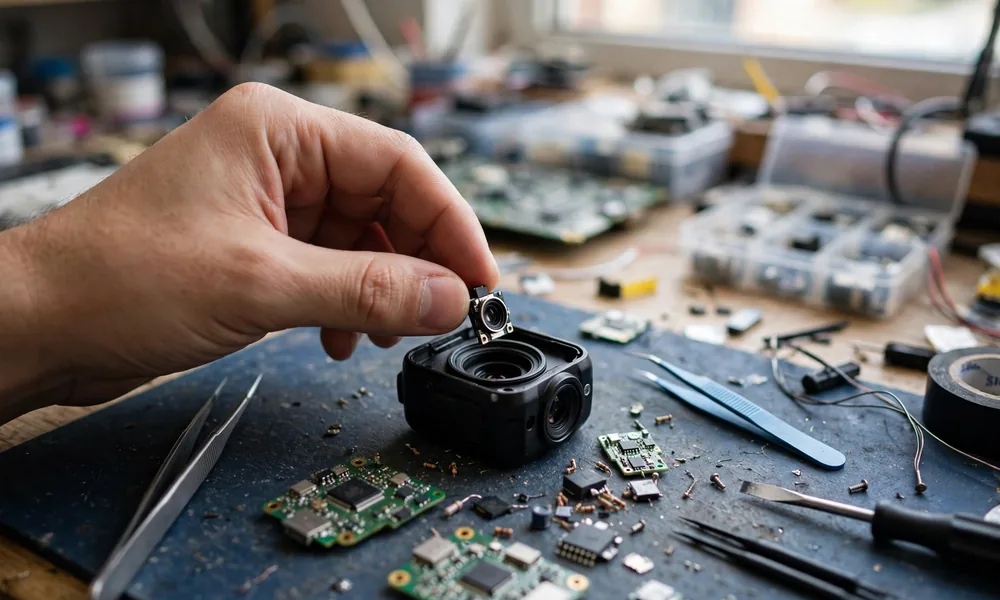
With the optics chosen, the electronics team lays out the circuit board, a green rectangle barely larger than a credit card. On it go the image processor, which turns raw sensor data into video, the memory controller, and a small supercapacitor that gives the camera a few seconds of power to save its last file if the car loses power in a crash. The board is assembled by machines that place hundreds of tiny parts with great precision, then it is baked in an oven so the solder melts and holds everything fast.
Step 3: Fitting the lens and focusing it by hand
The lens is screwed into its mount over the sensor, and this is one job that still needs a human touch. A technician points the half-built camera at a test chart and turns the lens a fraction of a millimetre at a time until the picture is sharp from edge to edge. Once the focus is perfect, a drop of glue locks the lens in place so vibration can never shift it. The same care goes into every camera that sees the road, and the way a luxury camera works shows how a similar lens and sensor pairing turns light into a picture in other machines too. A luxury dashcam is then sealed against dust, because a single speck on the sensor would sit in the middle of every video it ever records.
Step 4: Adding the memory, the GPS and the sensors
A dashcam without memory is just a camera, so the next step adds the parts that make it a recorder. A high-endurance memory card slot takes cards built to be written over thousands of times, and the camera records in a loop, always keeping the newest footage. A GPS receiver is fitted so every clip carries its speed and position, and a small accelerometer, often called a G-sensor, watches for sudden shocks. When the car brakes hard or is bumped in a car park, the G-sensor tells the camera to lock that clip so the loop never overwrites it.
Step 5: Building the body and the mount
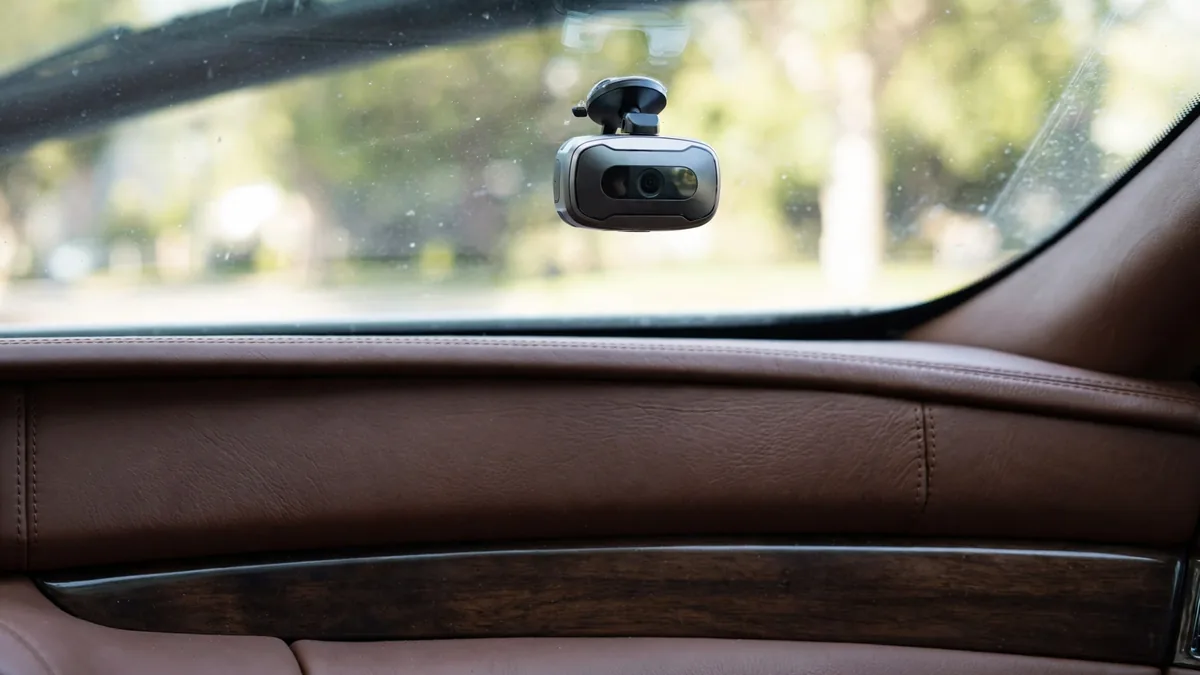
The finished electronics need a body that can live on a windscreen for years. Luxury dashcams use a compact shell of tough plastic or magnesium, shaped so it hides behind the rear-view mirror and never blocks the driver’s view. The mount is just as important as the body: a strong adhesive pad or a suction cup holds the camera steady, and a ball joint lets the driver aim it exactly at the road. Heat is the enemy here, so the shell has small vents and the parts inside are arranged so the processor, which runs hottest, sits near the airflow. The craft behind a luxury SUV follows the same idea on a bigger scale, hiding clever engineering inside a cabin that looks calm and simple. Before the body is closed, workers check that no cable presses on the lens and that every button clicks cleanly.
Step 6: Testing in heat, cold and shaking
A finished dashcam is not trusted until it has been punished. Test rigs shake it for hours to copy years of rough roads, ovens bake it to temperatures a parked car reaches in summer, and freezers chill it below freezing to make sure it still starts on a winter morning. The camera records test footage through all of it, and engineers watch for dropped frames, fogged lenses or loose mounts. Only cameras that pass every test are boxed with their mount, a long power cable and a trim tool for hiding the wire behind the dashboard. The case for physical buttons in cars explains why drivers still value one simple control they can find without looking, and a luxury dashcam is built the same way: one button, one job, done properly. When the box is sealed, the little witness is ready for the windscreen.
Dashcam Specifications
| Specification | Typical Luxury Dashcam |
|---|---|
| Video resolution | 4K at 30 frames per second |
| Field of view | 140 to 170 degrees |
| Image sensor | Large-pixel Sony-type sensor |
| Night vision | HDR with wide dynamic range |
| Storage | Up to 512 GB high-endurance card |
| GPS and G-sensor | Built in, with parking mode |
| Operating temperature | Minus 20 to 70 degrees Celsius |
The Price
A luxury dashcam costs an estimated $300 to $600 for a single front camera, and an estimated $500 to $900 for a front and rear pair with parking mode and a hardwire kit. Professional fitting adds an estimated $100 to $200, though many owners fit the camera themselves in under an hour.
A Rare Fact
Some luxury dashcams can protect a parked car for days without draining its battery. They sit in a low-power sleep and wake only when their motion or shock sensor feels a bump, recording a short clip before going back to sleep. The clever part is a small voltage guard that watches the car battery and shuts the camera down before the battery gets too weak to start the engine, so the witness never leaves its driver stranded.
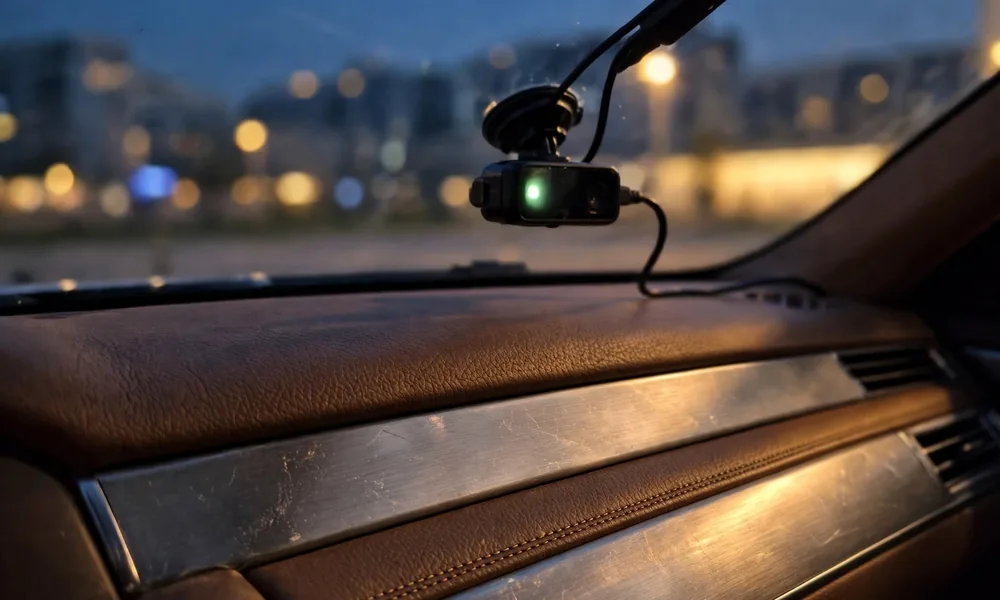
Life with a luxury dashcam is mostly uneventful, and that is the point. It starts when the engine starts, stops when the engine stops, and quietly overwrites old footage that nobody will ever need. The driver forgets it is there until the day a van pulls out without looking, or a parked car is scraped in the night.
A luxury dashcam is proof that small machines can carry big responsibilities. Its lens is focused by hand, its board is tested twice, and its body is built to survive years of sun, frost and shaking without complaint. It asks for nothing, records everything, and stands ready to speak for its driver when words are not enough. For a machine the size of a matchbox, that is a remarkable job.