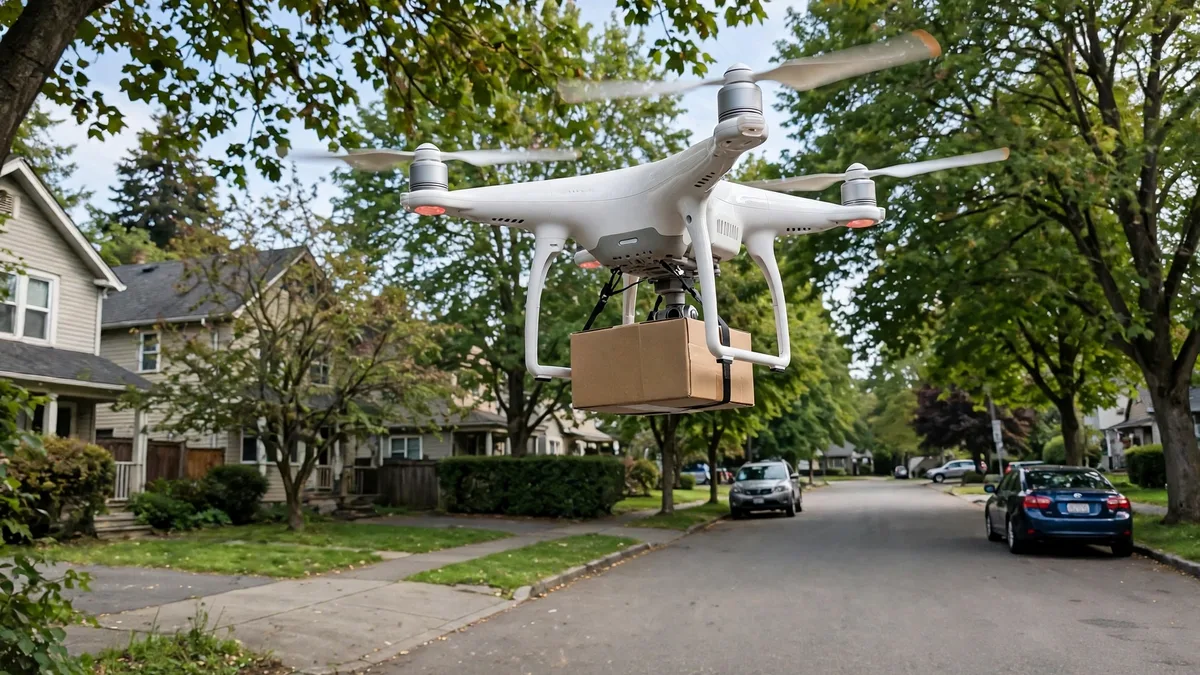
The parcel left the warehouse at half past nine, and it did not travel by van. It rose straight up from a small pad on the roof, cleared the chimneys, and turned towards the river, a white quadcopter the size of a suitcase with a brown box tucked under its belly.
Twenty minutes later it was hovering over a garden in the suburbs, lowering the box on a thin line until it touched the grass beside the back door. This is how a luxury drone delivery machine is made, from carbon fibre bones to the little winch that sets a parcel down as gently as a hand.
How It’s Made
Step 1: The frame is laid up in carbon fibre
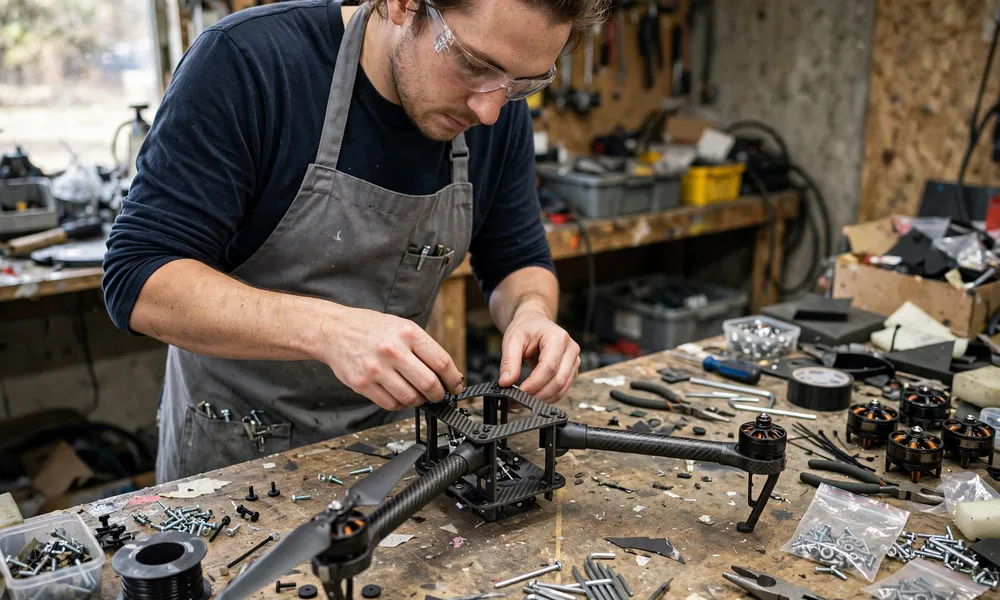
A delivery drone starts as cloth, not metal. Sheets of carbon fibre fabric are cut into shapes and laid into moulds, layer over layer. Resin is brushed or pulled through the layers, and the mould is closed and baked until the resin hardens into a stiff, feather-light shell.
Carbon fibre is chosen because a delivery drone lives on its weight budget. Every gram saved on the frame is a gram that can go into the parcel or the battery, and a light frame also means the motors work less hard and the drone stays up longer. The arms are the most important part: long, hollow tubes that must be stiff enough not to bend when the motors pull hard, yet light enough to keep the whole machine nimble in a gust.
Step 2: The motors and propellers are fitted
Each arm ends in a brushless electric motor, a compact ring of copper coils and magnets that spins without brushes to wear out. The motors are bolted to the arm tips through rubber mounts that soak up vibration. The propellers are then pressed onto the motor shafts, two spinning one way and two the other, so their turning forces cancel out.
On a luxury machine the propellers are not plain plastic. They are shaped from carbon fibre or a stiff composite, balanced on a jig until each blade weighs the same as its partner, and tuned so the drone hums rather than buzzes.
Step 3: The battery and power board go in
The heart of the drone is a slim lithium battery pack that slides into the belly of the frame, held by a latch a gloved hand can work in seconds. The pack is built from cells wired together and wrapped in a fire-resistant case. Swapping the battery, rather than waiting for it to charge, is what lets one drone fly all day.
Beside the battery sits the power board, which splits the current between the four motors, the flight computer and the sensors. Thick copper traces carry the heavy motor current, while a separate clean supply feeds the delicate electronics, so a sudden pull from a motor cannot starve the brain of the machine.
Step 4: The parcel bay and winch are built
Under the belly, the makers fit the part that makes a delivery drone different from a camera drone: the parcel bay. It is a small cradle with padded jaws that grip a box from the sides, and a latch that releases only when the drone is hovering in the right place.
Many luxury machines also carry a winch, a small drum wound with a thin cord that lowers the parcel the last few metres. The winch matters because landing on a lawn is not always safe, with dogs, children and garden furniture in the way.
Step 5: The sensors and flight brain are added
A delivery drone cannot see the way a pilot does, so it is given many small eyes. Cameras look down and forward, ultrasonic sensors measure the distance to the ground, and a satellite receiver fixes its position to within a hand’s breadth.
All of this feeds into the flight computer, a small board running software that has been tested on thousands of simulated flights before it ever flies a real one. The computer watches the battery, the wind and the route, and it carries a simple rule above all others: if anything goes wrong, come home.
Step 6: The drone is tested, tuned and painted
Before a delivery drone carries anything real, it flies empty. Test pilots run it through hover checks, wind trials and drop drills on a closed field, watching for a wobble, a hot motor or a winch that sticks.
Only then does the machine get its finish. The shell is sanded, painted in the maker’s colours, and sealed against rain, and a small beacon light is fitted so the drone can be seen at dusk. The finished drone weighs less than a small dog, yet it is signed off to carry a parcel across town, in wind and drizzle, and to set it down without a scratch.
| Spec | Detail |
|---|---|
| Frame | Carbon fibre shell and hollow arms, baked in moulds, strong in every direction and light enough to save weight for the parcel |
| Motors | Four brushless motors on rubber mounts, with balanced carbon fibre propellers, two spinning each way |
| Battery | Swappable lithium pack in a fire-resistant case, with a circuit watching every cell and a coated power board |
| Parcel bay | Padded cradle under the belly with a latch that opens only over the drop point, plus a winch that lowers the box on a cord |
| Sensors | Down and forward cameras, ultrasonic height sensors and satellite positioning, all feeding a flight computer with a return-home rule |
| Testing | Empty test flights for hover, wind and drop drills, with logs read and motor settings tuned before the first real parcel |
The hardest part of building a delivery drone is the weight. The frame, the motors, the battery and the parcel all pull against each other, and every extra gram shortens the flight. The winch that lowers the box is the smallest part of the machine, and the most watched.
What One Costs
A luxury drone delivery machine typically costs an estimated $15,000 to $60,000, set mostly by the size of the parcel bay, the quality of the sensors and the flight range. A small machine for light parcels sits near the bottom, while a long-range machine with a winch, weather sealing and a full sensor set costs far more. The bare airframe it is built from is a simpler thing, and how a luxury drone is made shows how that frame comes together, while how a luxury drone works explains the flying itself.
A Rare Fact
The first drone deliveries were not made by shops at all, but by doctors. Small drones carried blood samples and medicine over hills and rivers to clinics that had no road, and the parcels they carried were so light that the early machines looked like toys, yet they flew routes no van could ever follow.
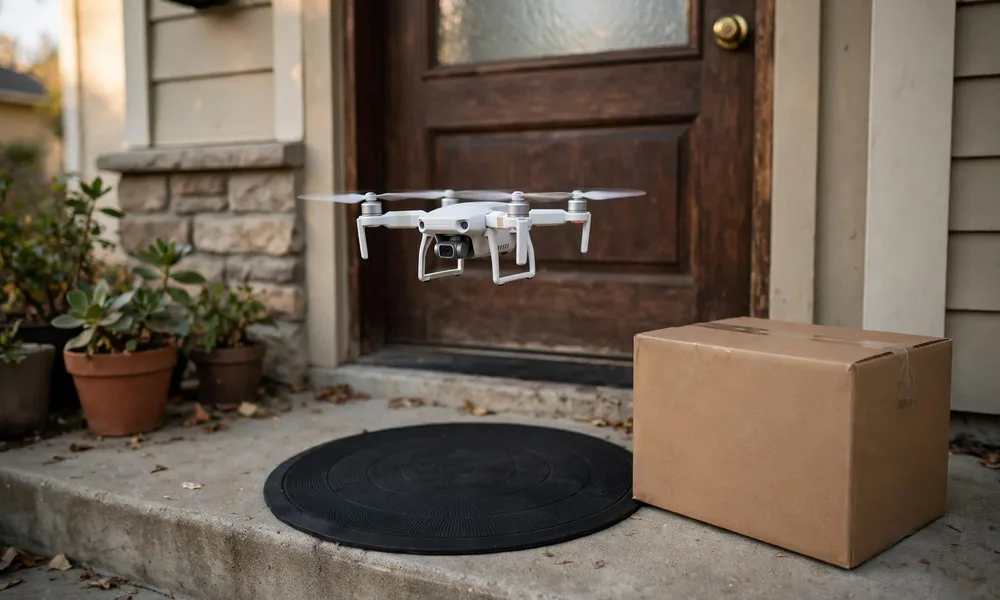
A luxury drone delivery machine is a carbon fibre frame, four quiet motors, a swappable battery, a parcel bay with a winch, and a flight computer that would rather come home than take a risk. It is built to cross a town in minutes and to set a box down on a lawn without ever landing. The last mile it replaces once belonged to the courier on two wheels, and how a luxury electric scooter is made shows the machine that still does that job on the ground.