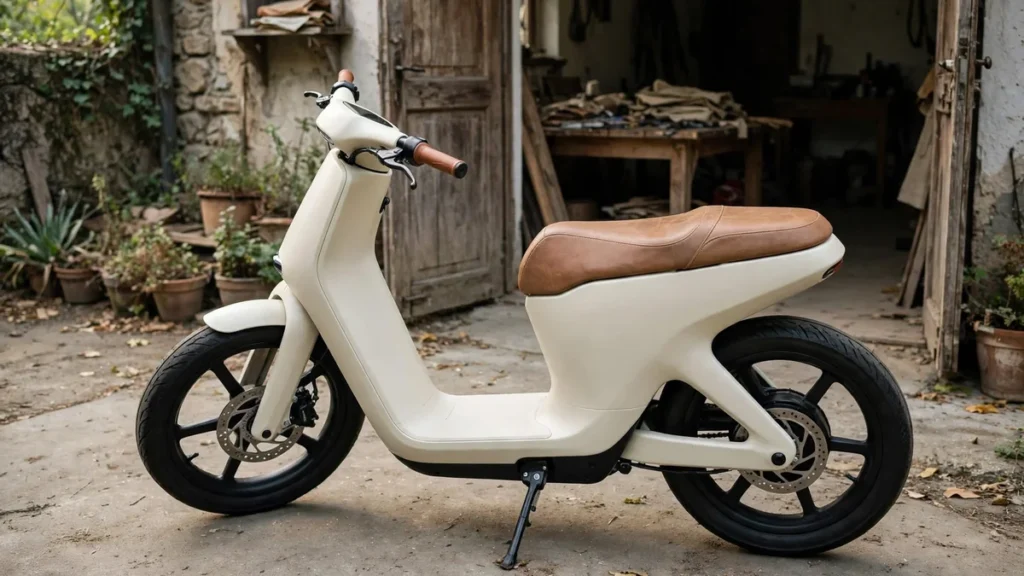
On a quiet street at first light, a rider glides past on something that looks more like a piece of furniture than a vehicle: a slim deck, a single curving stem, no engine noise at all. It is a luxury electric scooter, and the silence is the point. Everything about it, from the way it folds to the way it stops, has been engineered to feel effortless.
A luxury electric scooter is not a toy with a bigger battery. It is a small machine built to the same standards as a premium car part: a stiff frame, a sealed battery, a motor that delivers its power smoothly, and brakes that work in the rain.
This is how a luxury electric scooter is made, from its aluminium frame and battery pack to its motor, brakes, and first road test, and what separates a genuinely premium scooter from a cheap one wearing nice paint.
How a Luxury Electric Scooter Is Made
A luxury electric scooter is built in six main stages: the frame is formed, the battery pack is built, the motor is fitted, the electronics are installed, the finishing touches are added, and the scooter is tested on the road.
Step 1: Forming the frame
Everything starts with the frame, because a scooter that flexes feels cheap and unsafe. Builders form the deck and stem from aircraft-grade aluminium, usually extruded and then machined, so the structure is stiff without being heavy. The deck is wide enough for both feet and low enough to step onto easily, while the stem carries the folding hinge, the cables, and the display. Welds are kept to a minimum, because every weld is a place where a crack can start, and the folding mechanism is tested thousands of times before it is approved.
Step 2: Building the battery pack
The battery is the heart of the scooter, and it is built like a piece of precision equipment. Cells are selected, matched, and welded into a pack that fits inside the deck, where its weight sits low and keeps the scooter stable. A battery management system watches every cell, balancing charge, limiting heat, and shutting the pack down if anything goes wrong. The pack is sealed against water and dust, because a scooter lives outdoors, and its casing doubles as part of the deck structure.
Step 3: Fitting the motor
Most luxury scooters use a hub motor built into the front or rear wheel, or one in each wheel for the most powerful models. The motor is a brushless design, which means no brushes to wear out and almost no maintenance, and it is sealed against rain and grit. Builders tune the controller so the power arrives smoothly, with no sudden surge when the rider twists the throttle, because a luxury scooter should accelerate like a lift, not a rocket. The choice between one motor and two, and between hub and belt drive, is one of the biggest decisions in a scooter’s design, and the trade-offs are laid out clearly in the comparison of diesel and electric scooter motors, where efficiency, weight, and maintenance decide the winner.
Step 4: Installing the electronics
With the frame, battery, and motor in place, the electronics are fitted. A controller sits between the battery and the motor, translating the throttle into power, while a small display on the handlebars shows speed, battery level, and riding mode. All the wiring runs inside the stem and deck, protected from rain and from the rider’s feet, and every connector is sealed. The electronics are tested in a rain chamber, because a scooter that fails in a shower is a scooter that will come back under warranty.
Step 5: Adding the brakes and finishing touches
Brakes matter more on a scooter than on almost any other vehicle, because the rider is standing up with nothing around them. Luxury scooters use hydraulic disc brakes, often on both wheels, with a feel that lets the rider brake hard without locking up. The tyres are pneumatic, filled with air, which absorbs bumps far better than solid tyres and gives the scooter its smooth ride. Then come the finishing touches: a leather or rubber grip, a bell that sounds like it belongs on a good bicycle, and paint or anodising in colours chosen by a designer rather than an accountant.
Step 6: Testing on the road
The finished scooter is tested before it is boxed. It is ridden over cobbles, up hills, and through puddles, with testers checking that the folding hinge stays tight, the brakes stay sharp, and nothing rattles loose. The battery is charged and discharged to confirm its range, and the motor is run at full power to check for overheating. Only when the scooter passes its road test, dry and silent, is it signed off and packed.
Specifications
| Specification | Typical figure |
|---|---|
| Weight | 16 to 30 kg |
| Top speed | 25 to 65 km/h |
| Range | 40 to 100 km |
| Motor power | 500 to 2,000 W |
| Battery | 500 to 1,500 Wh |
| Frame material | Aircraft-grade aluminium |
| Brakes | Hydraulic disc, front and rear |
| Charging time | 4 to 8 hours |
How Much Does a Luxury Electric Scooter Cost?
A luxury electric scooter costs far more than the scooters sold for commuting, and the price reflects the materials and the engineering. Estimates generally put a premium model at roughly $1,500 to $5,000, depending on the battery size, the motor power, and the quality of the brakes and finish. The most powerful dual-motor scooters, with long range and hydraulic brakes, sit at the top of that range. Buyers are paying for a machine that is quiet, solid, and reliable, and for a warranty from a company that will still exist in three years.
A Rare Fact
The electric scooter is far older than most people think. The first electric scooter, the Autoped, was sold in New York in 1915, with a small petrol engine on some versions and an electric motor on others, and it was ridden by everyone from postmen to suffragettes. It folded up, just like a modern scooter, and it was marketed as the future of city transport. It took more than a century, and the arrival of light lithium batteries, for that idea to finally work at scale, which is why the modern luxury scooter feels both brand new and strangely familiar.
A luxury electric scooter is a small machine that carries big expectations. It has to be fast enough to be useful, light enough to carry, quiet enough to ride anywhere, and safe enough to trust at speed, all at once. That combination is why the best scooters cost as much as a used car, and why the brands that get it right have loyal riders. The market is crowded, and the differences between brands come down to the details, as shown in the ranking of the best electric scooter brands, where build quality and after-sales support matter as much as speed. For city riders, the right scooter is the one that disappears into the journey, and that is the hardest thing of all to build.
Commuters have their own priorities, and the scooters that suit a daily ride are not always the fastest ones, as explained in the guide to the best electric scooters for commuting in 2027, where range, comfort, and the ability to fold quickly matter more than top speed. A luxury scooter that commutes well is a luxury scooter that earns its price every single day.