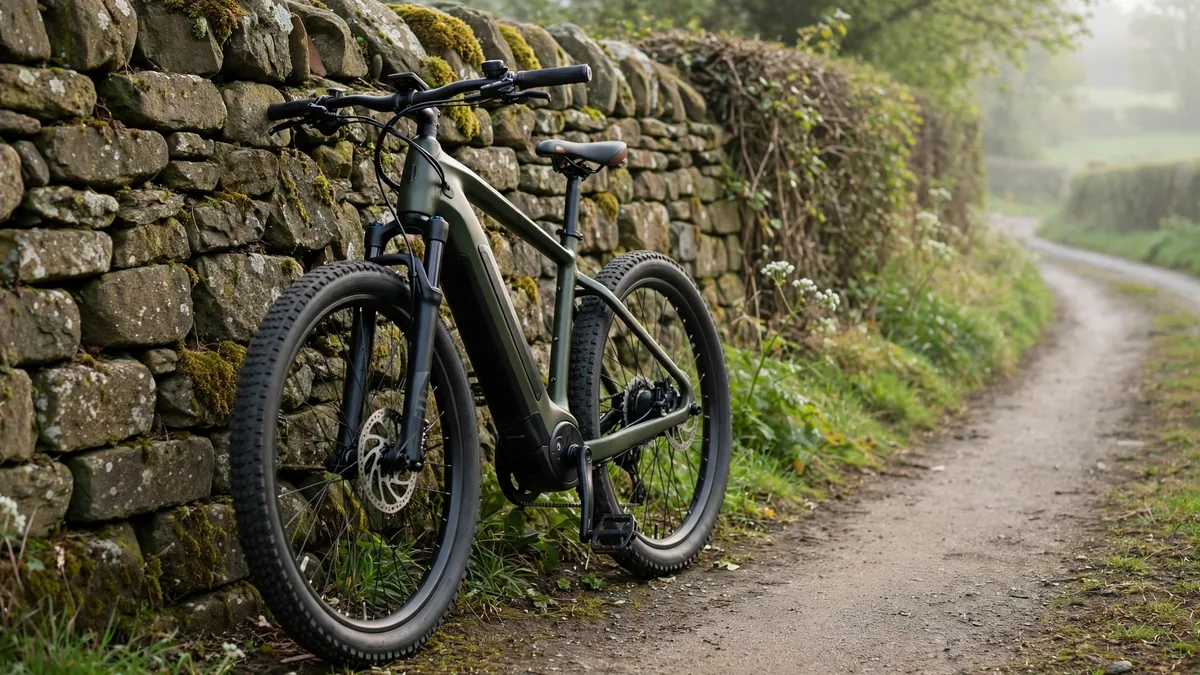
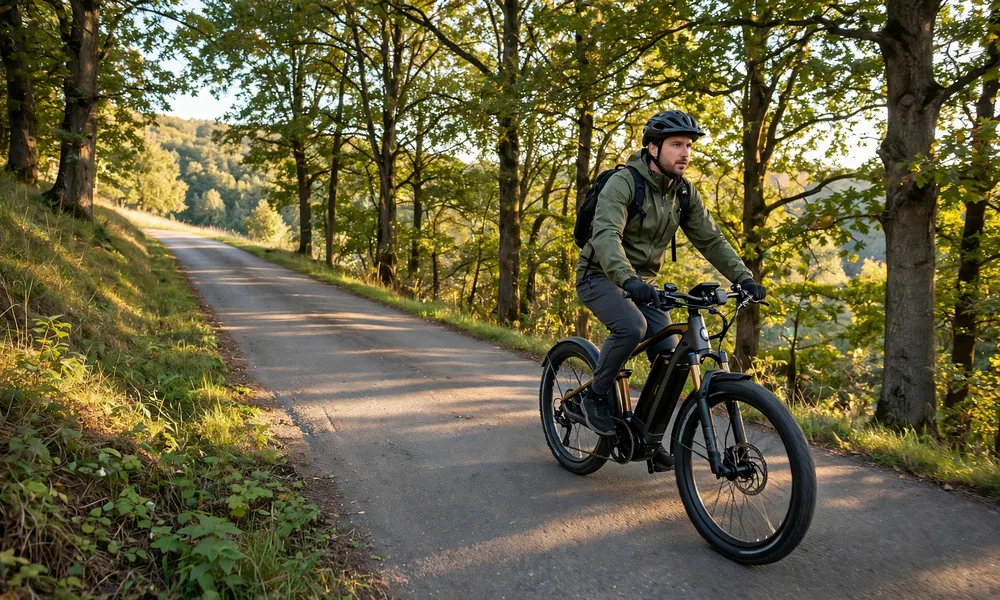
On a quiet lane outside the city, a rider in ordinary clothes is climbing a hill that used to make her walk. She is not breathing hard, she is not standing on the pedals, and she is not going slowly either. The bike beneath her is doing something she can feel but cannot quite see: a gentle push arrives exactly when her legs ask for it, and fades the moment she stops asking. To a passer-by it looks like a beautiful bicycle. To the rider it feels like the hill has quietly shrunk.
That is the trick of a luxury e-bike. It is a whole machine in which a motor, a battery, a set of sensors, a gearbox and a frame were designed together, so that the assistance feels like a stronger version of the rider rather than a separate engine. This is how the whole machine works, from the first push on the pedal to the last mile of range.
Step 1: The rider pushes, and the sensors listen
Everything starts at the cranks, where the rider’s feet meet the bike. A luxury e-bike does not use a simple on-off switch for its power. It uses a torque sensor, a small device in the bottom bracket that measures how hard the rider is pressing on the pedals, many times every second. Push gently and the bike adds a little. Push hard on a hill and it adds a lot.
A cadence sensor works alongside the torque sensor, counting how fast the cranks are turning, and a speed sensor on the wheel tells the system how fast the bike is already going. Together the three sensors give the controller a complete picture of what the rider is doing, and the assistance is calculated from that picture rather than from a fixed setting. The e-bike torque sensor is the part that makes the difference between a bike that jerks forward and a bike that feels like it is reading your mind.
Step 2: The controller decides how much help to give
The sensor readings travel to the controller, a small computer usually hidden inside the frame or the motor housing. The controller holds the bike’s assistance modes, from a gentle eco setting that sips the battery to a powerful boost for steep climbs, and it decides how much current to send to the motor based on the rider’s effort, the chosen mode, and the speed of the bike. In most countries the assistance must fade out at 25 kilometres an hour, and the controller enforces that limit precisely.
Step 3: The mid-drive motor turns effort into motion
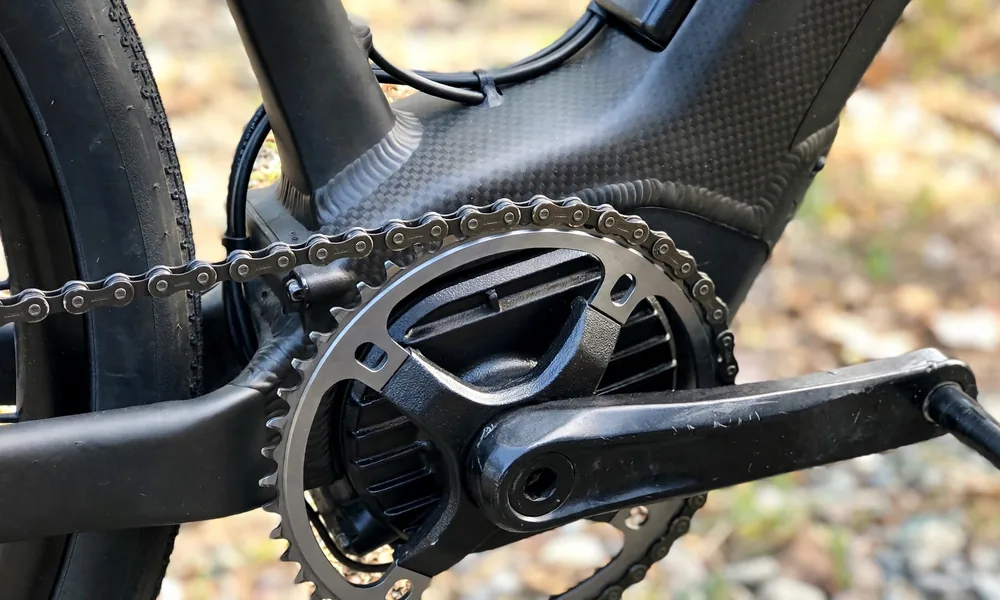
On a luxury e-bike the motor usually sits in the middle of the bike, at the cranks, rather than in a wheel hub. A mid-drive motor drives the chain directly, which means it can use the bike’s gears, just as the rider does. On a steep hill the rider shifts down, the motor spins faster through the low gear, and the bike climbs with far more torque than a hub motor of the same power could manage. That is the main reason luxury makers choose this layout.
Inside the motor, a compact electric motor spins a set of reduction gears that multiply its turning force before it reaches the chainring. The mid-drive motor is the heart of the machine, and it is also the part that has to survive years of torque, weather and vibration without complaint.
Step 4: The battery stores the ride
The battery is the fuel tank, and on a luxury bike it is usually hidden inside the down tube, the thick diagonal tube of the frame. The cells are lithium-ion, the same chemistry as a laptop battery but built to a far tougher standard, packed into a case that is sealed, cooled by the frame around it, and protected by a management system that watches every cell’s voltage and temperature.
Capacity is measured in watt-hours, and a luxury e-bike typically carries 500 to 750 watt-hours, enough for 80 to 160 kilometres of riding depending on the hills, the wind and the assistance level. The e-bike battery spec sheet explains what the numbers on a battery label mean in practice, and why two batteries with the same capacity can behave very differently on the road.
Step 5: Gears, brakes and suspension do the honest work
While the electronics get the attention, the mechanical parts do most of the honest work. A luxury e-bike usually carries an internal gear hub or a high-end derailleur system, built to handle the extra torque of the motor without wearing out in a season.
The brakes have to stop a bike that is heavier and faster than an ordinary bicycle, so luxury e-bikes use hydraulic disc brakes with large rotors, the same technology as a motorcycle in miniature. The suspension fork and the seat post absorb the bumps of a rough road, and the tyres are wider and tougher than road tyres, with a puncture-resistant layer.
Step 6: The display, the lights and the lock
The last step is the part the rider actually touches: a small display on the handlebar that shows speed, battery level, range and assistance mode, and a set of controls that let the rider change modes without taking a hand off the bars. On a luxury bike the display is often a bright, clear screen that is readable in sunlight, and it can connect to a phone for navigation and ride tracking.
Integrated lights, powered by the main battery, mean the rider never has to remember to charge a separate lamp, and a built-in lock or tracking system protects a machine that costs as much as a used car.
The spec sheet at a glance
| Specification | Typical luxury figure |
|---|---|
| Motor | Mid-drive, 250 watts nominal, 85 Nm torque |
| Battery | 500 to 750 watt-hours, lithium-ion |
| Range | 80 to 160 kilometres per charge |
| Top assisted speed | 25 kilometres an hour |
| Frame | Carbon fibre or hydroformed aluminium |
| Gears | 11-speed derailleur or internal hub |
| Brakes | Hydraulic disc, 180 mm rotors |
| Weight | 20 to 25 kilograms |
| Charging time | 3 to 5 hours |
| Display | Colour screen, phone connectivity |
| Tyres | Wide, puncture-resistant, 28 inch |
| Extras | Integrated lights, rack, lock and tracking |
What she costs, and a rare fact
A luxury e-bike costs an estimated $6,000 to $14,000, depending on the motor, the battery, the frame material and the brand, with the most exclusive hand-built models costing more. For a sense of which makers earn that price, the best electric bike brands ranking compares the names that lead the luxury end of the market.
Here is the rare fact the spec sheet never mentions. A mid-drive motor can climb a steep hill more efficiently than a much more powerful hub motor, because it works through the bike’s gears, and the earliest electric bicycles, built more than a century ago, used the same idea of driving the cranks rather than the wheel. It is an old idea, finally built with the motor, the sensors and the materials it always needed.