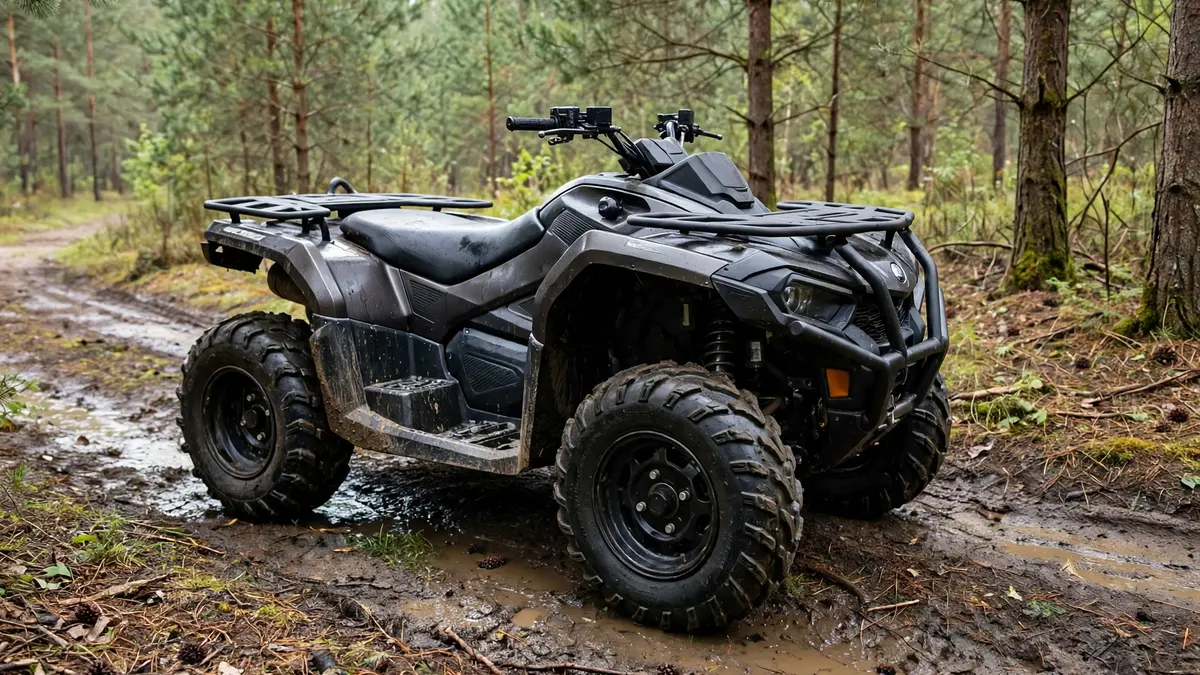
Follow the sound of a luxury electric ATV through the woods and you will hear almost nothing. The tyres crunch on gravel, a branch snaps under a wheel, and that is about it. There is no engine roar to warn the deer, no exhaust smell drifting back through the trees, just a quiet machine picking its way over roots and rocks. It looks like any other ATV from a distance, wide and low and built for rough ground, but underneath the plastic bodywork it is a very different animal.
A luxury electric ATV is made by welding a strong steel frame, fitting a sealed battery pack and one or two electric motors, and then adding four wheel drive, suspension, and bodywork made to survive mud and water. Here is how it happens, from the first steel tube to the first trail ride.
How It Is Made
Step 1: The frame is welded from steel tube
Every luxury electric ATV starts with a frame of steel tube, cut, bent, and welded into a ladder shape that can take a beating. The frame has to carry the weight of the battery, the motors, and the rider, and it has to survive jumps, rocks, and the occasional roll without bending, so the welds are checked by eye and by machine. Mounting points for the suspension, the steering, and the battery cradle are built into the frame from the start, because adding them later would weaken it. Once the frame is welded it is coated against rust, a step that matters more on an ATV than on almost any other vehicle, since the machine will spend its life in mud and water.
Step 2: The battery pack is sealed against water
While the frame is being coated, the battery pack is built in a clean room. Lithium cells are tested, matched, and packed into a tough metal case with a cooling system and a battery management computer, and the case is sealed so tightly that the ATV can cross a stream without water reaching the cells. That seal is tested under pressure before the pack is allowed anywhere near the frame. The finished battery is then bolted into the centre of the frame, as low as possible, where its weight gives the ATV a low centre of gravity and keeps it stable on steep side slopes, which is where a top heavy ATV would tip.
Step 3: Motors and four wheel drive go in
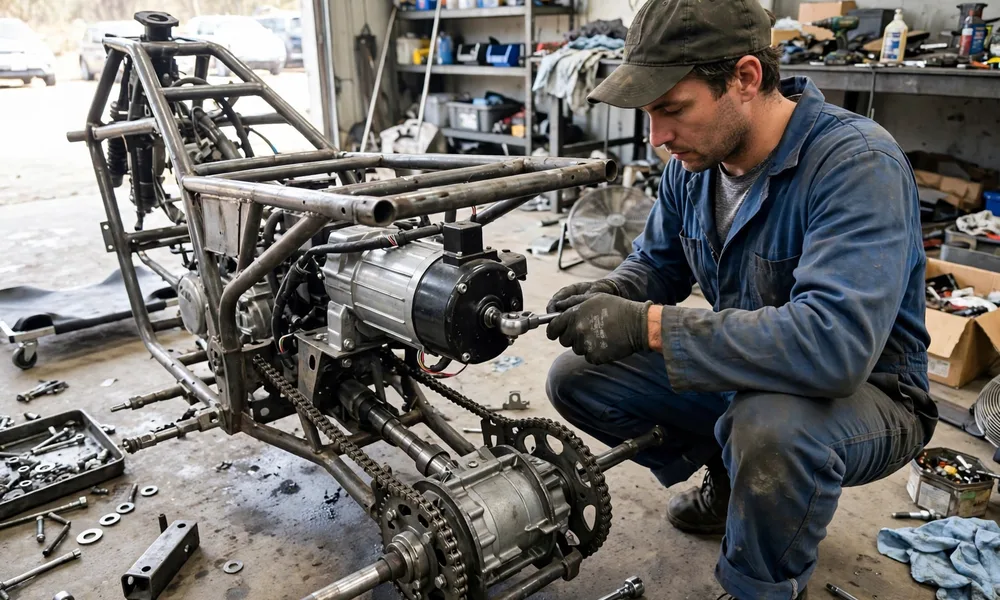
With the battery in place, the motors are fitted. A luxury electric ATV usually has one motor driving the rear axle and a second driving the front, or a single large motor with a driveshaft, and either way the result is four wheel drive without a heavy transfer box or a clutch. The motors are small and sealed, and they deliver their torque instantly, which is exactly what an ATV needs when a wheel is slipping in mud and the rider needs grip right now. Cables run from the motors to a controller that splits the power between the axles, and every connector is waterproofed, because the drivetrain will be hosed down after every muddy ride.
Step 4: Suspension, steering and brakes are fitted
Next comes the suspension, and on a luxury ATV it is far more than springs. Long travel arms and adjustable shock absorbers are bolted to each corner, giving the wheels room to move over rocks and ruts while the rider stays level. The steering rack is fitted at the front, with power assistance driven by a small electric motor, so the wide front tyres stay easy to turn even when they are buried in mud. Brakes go on all four wheels, usually discs, and because the motors can also slow the ATV by regenerating power, the brakes last far longer than they would on a petrol machine. Workers check the wheel alignment by hand, since an ATV that pulls to one side is tiring to ride all day.
Step 5: Wheels, racks and bodywork are added
The wheels are next, big knobbly tyres on tough alloy rims, chosen for grip in mud and on rock, and fitted with a sealant that lets them keep going even after a small puncture. Over the frame goes the bodywork, moulded plastic panels that shrug off branches and stones, along with the racks at the front and rear that carry tools, camping gear, or a catch. The seat is fitted, wide and grippy, and the handlebars get the throttle, the brake levers, the winch control, and a small display showing speed, battery, and drive mode. A winch is mounted at the front on most luxury models, because even the best ATV gets stuck sometimes.
Step 6: Water testing and the first trail run
Before it leaves the factory, a luxury electric ATV is tested like it will be ridden. It is sprayed with water, driven through a shallow test pool to prove the battery seal, and then taken out on a rough trail, where the suspension, the steering, and the four wheel drive are worked hard over rocks and mud. Technicians listen for rattles, check for leaks, and measure the battery drain under load, and any machine that fails a test goes back to the line instead of to a customer. Only when the trail run is clean is the ATV washed, polished, and crated, ready for a life of silent work and play in the woods.

Luxury Electric ATV Specifications
The figures below describe a typical luxury electric ATV. Smaller and larger machines differ in power and range, but the way they are built is the same.
| Specification | Typical value | What it means |
|---|---|---|
| Motor power | 10 to 25 kilowatts | One or two motors, with instant torque at all four wheels. |
| Battery capacity | 6 to 12 kilowatt hours | Sealed against water, mounted low in the frame. |
| Range off road | 60 to 120 kilometres | Shorter in deep mud, longer on firm trails. |
| Top speed | 70 to 100 kilometres per hour | Quick on a track, limited off road by the terrain. |
| Towing capacity | 500 to 900 kilograms | Enough for a trailer, a log, or another stuck ATV. |
| Weight | 350 to 450 kilograms | Heavy for its size, but stable on steep slopes. |
What It Costs
A luxury electric ATV costs an estimated $12,000 to $25,000, depending on the battery size, the motors, and the trim, with the most exclusive models costing more. Those are estimates, not quotes, and they reflect a hand built machine with a sealed battery, four wheel drive, and almost no servicing beyond tyres and brakes. The full figures are laid out in luxury electric atv specs explained, and the way the finished machine behaves on the trail is another story, as how a luxury electric atv works explains.
A Rare Fact
Here is a detail most people never guess. A luxury electric ATV can be quieter than a person walking through dry leaves, yet it can pull a trailer heavier than itself up a muddy slope, because an electric motor gives its full pulling force from a standstill, while a petrol engine has to spin up first. That silence changes how the machine is used: farmers check livestock without spooking them, and hunters and photographers move through the woods without scaring away the very animals they came to see. The silence comes at a price, which is why the cost is so high, as why a luxury electric atv is so expensive explains.