The first thing you notice about a luxury electric ATV is what is missing. There is no engine roar, no smell of petrol, no vibration shaking through the handlebars while you wait at the trailhead. You thumb a switch, the display wakes, and the machine simply stands ready, silent as a parked bicycle. Then you twist the throttle and the quiet ends in a different way: instant, smooth torque that pulls all four wheels forward without a gear change, a clutch, or a pause.
That silence changes how an ATV is used. On a private estate, in a vineyard, or along a forest track at dawn, the rider can hear birds, water, and the tyres on the ground instead of an engine drowning everything out. The spec sheet tells the same story in numbers: battery size, motor power, torque, range, ground clearance, and towing capacity. Read properly, those figures explain whether the machine is a serious working tool, a weekend toy, or a luxury object that happens to have four wheels.

How It Works
Step 1: The battery stores the energy
Everything starts in the battery pack, usually a lithium-ion unit mounted low in the chassis between the wheels. Keeping the weight low and central gives the ATV stability on side slopes, and it protects the cells behind a sealed, armoured case. The capacity number on the sheet, measured in kilowatt-hours, is the fuel tank: bigger means longer rides, heavier towing, and fewer trips back to the charger.
Step 2: The motor turns power into torque
An electric motor does not need to rev up to make power. It delivers its full twisting force from a standstill, which is exactly what an ATV needs when it is climbing out of a muddy rut or pulling a trailer up a hill. The headline power figure matters less than torque, because torque is what moves a loaded machine through soft ground. A motor rated at forty or fifty kilowatts can feel stronger than a petrol engine twice its size, simply because the force arrives immediately and never fades between gears.
Step 3: Four-wheel drive shares the grip
Four-wheel drive on an electric ATV is managed by software as much as by hardware. Sensors watch each wheel for slip, and the controller sends more torque to the wheels that still have grip while easing off the ones that are spinning. The result is a machine that crawls over rocks and through boggy ground without the rider having to think about levers and modes. On a dry track, the same system can send most of the power to the rear wheels, giving the ATV a lighter, more playful feel.
Step 4: The suspension and clearance do the climbing
Power is useless if the machine grounds out on the first rock. Luxury electric ATVs carry long-travel suspension, often with adjustable dampers, and ground clearance of around thirty centimetres or more. That height lets the chassis clear ruts, logs, and stones that would stop a lower machine, while the suspension keeps the tyres pressed into uneven ground so the motors can keep working. The spec sheet’s clearance and travel figures are a direct measure of where the machine can actually go.
Step 5: Regenerative braking recovers energy
Going downhill, an electric ATV can turn its motors into generators. Instead of the brakes doing all the work on a long descent, the motor resists the wheels and feeds energy back into the battery, while also holding the machine at a steady, controlled speed. This matters more on an ATV than on a road car, because descents are steep, frequent, and long. The rider gets extra range for free, the brakes stay cool, and the machine feels planted rather than running away.
Step 6: The display and modes manage the ride
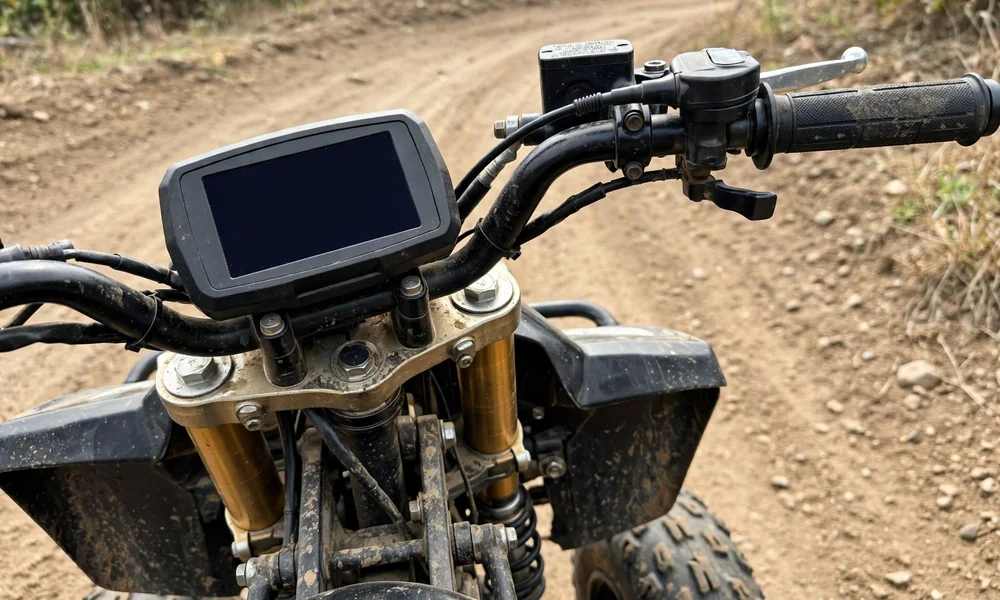
A small display on the handlebars is the ATV’s dashboard. It shows battery level, estimated range, speed, and the selected drive mode, and it often connects to a phone for navigation and ride logging. Luxury models add modes for work, trail, and sport, each changing throttle response, top speed, and how much torque goes to each axle. The best systems also include a quiet mode that caps speed and noise for riding near houses, stables, or wildlife.
Step 7: Charging brings it back to full
Charging is the quiet part of ownership. Most luxury electric ATVs charge from a standard domestic socket overnight, while faster on-board chargers can refill the battery in a few hours from a higher-power outlet. The spec sheet usually quotes a charging time from empty to eighty percent, which is the figure that matters on a working day. With no oil, filters, or exhaust to service, the maintenance list shrinks to tyres, brakes, and the occasional software update.
Key Specifications
The figures below describe a typical luxury electric ATV; individual builds vary.
| Specification | Typical figure |
|---|---|
| Battery capacity | 8 to 15 kilowatt-hours |
| Motor power | 30 to 50 kilowatts |
| Torque | 120 to 200 newton-metres |
| Range | 80 to 150 kilometres per charge |
| Top speed | 80 to 110 kilometres per hour |
| Ground clearance | 280 to 350 millimetres |
| Towing capacity | 500 to 900 kilograms |
| Charging time | 4 to 8 hours on a domestic socket |
How Much Does It Cost?
A luxury electric ATV typically costs from around $18,000 to $35,000, depending on the battery size, the motor, and the finish. That is an estimate based on current flagship models, and the top of the range usually buys a larger battery, adjustable suspension, and a proper weatherproof cabin of accessories rather than a bare machine. Running costs stay low, since electricity is cheaper than petrol and the service list is short, but a replacement battery pack outside warranty can cost several thousand dollars. To compare with its petrol-powered cousin, read luxury ATV specs explained for the figures the electric version has to beat. For the two-wheeled side of electric power, luxury electric motorcycle specs explained shows how the same motors work on a bike. And EV charging port specs explained explains the plugs and speeds that decide how fast the battery refills.

A Rare Fact
Here is something few riders expect: the quietest electric ATVs are so silent that builders have had to add artificial sound for safety. On a working farm, staff and animals cannot hear a silent machine approaching around a blind corner, so some luxury models play a soft, low hum at slow speed that fades away once the ATV is moving faster. The sound is not for the rider, who can barely hear it over the tyres, but for everyone else nearby. It is a strange reversal of a century of engineering, in which builders spent decades making engines quieter, only to add noise back to a machine that had finally become silent.
A luxury electric ATV is not a petrol quad with a battery fitted as an afterthought. It is a machine redesigned around instant torque, a low centre of gravity, and silence, and its spec sheet rewards careful reading: battery capacity for range, torque for climbing, clearance for terrain, and charging time for how it fits a working day. When those numbers line up with the ground you actually ride on, the result is a machine that works hard, costs little to run, and lets you hear the place you are riding through.


