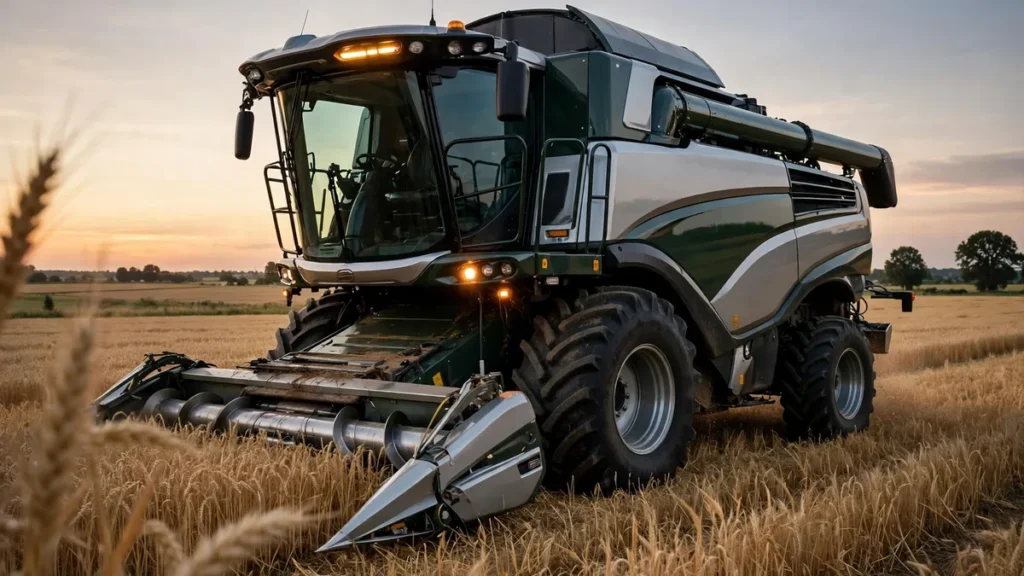
At the edge of a new housing estate, just after sunrise, a digger sits beside a neat pile of earth, and nobody around it is shouting over an engine. The driver climbs into the cab, touches a screen, and the arm swings out in near silence, the bucket biting into the soil and lifting a clean scoop to the waiting truck. It is a luxury electric excavator, and the quiet is the first thing everyone on site notices.
A luxury electric excavator is a digging machine powered by a large battery pack and electric motors, built to move earth, break ground and load trucks without diesel fumes or roaring noise. It is made for owners who work near homes, hospitals, schools and gardens, where a quiet machine matters as much as a strong one. Building it means joining heavy steelwork, thick hydraulics and fine electric control, because an excavator must be both enormously strong and delicately precise, able to lift tonnes of soil and still place a bucket within a few centimetres of a pipe.

How It’s Made
Step 1: Cutting and welding the steel frame
Every excavator starts as flat sheets of thick steel, cut by computer-guided torches into the shapes of the undercarriage, the revolving body and the long arm. The steel is heavy plate, chosen because it must carry the weight of the whole machine and absorb the shock of a bucket striking rock. Workers check each cut edge by hand, looking for burrs and cracks that a machine might miss, before the pieces move to the welding bays.
Step 2: Fitting the tracks and the slew ring
The tracks are the feet of the excavator, and they are built from steel links pinned together into two long chains, each one running around a drive sprocket and a set of rollers. The links are hardened so they can grip mud, gravel and broken concrete without wearing thin too quickly, and the track frame is sealed against dust and water. A luxury machine gets wider track shoes than a standard digger, so it spreads its weight and leaves a lighter mark on lawns and finished ground.
Between the tracks and the upper body sits the slew ring, a giant ball bearing as wide as a dining table, which lets the cab and arm turn in a full circle while the tracks stay still. The ring is bolted down with dozens of high-strength bolts, each tightened to an exact torque and marked with paint so a fitter can see at a glance that none has moved. The same care with a heavy steel frame under a big machine appears in other electric vehicles, and the way a luxury electric crane is made shows how a strong chassis is built before anything else is fitted.
Step 3: Installing the battery pack and motors
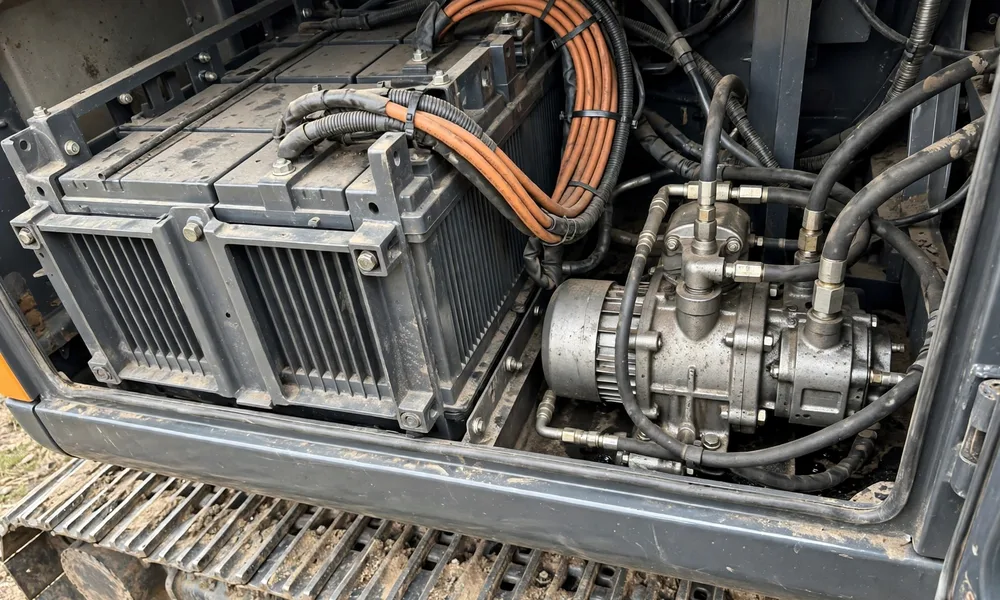
Electric motors do the work of digging, but they do it through hydraulics. One motor drives a pump that sends oil to the cylinders of the boom, the stick and the bucket, and another turns the slew ring, while a third drives the tracks. Each motor can start and stop in an instant, and the driver can feather a movement with a joystick, so a bucket can peel soil away from a buried cable without touching it. That fine control is what makes the machine feel luxurious, because brute strength alone would be useless on a careful job.
Step 4: Building the boom, stick and bucket
The boom is the long first arm of the excavator, built from two steel plates welded into a hollow box, with thick pins at each end. The stick is a slimmer arm that joins the boom to the bucket, and both are fitted with hydraulic cylinders that push and pull them through their arc. The cylinders are polished steel rods sliding through seals, and they must stay perfectly clean, because a single grain of grit can score a rod and cause a leak.
The bucket is the business end, a steel scoop with hardened teeth along its cutting edge and a replaceable wear plate on its underside. Buckets come in different widths for different jobs, from a narrow trenching bucket that cuts a neat slot for a pipe to a wide grading bucket that smooths a driveway. The driver can swap a bucket in minutes with a quick coupler, and the pins are greased by hand each morning, a small ritual that keeps the whole arm moving smoothly for years. The way the arm moves on site is close to what a luxury electric excavator does at work shows, with the same quiet swing and precise bucket control.
Step 5: Fitting the cab, testing and the first dig
The cab is a glass box mounted on dampers, with a heated seat, air conditioning and a screen that shows the battery level, the hydraulic temperature and the weight on the bucket. The joysticks are weighted to feel like the controls of a fine machine, and the glass is tinted to cut glare without dimming the view of the trench. Sound insulation is so good that the driver can hear a radio at low volume, and the cab is sealed so dust stays outside.
Before the excavator leaves the factory it is tested on a proving ground, digging through clay, gravel and broken stone while engineers watch for leaks, overheating and any hesitation in the arm. The machine lifts, swings and dumps a full bucket hundreds of times, and the battery is drained and recharged to check its true working time. Only when the bucket has dug a straight trench, loaded a truck and parked without a fault is the machine signed off. The same long proving run is part of every big electric build, and the way a luxury electric bulldozer earns its price shows how much testing goes into a premium machine before it is trusted with real work.
| Specification | Typical machine |
|---|---|
| Power source | Large battery pack in a sealed steel case, charged overnight |
| Motors | Electric motors driving hydraulic pumps for arm, slew and tracks |
| Undercarriage | Steel track chains with wide shoes and sealed rollers |
| Slew ring | Giant ball bearing letting the upper body turn a full circle |
| Boom and stick | Welded hollow steel box arms with hydraulic cylinders |
| Bucket | Hardened steel scoop with replaceable teeth and wear plate |
| Cab | Glazed, air-conditioned, battery and hydraulic displays |
| Working time | A full day of digging on one overnight charge |

A luxury electric excavator is an estimate of $180,000 to $450,000, depending on its size, the reach of its arm and the capacity of its battery. The price covers the machine, the battery and charging equipment, the first service visits and the training for the driver who will work with it every day.
Here is a rare fact worth knowing. The very first excavators were not machines at all but men with shovels and wheelbarrows, and the first steam shovels of the 1800s were so heavy and slow that they needed a whole crew just to move them into place. A modern electric excavator can be driven by one person, digs in near silence, and can place its bucket within a few centimetres of a buried pipe, while the only sound on site is the soft whir of its motors and the earth falling into the truck.