The wheat was ready a week early, and the farmer who owned the field knew it the moment he walked into it that morning. The heads were heavy, the stalks were dry, and the forecast gave him four clear days before the rain arrived. He had one machine to bring the whole crop in, and it was worth more than the house he slept in.
When the machine rolled out of the shed, the first thing anyone noticed was what was missing. There was no diesel rumble shaking the yard, no blue smoke, and no smell of fuel hanging in the air. It moved across the field almost quietly, its header lowering like a slow wave, and the wheat disappeared into it in a steady golden stream.
A luxury electric harvester is one of the most expensive machines a farm will ever buy, and the price surprises almost everyone who first hears it. This article explains where that money goes, from the battery pack underneath to the cab where the driver works, and why the machine costs so much more than an ordinary harvester.
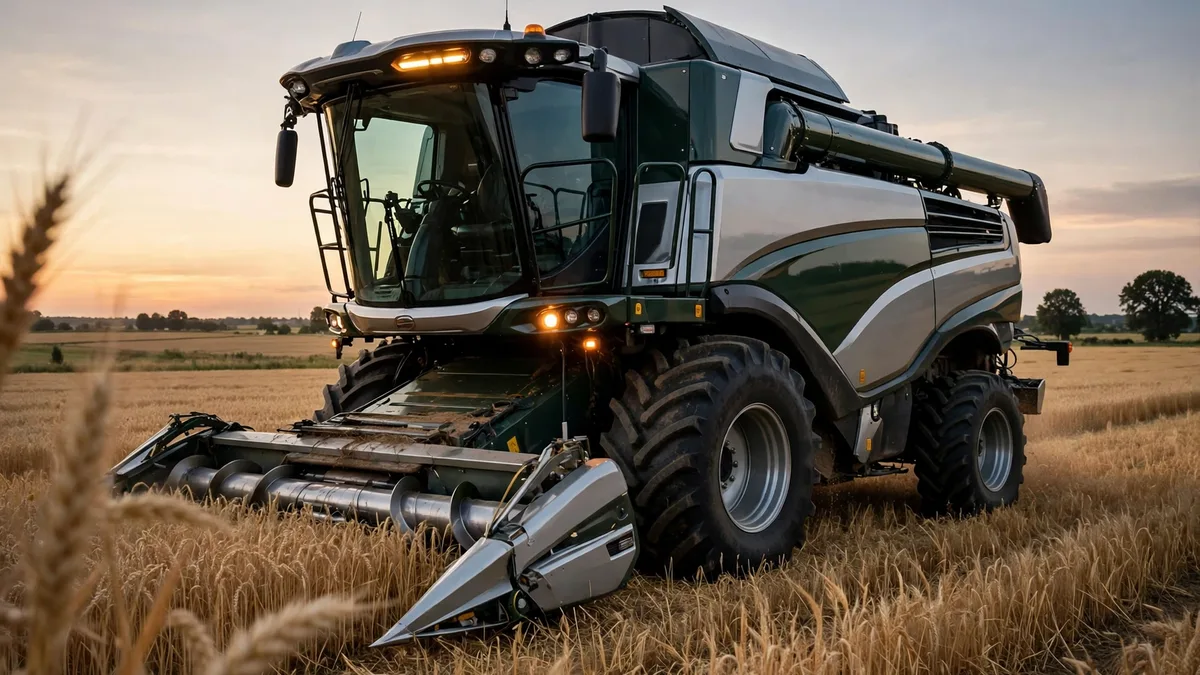
1. The battery: a power station on wheels
The single most expensive part of a luxury electric harvester is its battery. A big harvester needs a battery pack of several hundred kilowatt-hours, large enough to run the header, the threshing drum, the grain handling system, and the wheels all at once for a full working day.
The battery is also protected like something precious. It sits inside a sealed steel case with its own cooling system, because a harvester works in the hottest, dustiest conditions a machine can face. A battery that fails in the middle of harvest can cost a farmer the whole crop, so the protection around it is built without compromise. Like a luxury tractor, the machine is designed so that its most expensive part is also its best protected one.
2. How a luxury electric harvester is built
Building one of these machines takes weeks, and the order of the work matters.
- The frame comes first. Welders build a heavy steel chassis that can carry tonnes of grain, a huge battery, and a header wider than a road, all while bouncing across uneven ground.
- The battery pack is fitted. Workers lower the sealed pack into the frame and connect its cooling lines, its safety cut-offs, and the thick cables that will carry power to every motor.
- The electric motors are installed. Separate motors drive the wheels, the header, and the threshing drum, so each one can be controlled on its own and stopped the moment something goes wrong.
- The threshing system is built in. The drum, the sieves, and the grain elevator are fitted and balanced, because a drum that shakes even slightly will wear itself out in a single season.
- The cab is added. The glass, the seat, the screens, and the climate system go in last, so the driver gets a quiet, dust-free place to work through a twelve-hour day.
- The machine is tested. Engineers run it on a test field, checking that the battery lasts, the grain comes out clean, and nothing overheats under a full load.
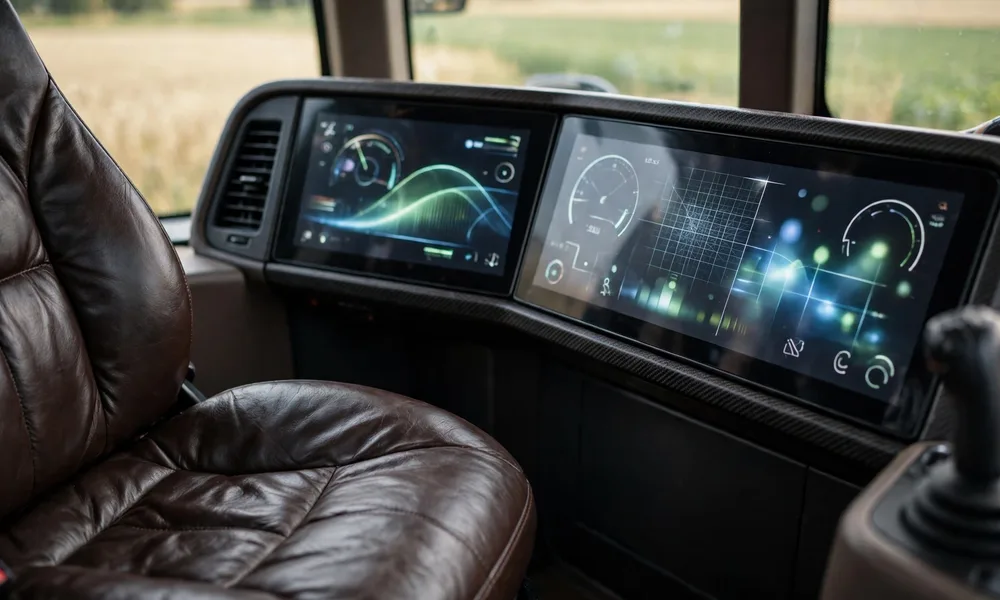
3. How it works in the field
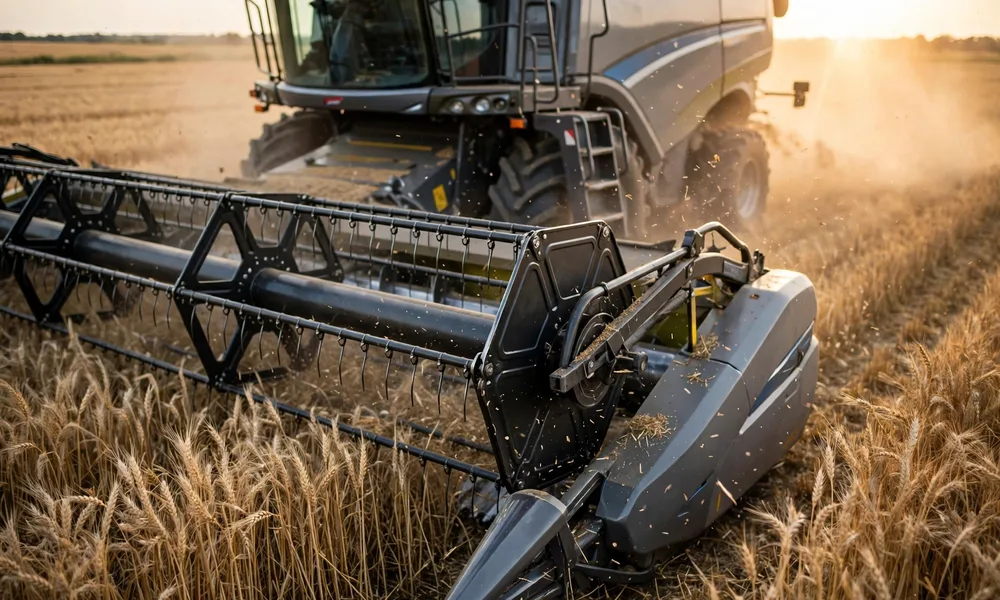
In the field, the harvester does three jobs at once. The header at the front cuts the crop and feeds it into the machine. The threshing drum then beats the grain free from the stalks, and the sieves shake the grain clean while the straw is blown out of the back. All three jobs run on electric motors, and the driver can adjust each one from the cab without stopping.
The electric drive is what makes the machine feel different. A diesel harvester has one engine that must power everything, so the driver is always balancing speed against power. An electric harvester gives each job its own motor, so the header can slow down for a thin patch of crop while the drum keeps its speed. The silence matters too: the driver can hear a bearing starting to fail or a stone hitting the header, sounds that a diesel engine would drown out completely. That quiet working life is part of why the price of a luxury tractor follows the same pattern, with the electric parts costing far more than the steel around them.
4. What it costs, and what you get for it
A luxury electric harvester is not a single price but a range, because the size of the machine, the size of the battery, and the level of automation all change the final number. As an estimate, a large luxury electric harvester costs between $650,000 and $1,100,000, depending on the header width, the battery size, and the options fitted. Smaller models cost less, and a machine with full self-driving features sits at the top of the range.
| Specification | Typical figure |
|---|---|
| Battery capacity | 400 to 700 kilowatt-hours |
| Header width | 7 to 12 metres |
| Grain tank | 10,000 to 14,000 litres |
| Working speed | Up to 10 kilometres per hour |
| Weight | 18 to 25 tonnes |
| Estimated price | $650,000 to $1,100,000 |
The running costs are where the machine starts to pay some of that price back. Electricity costs far less than diesel for the same amount of work, and electric motors have fewer moving parts to wear out, so servicing is simpler and less frequent. The high price also reflects the small numbers built: only a few thousand luxury harvesters are made each year, so the cost of designing the machine is shared across far fewer buyers than a family car.
5. A rare fact about the first electric harvesters
Here is a fact that surprises most people: electric harvesters are not a new idea at all. More than a hundred years ago, some farms tried running threshing machines from electric motors fed by cables from a fixed power source, because the early petrol engines were unreliable and hard to start. The idea faded when cheap diesel engines arrived and farms spread out beyond the reach of any cable. The modern luxury electric harvester is, in a way, an old idea that had to wait a century for its battery to catch up.
That history is a useful way to understand the price. The cost is not in the steel or the cutting blades, which have changed little in decades. It is in the battery, the motors, the software, and the quiet cab, all of which turn a simple cutting machine into something closer to a power station that happens to harvest wheat. A luxury electric crane tells the same story in a different industry: when a machine swaps diesel for batteries, the price goes up first and the savings arrive slowly, season by season.
So the next time you see a harvester moving through a field with barely a sound, remember what is inside it. The price is not a mistake, and it is not a luxury for its own sake. It is the cost of a battery big enough to run a farm machine all day, motors precise enough to save every grain, and a cab quiet enough to work in for twelve hours.