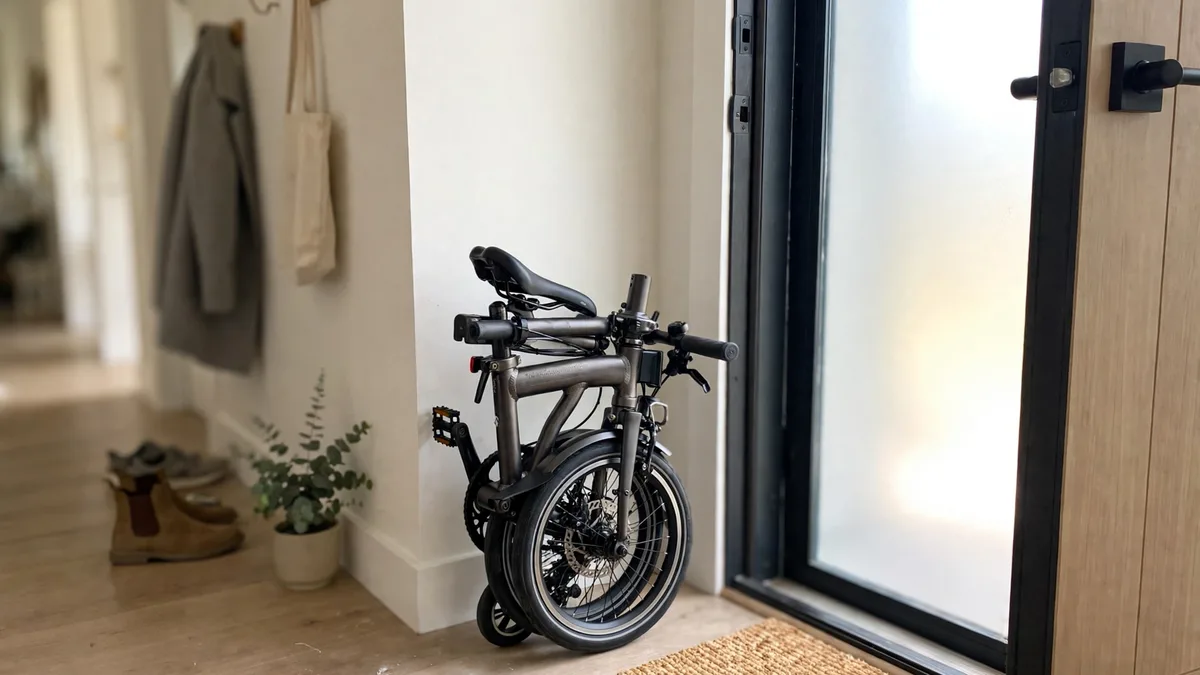
The train doors sigh open, the platform is crowded, and the woman stepping off is carrying what looks like a large suitcase on small wheels. Thirty seconds later she is riding away through the morning traffic, pedalling a full-size electric bike that, a minute ago, was folded flat enough to slide under a desk. That is the quiet magic of a luxury folding e-bike: it refuses to choose between being a serious machine and being something you can carry up a flight of stairs.
Making one is a harder engineering problem than building an ordinary e-bike, because every hinge is a place where a frame wants to flex, and every fold is a place where a cable, a chain or a battery wants to get in the way. Here is how it comes together, from a stack of aluminium tubes to a bike that fits in a hallway cupboard.
How It’s Made
Step 1: The frame is designed around its hinges
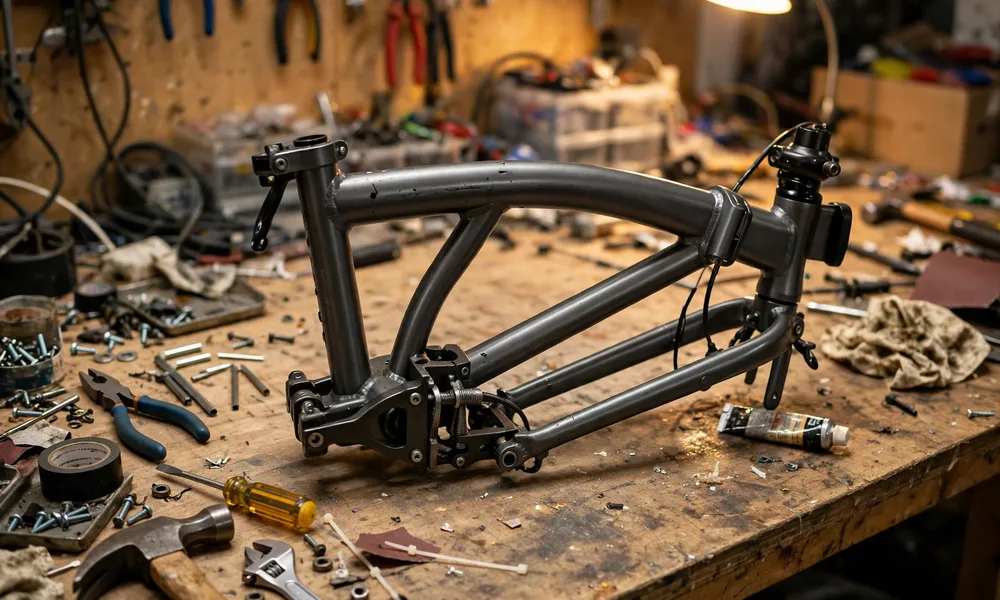
Everything starts with the fold. Engineers decide first where the bike will bend — usually a hinge in the middle of the main tube and a second hinge at the handlebar stem — and then design the frame around those two points. The tubes are drawn from 6061 or 7005 aluminium alloy, or laid up in carbon fibre on the most expensive models, and the hinge plates are machined from solid billet rather than cast, because a hinge that flexes even a fraction of a millimetre will make the whole bike feel vague. The frame is drawn full-size on a jig, and the hinge barrels are welded or bonded in place before anything else, since their alignment decides whether the bike folds flat or fights its owner every time.
Step 2: Hinges, latches and safety catches are fitted
A folding bike lives or dies by its latches. Each hinge gets a quick-release clamp with a cam lever, a secondary safety catch, and a small magnet or clip that holds the folded halves together so the bike does not spring open in a lift. The clamp faces are machined flat and the pivot pins are hardened steel, ground to a tolerance of a few hundredths of a millimetre. Workers test each latch by opening and closing it hundreds of times on a bench rig, listening for the solid click that tells a rider the joint is locked.
Step 3: The motor and battery are packed into the fold
The electric heart of the bike has to fit inside the folded shape, not stick out of it. Most luxury folders use a compact hub motor in the rear wheel or a small mid-drive unit at the bottom bracket, paired with a slim battery that hides inside the main frame tube or clips under the seat post. The battery cells are grouped into a custom-shaped pack, often 36 or 48 volts, and the wiring is routed through the frame with slack loops at each hinge so the cables bend instead of stretching. Builders test the fold with the battery in place, checking that no wire is pinched and that the pack can be removed with one hand for charging at a desk.
Step 4: Small wheels, folding handlebars and a telescopic post
Folding bikes run on small wheels, usually 16 or 20 inches, and those wheels have to be built to a higher standard than their size suggests, because a small wheel spins faster and hits potholes harder. The rims are double-walled aluminium, the spokes are tensioned by hand, and the tyres are puncture-resistant with a reflective sidewall stripe. The handlebar stem folds down on its own hinge and the seat post telescopes, so the whole package collapses to roughly the size of a suitcase.
Step 5: Brakes, lights and the folding test
With the frame complete, the bike gets hydraulic disc brakes, which matter more on a folding bike than on a full-size one, because the small wheels stop quickly and the rider sits upright with their weight high. Integrated lights run off the main battery, the bell and the display are mounted on the folding bars, and a small sensor cuts the motor the instant the brakes are touched. Then comes the folding test: a worker folds and unfolds the bike fifty times, timing it, and the target is under thirty seconds with no tools and no scraped knuckles. If a cable catches or a latch sticks, the bike goes back to the bench.
Step 6: Final assembly, tuning and the ride check
The last stage is a full ride check on a short test track. A technician rides the bike unfolded, checking that the hinges stay silent over bumps, that the motor assistance is smooth through its three or four levels, and that the bike tracks straight with no hands on the bars. The gears are indexed, the brakes are bedded in, and the folding mechanism is lubricated and wiped clean. Only then is the bike folded one final time, wrapped in a protective cover, and packed with its charger and a small toolkit. The buyer gets a machine that feels like a normal e-bike on the road, which is the whole point — the fold should be invisible until you need it.
Folding E-Bike Specifications
| Specification | Typical luxury figure |
|---|---|
| Frame | Aluminium alloy or carbon fibre, twin-hinge folding |
| Motor | 250 W hub or mid-drive motor |
| Battery | 36–48 V, about 300–500 Wh, removable |
| Wheels | 16 or 20 inch, double-wall rims |
| Weight | About 16–22 kg depending on specification |
| Folded size | Roughly 85 × 65 × 40 cm |
| Range | About 50–90 km per charge (estimate) |
| Brakes | Hydraulic disc brakes, front and rear |
How Much Does One Cost?
A luxury electric folding bike typically costs between about $3,500 and $7,000, with the most exotic carbon-fibre models reaching past $9,000. Those are estimates based on current premium models, and the price climbs with lighter frames, longer-range batteries and better components. What the money buys is not speed — most are limited to 25 km/h of assistance — but the engineering that lets a full-size ride disappear into a small space, and the freedom to take a bike on a train, into an office or up to a flat without ever hunting for a rack.
A Rare Fact
The folding hinge is older than the bicycle itself in spirit: the first folding bikes were built for soldiers in the 1890s, who needed a machine they could carry over fences and into trenches. Modern luxury folders still borrow a trick from those military designs — the hinge pin is deliberately the strongest part of the frame, not the weakest, so the joint that folds is also the joint that takes the hardest loads. It is a neat reversal of the obvious assumption, and it is why a well-made folder can outlast a rigid bike of the same weight.
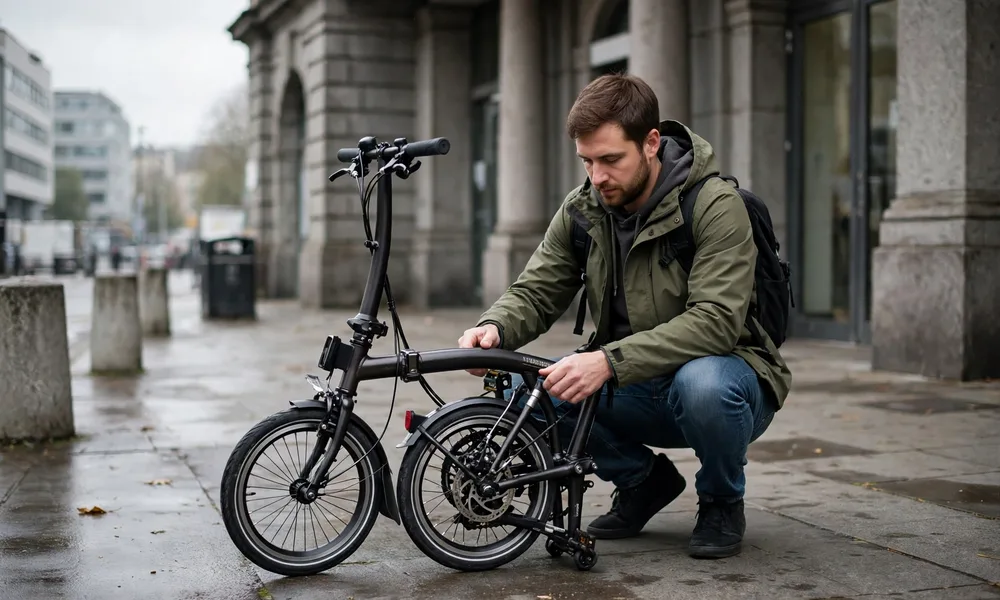
Compared with a conventional machine, the folder asks its owner to accept smaller wheels and a little more weight in exchange for a bike that goes everywhere with them. The engineering behind that trade is closer to a electric mountain bike than to a city runabout, and the electric system is the same idea as in a electric bike, just packed tighter. Even the enclosed, weatherproof thinking behind a electric velomobile shows up here, in the way cables and batteries are hidden away from rain and knocks. Folded, it is luggage. Unfolded, it is simply a good electric bike — and that is the hardest trick of all to pull off.