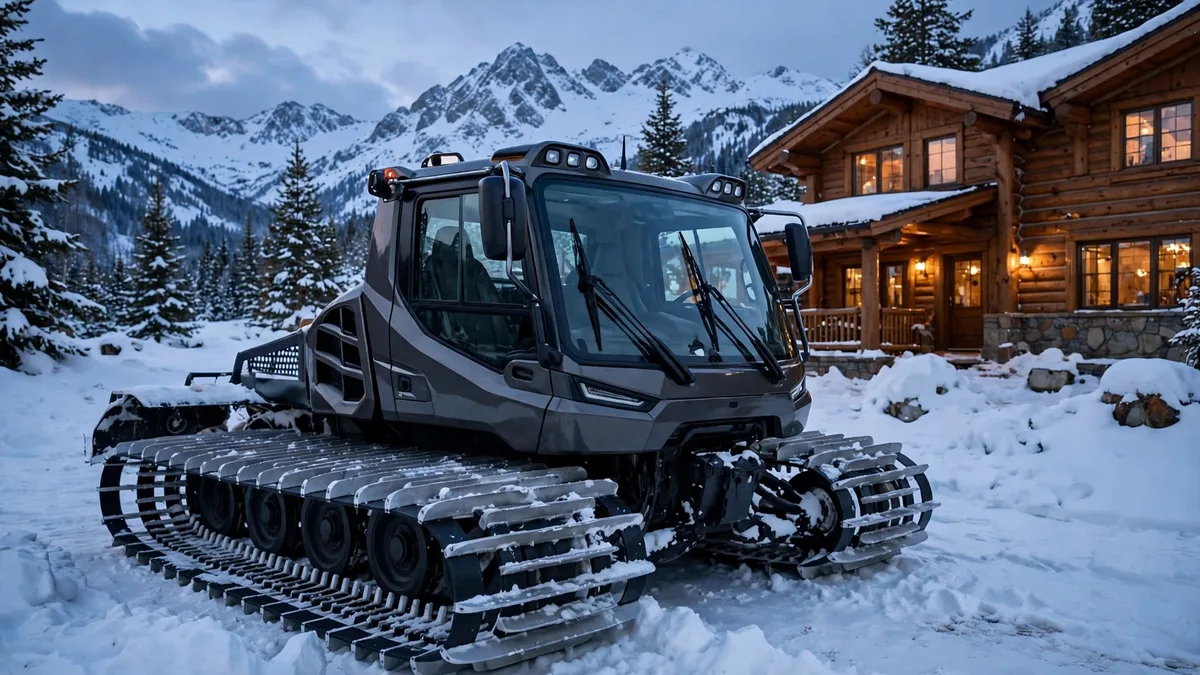
The snow is falling sideways, the wind is shaking the pines, and the little mountain lodge at the top of the valley is cut off from the road. Then a low shape appears through the whiteout, moving steadily uphill on wide rubber tracks, its cabin glowing warm, its headlights cutting two clean tunnels through the snow. It stops at the lodge door, the doors open, and the guests step out dry, warm and smiling, as if they had arrived by taxi.
That shape is a luxury electric snowcat, and it is the only vehicle that can do this job in silence. It carries people and supplies across snow that would swallow a wheeled vehicle, grooms private slopes before breakfast, and does it all without a drop of diesel or a cloud of exhaust. Under its calm, boxy body sits a machine built for the coldest, quietest work a vehicle can do.
How It Works
Step 1: The battery powers everything
At the heart of the snowcat sits a large battery pack, mounted low in the frame between the tracks. Keeping it low matters, because a snowcat spends its life on side slopes and soft snow, and a high centre of gravity would tip it. The pack is sealed in a steel case, insulated against the cold, and fitted with its own heater, since a freezing battery gives up far less energy than a warm one.
The battery does more than drive the tracks. On a cold morning, the snowcat warms its own battery before it moves, drawing a little power to heat the pack so the rest of the day’s work is efficient. The same careful approach to a battery in a hostile environment shows up in other electric machines, and the way a luxury electric snowcat is made shows how the pack is fitted and sealed before anything else is built around it.
Step 2: Two motors drive the tracks
Most luxury electric snowcats carry one electric motor for each track, so the left and right sides can be driven independently. That is how the machine steers. To turn left, the left track slows and the right track speeds up, and the snowcat pivots in its own length. There is no steering wheel connected to the tracks by gears and shafts, only software deciding how fast each motor should spin.
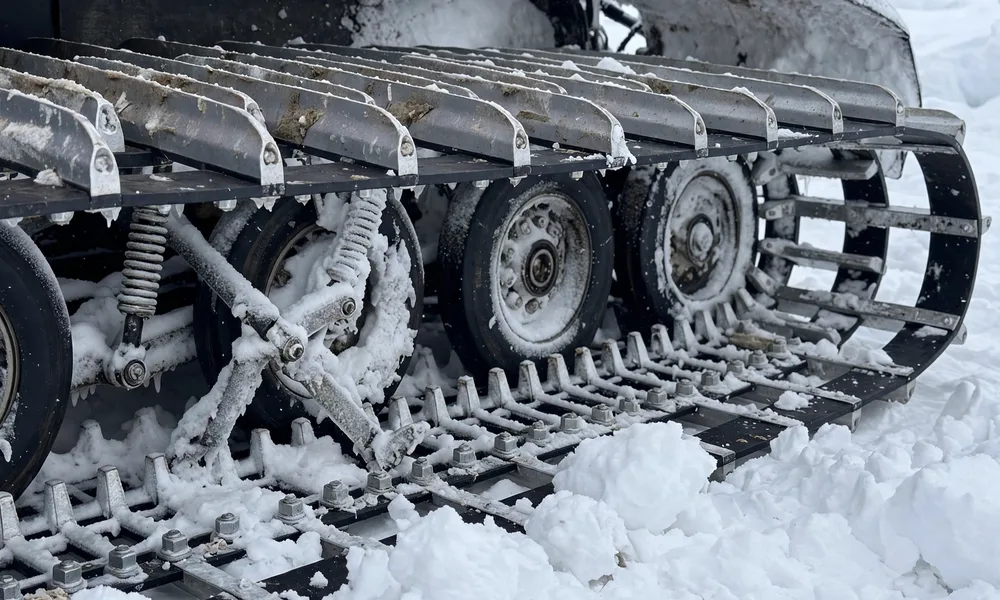
Electric motors are perfect for snow work because they deliver full torque from a standstill, the exact force needed to break free when the tracks are frozen into overnight snow. The tracks themselves are wide belts of rubber with steel grousers, bars that bite into the snow, and they spread the snowcat’s weight so it floats on powder instead of sinking.
Step 3: Steering and traction in deep snow
Driving a snowcat is less like driving a car and more like sailing. The driver steers with a wheel or a pair of levers, and the machine responds slowly, deliberately, as the tracks grip and slip in the snow. Sensors on each motor watch for a track that is spinning without moving the machine, and the software eases off the power before the track digs itself into a hole.
On a side slope, the snowcat leans into the hill, and the low battery keeps it planted. In powder deeper than the tracks, the machine’s wide footprint and gentle speed let it climb on top of the snow rather than ploughing through it.
Step 4: The cabin keeps everyone warm
Inside, the cabin is the luxury part. Heated seats, a heated windscreen, thick insulation and a heater that runs off the battery keep the temperature comfortable even when it is minus twenty outside. The windows are large and low, so passengers can watch the mountains slide past, and the cabin is sealed against drafts, because a cold draught at speed in a snowstorm is miserable.
The controls are simple, a small screen showing the battery, the range and the track temperature, a few big buttons that work with gloves on, and a radio for talking to the lodge. Building a comfortable, sealed cabin for a machine that works in brutal conditions is a familiar challenge, and the way a luxury electric quad bike is made shows how engineers protect riders and electronics from mud, water and cold in a much smaller package.
Step 5: Grooming the snow behind it
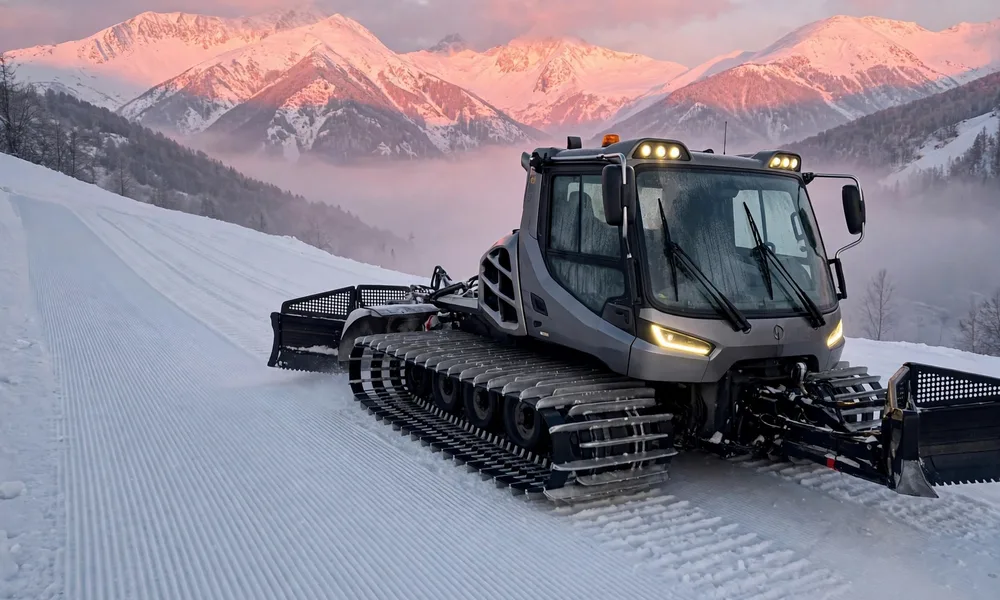
Many luxury snowcats carry a grooming attachment at the back, a wide tiller that breaks up the snow surface and combs it into the smooth corduroy that skiers love. As the snowcat moves forward, the tiller spins, churning the top few centimetres of snow and laying it down in even ridges, while a trailing mat smooths the finish.
The driver watches the tiller on a small camera, adjusting its depth as the snow changes, because a tiller set too deep churns up dirt and a tiller set too shallow leaves the slope lumpy.
Step 6: Charging and surviving the cold
At the end of the day, the snowcat returns to its garage and plugs in. Charging takes several hours, and the garage is heated, so the battery charges at a comfortable temperature and the tracks thaw. The snowcat’s software checks itself overnight, reporting any fault to the lodge, and in the morning the machine is warm, charged and ready before the first guest wakes.
Cold is the enemy of every part of the machine, from the battery to the rubber of the tracks, which stiffens in extreme cold, so the snowcat is designed to be stored warm and to warm itself before work. The same thinking about keeping an electric vehicle healthy in harsh weather applies across the whole electric range, and the way a luxury electric UTV is made shows how engineers seal batteries, motors and wiring against the weather a machine will actually face.
| Specification | Typical luxury model |
|---|---|
| Battery | Large lithium pack, heated and insulated |
| Motors | One per track, independent drive for steering |
| Range | About 80 to 150 km per charge, depending on snow |
| Top speed | Around 20 to 30 km per hour on snow |
| Passengers | Driver plus 5 to 10 passengers, depending on cabin |
| Tracks | Wide rubber belts with steel grousers |
| Cabin | Heated seats, heated windscreen, insulated body |
| Grooming | Rear tiller and finishing mat for slope grooming |
A luxury electric snowcat is an estimate of $250,000 to $600,000, depending on cabin size, battery and grooming equipment, with the largest resort machines costing more. That is a serious sum, but it buys a vehicle that replaces a diesel snowcat, a shuttle bus and a grooming machine, while running almost silently and costing far less to maintain, since an electric motor has a fraction of the moving parts of a diesel engine. Charging overnight costs a few dollars of electricity, and the main running costs are track wear and the grooming tiller.
Here is a rare fact worth knowing. The first snowcats were built in the 1920s from converted cars with tracks bolted on, and they were so loud and smoky that mountain lodges used to hear them coming for miles. The electric snowcat has come full circle, back to the silence of the mountains themselves, and the strangest thing about riding in one is that you can hear the snow. The tracks crunch, the wind moves through the pines, and the machine that carries you through the storm makes almost no sound of its own.


