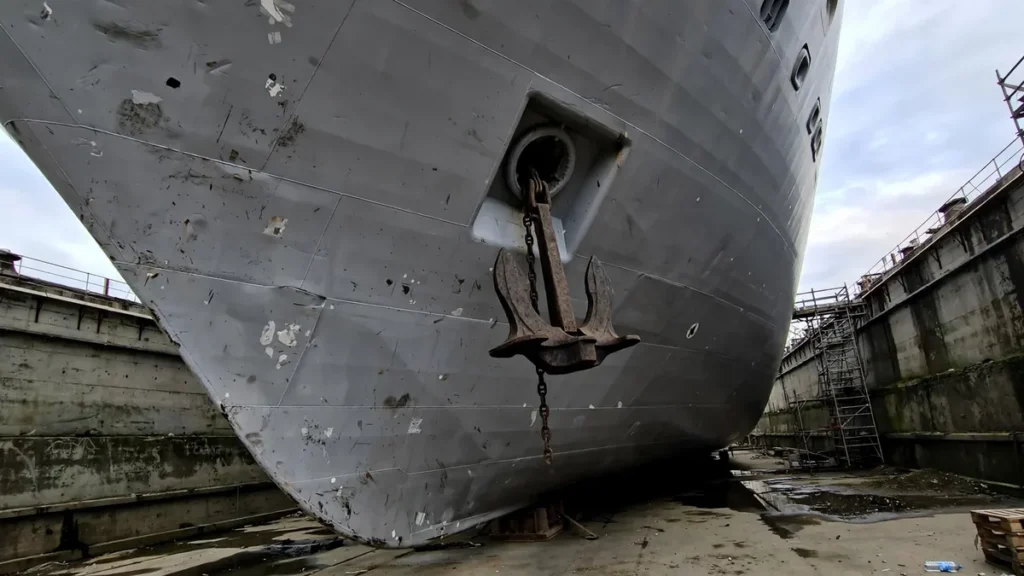
On the bridge of a luxury ship, the order to anchor is given in a single quiet word, but on the foredeck it sets off a sequence of noise and motion barely changed in a hundred years. A brake is released, a great weight of steel begins to move, and the anchor chain rattles out through the hawsepipe in a roar heard all over the ship, until the anchor hits the seabed and the chain settles into a long curve on the bottom.
That is the chain at work, and its job is not to hold the ship by strength alone. It holds by weight, by shape, and by the way it runs through the deck machinery. Here is how the operation runs, from letting go to hauling the anchor home again.

How It Works
The chain at rest
Between anchorings, the chain lives in the chain locker, a deep steel compartment below the foredeck. The crew flake it down carefully as it comes aboard, laying it in layers so it will run out cleanly next time, because a tangled pile is how a chain jams at the worst possible moment.
The inboard end of the chain, the bitter end, is secured to a strong point in the locker with a releasable link. It is the last line of defence: if the chain runs away, the bitter end holds it, and it can be slipped in an emergency if the ship must abandon her anchor and run. The anchor itself hangs ready in its pocket in the bow, the chain running from the locker, up through the hawsepipe, over the gypsy, and down to the anchor.
Letting go: the brake does the talking
Anchoring starts at the windlass, the great machine on the foredeck that hauls the chain. Before letting go, the crew take the weight of the anchor on the windlass brake, a band wrapped around a drum that holds the full load of chain and anchor with friction alone. The brake is the most important control on the foredeck, and the crew treat it with respect.
When the bridge gives the order, the brake is eased open and the anchor drops. At first the chain follows slowly, then faster as the weight already out pulls more after it. The crew control the speed with the brake, tightening it to slow the run and easing it to let the chain flow, because a chain that runs out too fast can pile up, jump the gypsy, or damage the locker. The rumble of the chain is the sound of the brake working, and an experienced crew can judge the speed by ear.
The gypsy takes hold
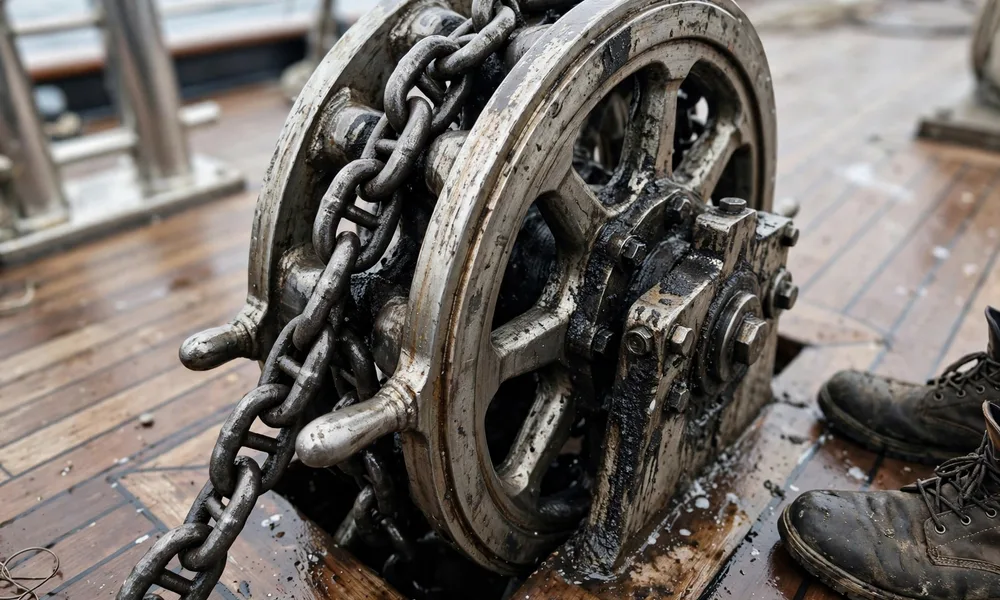
Between the locker and the sea sits the gypsy, a wheel with pockets around its rim, each shaped to fit one link of the chain. The gypsy is the heart of the operation. When the chain runs out, it passes over the gypsy, and each link settles into a pocket as the wheel turns, so chain and wheel move together without slipping.
On letting go, the gypsy is disconnected from the windlass motor and allowed to spin freely, so the chain can run out under its own weight with only the brake to govern it. The pockets keep the chain in line as it flies over the wheel, and the crew watch the gypsy closely, because a link that fails to seat will jam the wheel. The machinery that drives the gypsy when it is time to haul back is built to match the chain it serves, and how a luxury ship anchor winch works explains the windlass above the chain and the power it brings to the job.
Riding at anchor: the curve that holds
Once the anchor is on the seabed, the crew pay out more chain until the ship is riding on a long scope, several times the water’s depth. The chain does not hang in a straight line from bow to anchor. It sags in a curve, called a catenary, with a long length lying on the seabed, and that curve is what holds the ship.
When wind or current pushes the ship, the curve absorbs the pull. The ship surges, the chain lifts a little off the bottom, and the weight of the lifted chain pulls her back. Only in a hard blow does the chain pull straight, and only then does the anchor feel the full force. The crew watch constantly, and if the ship starts to drag, they pay out more chain. The length of chain carried is part of the ship’s outfit, and the luxury ship anchor chain specs explained sets out the figures that decide how much chain a ship carries and how deep she can anchor.
Hauling back: the windlass earns its keep
Weighing anchor reverses the process. The crew engage the gypsy to the windlass motor, and the windlass begins to turn, its pockets gripping link after link and hauling the chain up through the hawsepipe. It is slow, heavy work, and the windlass strains audibly as it lifts the chain hanging in the water.
As the chain comes up, the crew wash it. A hose plays over the links as they pass the hawsepipe, blasting off the mud and sand, because a chain that goes into the locker dirty will corrode and jam. The anchor is the last thing to come up, breaking the surface with a rush of water and swinging into its pocket in the bow, where it is secured for sea. The pocket it sleeps in is shaped around it, and how a luxury ship anchor pocket works shows the hidden recess that holds the anchor tight against the hull while the ship is under way.
When things go wrong
Chain operations go wrong in a handful of familiar ways, and the crew train for all of them. A chain can jump the gypsy if a link is worn or a pocket is damaged, and the wheel will jam with a bang that stops the operation. A chain can foul its own anchor, wrapping around a fluke on the seabed, so hauling back only drags the anchor sideways. And a chain can twist in the locker, piling into a knot that will not run out when needed.
The answers are unglamorous: stop, inspect, and sort it out by hand. The crew carry a heavy hammer for tapping a jammed link free, and will go into the locker with a lantern to untangle a pile by hand. Prevention is better than any cure, which is why the chain is inspected during refits, the gypsy pockets are measured for wear, and the brake is tested before every anchoring. A chain that is looked after will run cleanly for decades, and one that is neglected will fail at the worst possible moment.

Why It Matters at Sea
An anchor chain is the simplest safety device on a ship, and the most demanding to operate well. It has no electronics, no software, no backup system. It works because of its weight, its curve on the seabed, and the machinery that controls its speed, and the operation depends on the crew understanding those three things.
When the anchor drops cleanly, the ship settles on her chain, and the crew can stand down knowing she will stay where she is through the night. That quiet confidence is the product of a brake that holds, a gypsy that grips, and a chain that runs true, earned anew on every anchoring.