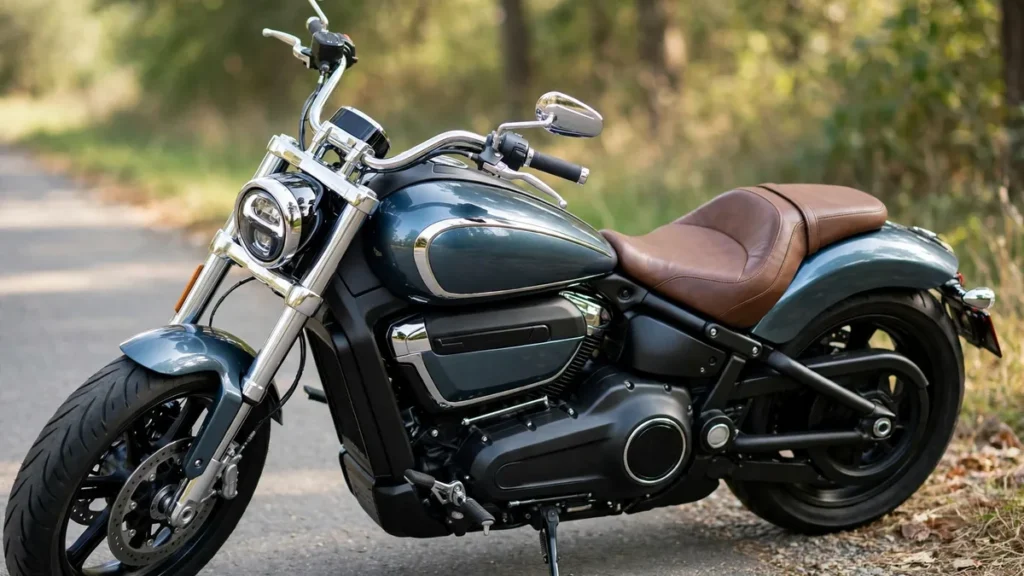
A luxury electric truck pulls away from the lights with a load that would strain a diesel, and it does it in near silence. There is no roar, no gear change, no shudder, just a smooth, steady push that keeps going until the road runs out.
Under the cab there is no engine, no gearbox full of cogs and no exhaust. There is a battery the size of a bed, motors at the axles and software that thinks about every hill. This is how a luxury electric truck works, from the battery to the wheels.
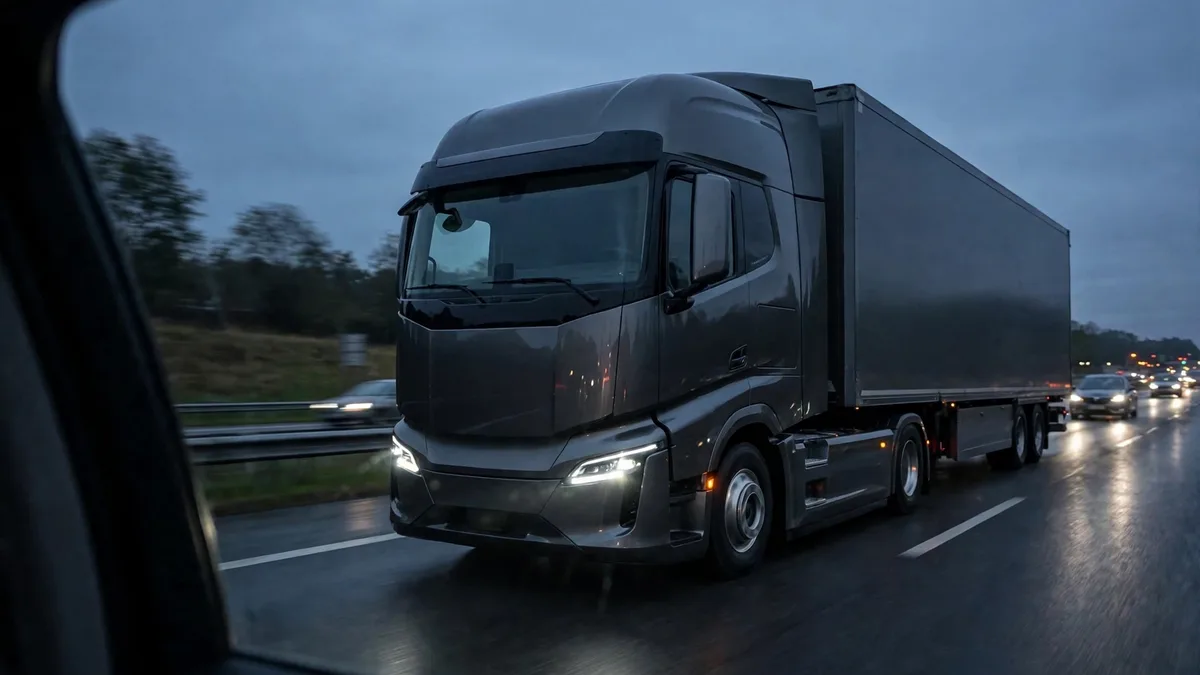
How It Works
Step 1: The battery stores the energy
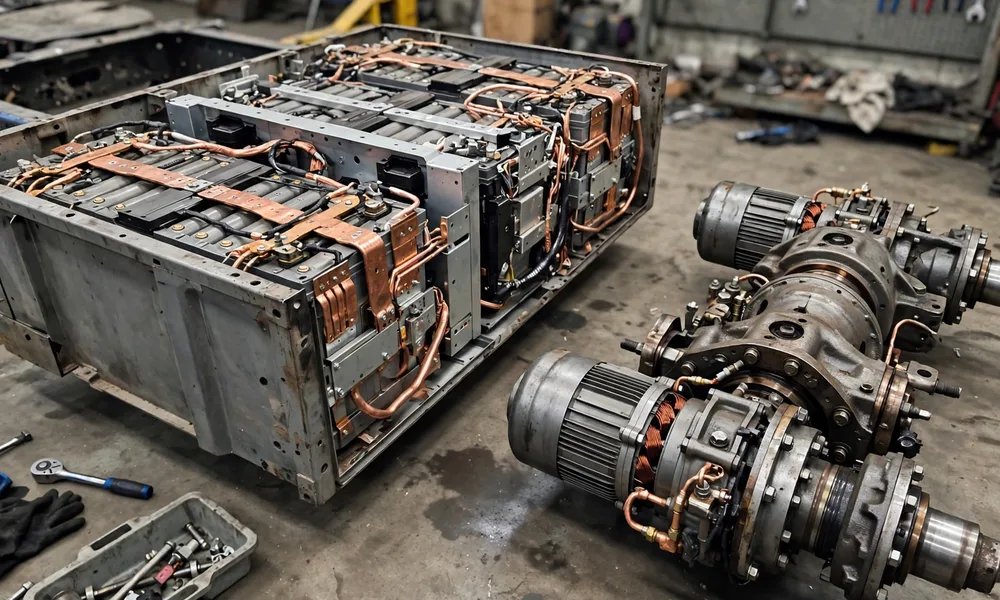
The truck carries its energy in a battery pack mounted low in the chassis, between the frame rails, where its weight keeps the truck stable. The pack is made of thousands of cells, grouped into modules, each one watched by a computer that checks its temperature and charge, and cools it with liquid if it gets warm. The pack is sealed against rain and road spray, and protected by a steel case, because a truck battery has to survive a working life of bumps, dust and bad weather.
The battery is charged overnight at a depot, or quickly at a high-power charger on the road, and it holds enough energy for a full day of hauling. The driver sees the range on a screen in the cab.
Step 2: The motors turn the wheels
The motors sit at the axles, close to the wheels they drive, and there is often one for each axle, so the truck has power at every wheel that needs it. Each motor is a compact electric unit that makes its full turning force the instant it starts, which is why an electric truck can pull a heavy trailer away from a standstill without a struggle, and climb a hill without dropping speed.
The motors are cooled by liquid, like the battery, and they are sealed against dust and water. They have almost no moving parts to wear out, so an electric truck spends far less time in the workshop than a diesel.
Step 3: The gears and axles share the load
Between the motors and the wheels sits a small gearbox, usually with only two or three ratios, because an electric motor works well over a wide range of speeds and does not need the many gears a diesel does. The gearbox multiplies the turning force for starting and for steep hills, then shifts to a taller ratio for cruising, and the shift happens so smoothly the driver barely notices it.
The axles themselves are built heavier than a car axle, with strong housings and large bearings, because they carry the weight of the load as well as the power of the motors. The air suspension can raise or lower the truck to meet a loading dock.
Step 4: Regenerative braking recovers energy
When the driver lifts off the accelerator or presses the brake, the motors stop being motors and become generators. They turn the motion of the truck back into electricity and feed it into the battery, slowing the truck at the same time, and on a long downhill stretch this can put a useful amount of energy back into the pack.
The friction brakes, large discs at every wheel, are kept for hard stops and for holding the truck still. Because the motors do most of the everyday braking, the disc brakes last far longer than on a diesel truck.
Step 5: The cab and the driver work together
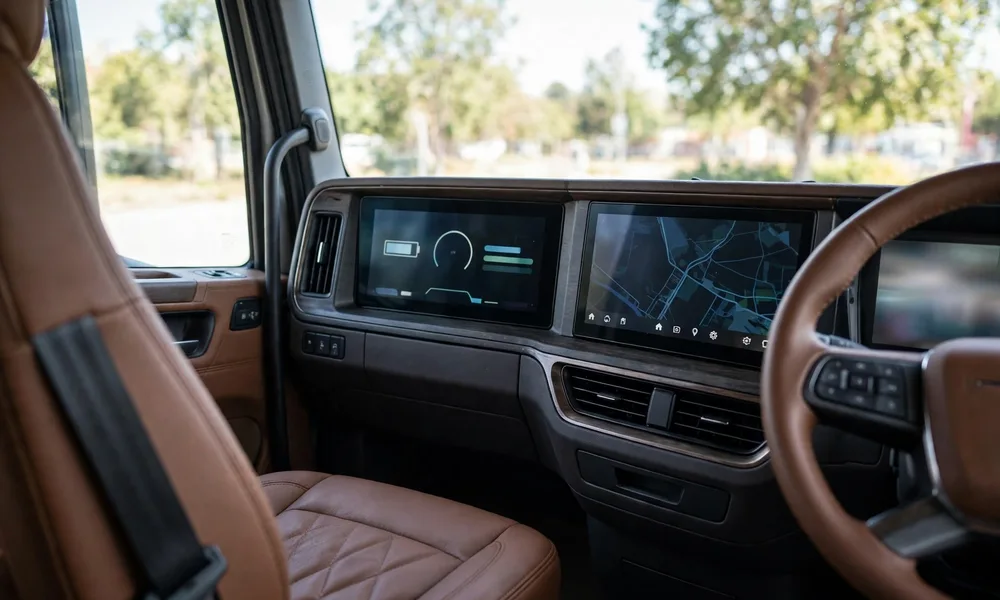
The cab of a luxury electric truck is a quiet, comfortable place, with no engine vibration coming through the floor and no exhaust noise. The seats are air-suspended, the screens show the range, the charging plan and the state of the battery, and the mirrors are replaced on some trucks by cameras, which give a wider view and cut the wind noise.
The truck also watches the road ahead with cameras and radar, warning the driver of a vehicle in the blind spot and braking on its own if a car stops suddenly ahead. The driver stays in charge, but the truck is always watching, and it never gets tired.
Step 6: Charging and the depot keep it running
At the end of the day the truck returns to its depot, where it is plugged in and charged overnight, when electricity is cheapest. The depot charger checks the battery health and charges each truck in turn, so the whole fleet is ready by morning. The truck can also be charged on the road, at a high-power charger, in the time it takes the driver to eat and rest.
The depot also keeps the truck clean and checked, but there is no engine oil to change, no exhaust to inspect and no fuel filter to replace. An electric truck asks far less of its depot than a diesel, and it gives the time back as miles on the road.
| Spec | Detail |
|---|---|
| Battery | Large pack low in the chassis, liquid cooled, thousands of cells |
| Motors | Electric motors at the axles, full turning force from a standstill |
| Gearbox | Two or three ratios, smooth shifts, no clutch |
| Range | An estimated 300 to 500 kilometres on a full charge, depending on load |
| Braking | Regenerative braking plus large disc brakes at every wheel |
| Charging | Overnight at the depot, or fast charging on the road |
The hardest part of making a luxury electric truck work is not the motors, it is the battery. It must hold enough energy for a full day of hauling, charge quickly enough to keep the truck earning, and last for years of daily use, all while being carried through rain, dust and potholes. The truck that gets the battery right is the one that makes electric haulage feel normal instead of brave.
What One Costs
A luxury electric truck typically costs an estimated $150,000 to $300,000, and the price is set mostly by the size of the battery, the power of the motors and the comfort of the cab. A short-haul truck with a smaller battery sits near the bottom of the range, while a long-haul truck with a large battery and a sleeper cab costs far more, and the depot chargers add to the bill. For the numbers behind it, the luxury electric truck specifications list the range and payload, and how a luxury electric truck is made shows how the machine is built.
A Rare Fact
An electric truck can be quieter inside than a luxury car at motorway speed, because there is no engine to hear and no exhaust to rumble. Drivers say the first thing they notice is the tyres and the wind, sounds a diesel would have drowned out, and some trucks play a gentle hum outside at low speed, so pedestrians can hear them coming.
A luxury electric truck is a battery, a set of motors and a quiet cab, doing the hardest job on the road without the noise and the smell that used to come with it. It hauls, it brakes, it charges overnight, and it does it again the next day, with less to maintain and less to go wrong. For a smaller electric hauler, how a luxury electric pickup works shows the same ideas in a truck that fits in a driveway.