A luxury electric dirt bike looks like the simplest machine in the electric world. No fairing, no luggage, no chrome, just a slim frame, knobbly tyres, and a seat built for standing on. Yet ask the price of a flagship electric dirt bike and the number can be startling: a single machine can cost as much as a good used car, and a competition version costs more still. The dirt bike earns that price the hard way, because it is a racing machine that must survive being dropped, jumped, and drowned in mud, all while carrying a battery that hates all three.
The dirt bike is the toughest motorcycle to build well. It must be light enough to jump, strong enough to crash, and sealed enough to ride through water, and it must do all of that with a battery pack that a road bike would protect behind fairings and a frame. Here is where the money goes, and why none of it can be skipped.

A Battery That Survives Jumps and Mud
The first shock on the bill is the battery. A luxury electric dirt bike carries a pack of 7 to 12 kilowatt-hours, smaller than a road bike’s pack, but far more expensive per unit of energy, because it must survive things no road battery ever faces. The casing is machined from aluminium and armoured underneath, so a rock strike or a hard landing cannot puncture it, and the whole pack is sealed against water and dust, because a dirt bike is ridden through streams, mud, and pressure washers after every ride.
The cells inside are held in a frame that absorbs shock, so a jump landing does not crack a connection, and the cooling system must work while the bike is caked in mud, which means it is sealed rather than relying on airflow. The management electronics watch every cell for damage after a crash, and the pack is designed to be removed and swapped in minutes, so a rider can change a flat battery at a race and keep riding. That swappable, armoured, sealed pack costs far more to design and build than a simple road bike battery, and it is the single most expensive part of the machine. Riders who race often own two packs, so one can charge while the other is in the bike, and the swap itself takes less time than changing a tyre.
Suspension and Frame: Built to Be Crashed
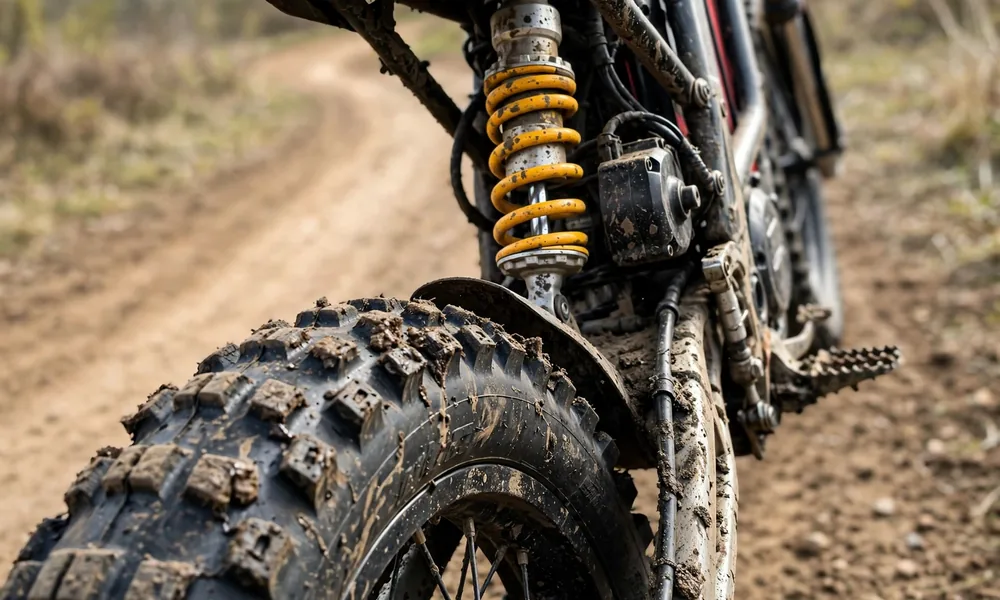
The second cost is the chassis, and on a dirt bike the chassis is expected to be crashed. The frame is built from lightweight aluminium or chromoly steel, welded by hand and tested until it survives jumps that would destroy a road bike, and the suspension is the most sophisticated part of the whole machine. The front forks and rear shock travel 300 millimetres or more, absorbing landings that would snap a normal fork, and they are fully adjustable, so a rider can tune them for sand, mud, or hardpack in minutes.
The wheels are part of the cost too. The rims are strong enough to survive a rock strike, the spokes are stainless steel, and the tyres are knobbly, soft-compound rubber that grips in mud and wears out quickly, which is why serious riders treat tyres as a consumable. The brakes are powerful and sealed against mud, the handlebars are wide and bend rather than snap in a fall, and every plastic panel is flexible, so it bends instead of shattering. The whole machine is designed around the idea that it will fall over, often, and that falling over should cost a lever and a grip rather than a frame.
Small Runs, Big Testing Bills
The third cost is the quietest one: the dirt bike is built in small numbers and tested like a racing machine. A mass-market motorcycle spreads its development cost across hundreds of thousands of machines, but a luxury electric dirt bike may sell only a few hundred a year, so the cost of designing the motor, the battery, the frame, and the suspension is divided among very few buyers. The motor itself is a special design, tuned for instant torque off the line and for the sudden power delivery a rider needs to lift the front wheel over an obstacle, and that tuning takes months of testing on real tracks.
The testing programme is the most expensive part of all. The builders run prototype bikes through race seasons, jumping them, crashing them, and riding them through mud until parts fail, and then they redesign the parts that failed and test them again. The riders who test them are professionals, and their time, the track hire, and the crashed prototypes all cost money. The result is a machine that has already survived a season of racing before the first customer ever rides it, and that season is priced into every bike that leaves the factory.
The Price, in Plain Terms
Add it up, and a luxury electric dirt bike typically costs an estimated $12,000 to $25,000, depending on whether it is a trail machine or a full competition bike with racing suspension and a swappable battery. The armoured battery accounts for the largest share, the suspension and frame for the next, and the small production run, the racing development, and the hand assembly for the rest. On a factory race bike the figure climbs higher still, because the machine is built in tiny numbers and every part is made to a racing standard.
A Rare Fact About the Luxury Electric Dirt Bike
Electric dirt bikes have a secret advantage that petrol bikes cannot match: they are almost silent. That silence means they can be ridden in places where a petrol bike would be banned for noise, from trails near houses to indoor arenas, and it changes the riding itself, because a rider can hear the tyres gripping, the suspension working, and a fellow rider calling out a warning. Some competition organisers have even created silent classes for electric bikes, where the only sound on the start line is the beep of the timing gate. That quiet has even changed racing, with electric classes now running alongside petrol bikes at some events.

What the Price Means for You
If you ever inspect a luxury electric dirt bike, look at the underside before you look at the badges. Check the battery casing for scratches and dents: a few marks mean the bike has been ridden hard, but a cracked casing is a reason to walk away. Squeeze the suspension and feel whether it moves smoothly through its travel, then check the spokes and the rims for cracks. Ask how the battery is swapped and how long a spare takes to charge, because a second battery is the difference between a morning ride and a full day on the trails. Check the handguards and levers too, because cheap replacements are a sign the bike has been dropped hard and repaired on the cheap.
The dirt bike is the toughest machine in the electric world, and its price makes sense once you see what it survives. The same thinking runs through the rest of the electric range, from how a luxury electric dirt bike is made, to how an electric dirt bike works underneath its slim bodywork, and the reasons a larger electric motorcycle is so expensive. A dirt bike is not an expensive toy. It is a racing machine with an armoured battery, built to be jumped, crashed, and ridden again the next day.