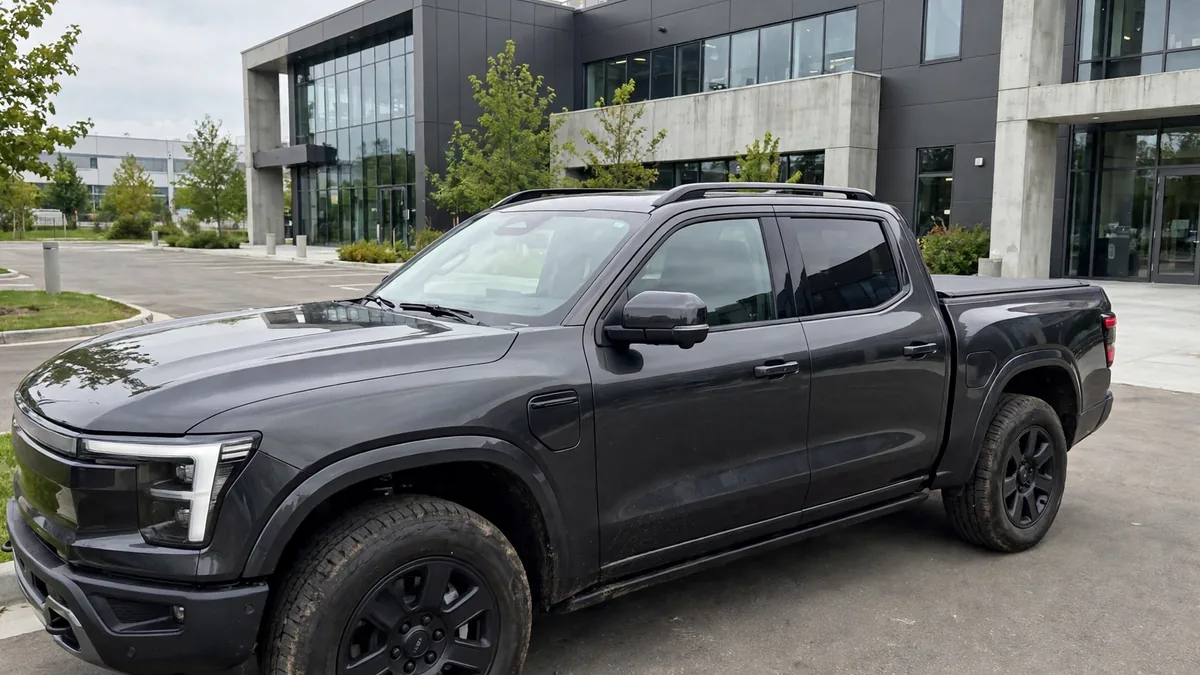
The first thing you notice about a luxury electric truck is not what it does, but what it does not do. It pulls away from a standstill with a full load in its bed and there is no roar, no shudder through the steering wheel, no smell of diesel hanging in the air. Just a low, distant hum and the strange feeling that something this big should not move this smoothly. It is built in a very different way from the pickups that came before it.
Under the skin, almost nothing is shared with a diesel truck. There is no engine block, no gearbox with a dozen ratios, no exhaust running the length of the chassis, and no fuel tank slung under the bed. In their place sits a flat battery pack the size of a double bed, motors tucked into the axles, and a frame designed around the battery rather than in spite of it. This is how one is made, from bare steel to the first silent mile.
How It Is Made
Step 1: The frame is built around the battery
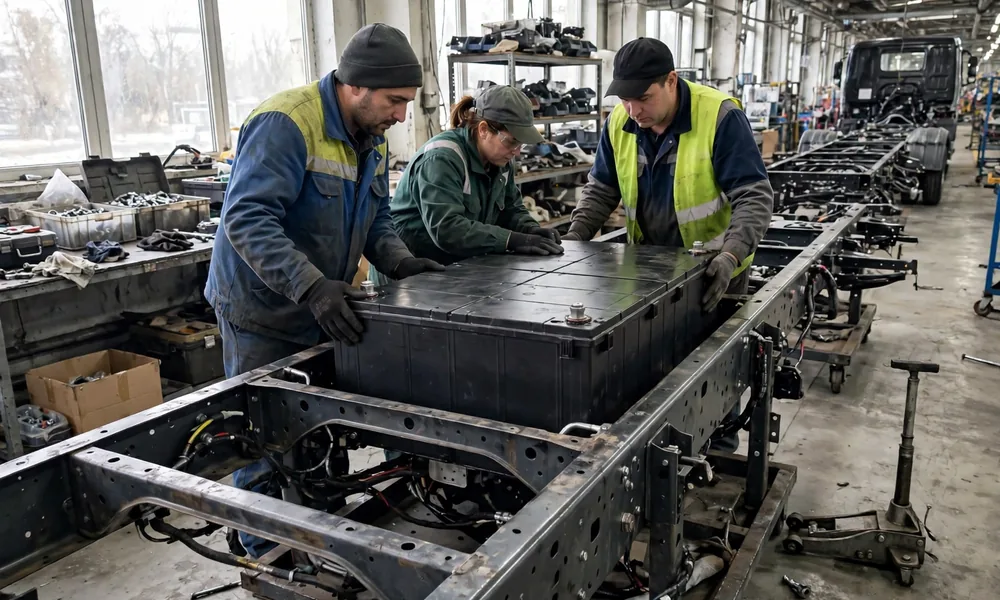
Every luxury electric truck starts with a ladder frame, but it is not the frame a diesel truck uses. The rails are spaced and shaped to cradle the battery pack between them, because the pack is the heaviest single part of the vehicle and the lowest thing in it. Steel is cut, bent and welded by robots, then checked by hand, and the frame is dipped in a rust-proofing bath before anything is bolted to it. Once fitted, the battery stiffens the whole chassis, which is part of why the truck rides so calmly.
Step 2: The battery pack is assembled cell by cell
In a clean, dry room, workers and machines stack thousands of cylindrical or pouch cells into modules, and the modules into one sealed pack. Each cell is tested before it goes in, and cooling channels carry liquid around the cells to keep them at the right temperature. The finished pack is sealed against water and dust, pressure-tested, and then lifted into the frame from below, where it bolts in place and is wired to the rest of the truck. It is the most expensive part of the vehicle.
Step 3: The motors go into the axles
Instead of one engine driving a long shaft, a luxury electric truck usually carries a motor at each axle, sometimes one per wheel. The motors are compact cylinders of copper and steel, wound by machine and balanced to spin at speeds a petrol engine could never reach. They are fitted with a small single-speed reduction gear, since the motor makes full pulling force from a standstill. The axles, motors and suspension are assembled as a unit and rolled under the frame, where they are bolted up and connected to the battery with thick orange cables that a technician can disconnect in seconds if the truck ever needs service.
Step 4: The cab is built for quiet
The cab of a luxury electric truck is where the money shows. The shell is stamped from high-strength steel and aluminium, then fitted with double-glazed windows, extra sound insulation in the doors and floor, and seats stitched by hand from leather that has been cut to match the grain of the hide. With no engine shaking the body, the trim is fitted to tighter gaps than a normal truck would need. The dashboard carries a large screen for navigation, towing cameras and energy use, and the whole cab is tested for wind noise in a tunnel before the truck is allowed near a road.
Step 5: The bed, body and paint are finished
With the cab in place, the bed is fitted, along with the lights, the bumpers and the aerodynamic details that matter far more on an electric truck than a diesel one: a smooth underbody, a shaped tailgate and mirrors designed to slip through the air. The body is painted in a booth where robots lay down layer after layer, and the paint is baked until it is hard enough to survive gravel, branches and loading ramps. The bed is lined with tough composite, and power outlets in its sides can run tools or a campsite from the battery.
Step 6: The truck is charged, tested and driven
The final step is the longest. The truck is charged, its software is loaded, and every system is checked: the motors, the brakes, the steering, the towing cameras and the driver-assistance features. Then it is driven on a rolling road and a test track, loaded, braked hard and put through water to prove the battery seal. Only when it passes every test is it washed, inspected under bright lights, and released. From the first cut of steel to the final test, the journey takes days, but the truck that leaves the factory is meant to last for hundreds of thousands of miles.
| Specification | Typical figure |
|---|---|
| Battery | Around 130 to 200 kWh, depending on the model and the range the buyer chooses |
| Range | An estimated 300 to 400 miles on a full charge, less when towing a heavy trailer |
| Motors | Two motors, one per axle, giving all-wheel drive without a driveshaft |
| Torque | An estimated 800 to 1,000 Nm, available from a standstill |
| Towing | An estimated 4,500 to 5,000 kg, with cameras that help reverse a trailer |
| Payload | Around 900 to 1,000 kg in the bed, plus a front storage space where the engine used to be |
| Charging | Up to 350 kW, adding around 100 miles of range in about ten minutes |
| Time to make | Several days on the line, plus testing, from first steel to finished truck |
What One Costs
A luxury electric truck typically costs an estimated $80,000 to $150,000, and the spread is mostly about the battery. The larger the pack, the further the truck goes and the more it costs, and the battery alone can account for a third of the price. The rest is the cab, the motors and the software, built to a standard no work truck had to meet before. The difference from a luxury diesel truck is instructive, because the diesel article is about an engine, a gearbox and an exhaust, while this truck replaces all three with a battery and two motors, and why a luxury electric truck is so expensive explains where the money goes in detail.
A Rare Fact
The battery pack in a luxury electric truck weighs around 1,300 kilograms, more than an entire small hatchback, and yet the truck carries it so low that it actually helps. The weight sits so low that the truck has a lower centre of gravity than many sports cars, so it corners with little body roll.
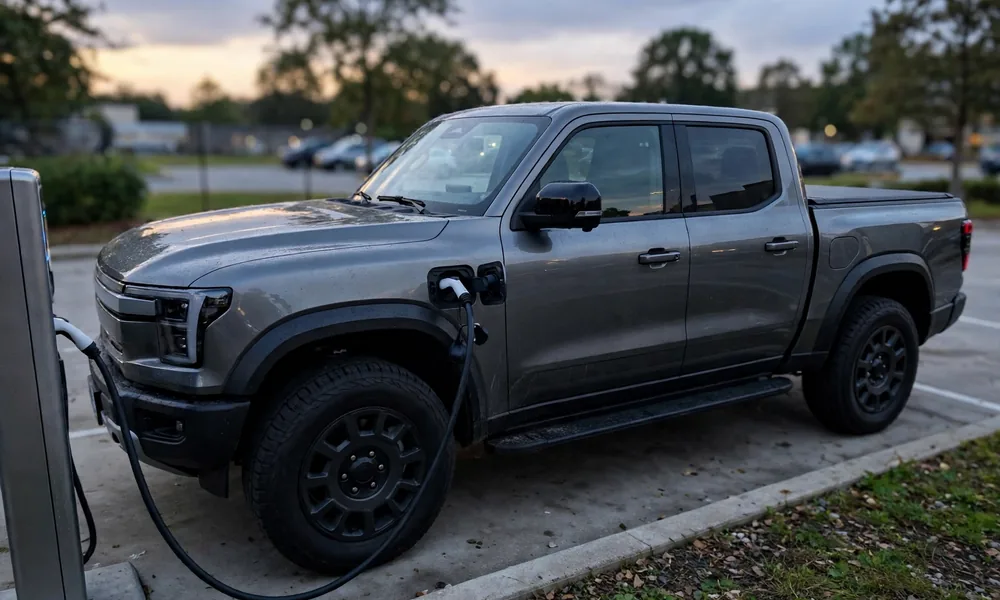
A luxury electric truck is not a diesel truck with a battery swapped in. It is a different machine that happens to do the same jobs, built from the ground up around silence, instant pulling power and a battery that doubles as part of the frame. That is why it can tow a trailer in the morning and carry a family in silence in the evening. For a closer look at the same idea in a smaller package, how a luxury electric pickup is made follows a lighter truck down a very similar line.