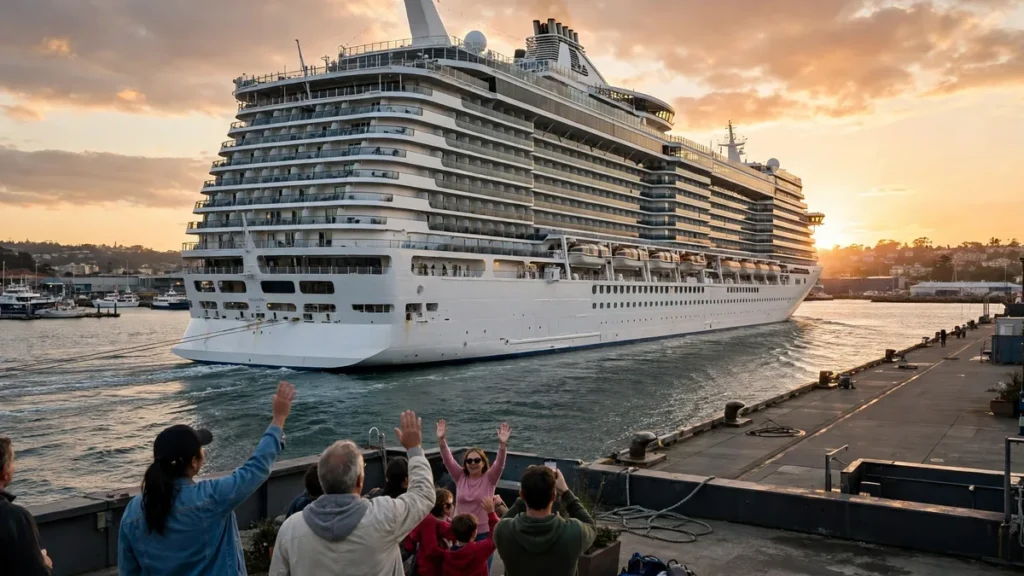
Most luxury yachts are built for calm Mediterranean summers and short hops between marinas. An explorer yacht is built for the opposite. It is designed to cross oceans, push through ice, anchor off remote islands and keep its owner comfortable for months without a port in sight. It looks like a yacht, but underneath it is closer to a small expedition ship, with a steel hull, enormous fuel tanks and room for helicopters, submarines and tenders.
The people who buy explorer yachts do not want to follow the crowd. They want to reach Antarctica, the fjords of Norway or the far Pacific, places where there is no marina, no fuel dock and no rescue boat nearby. That demand shapes every part of the build, from the thickness of the steel to the size of the freezer. Here is how a luxury explorer yacht is made, from the first steel plate to the first voyage into the wild.
How It’s Made
Step 1: The steel hull
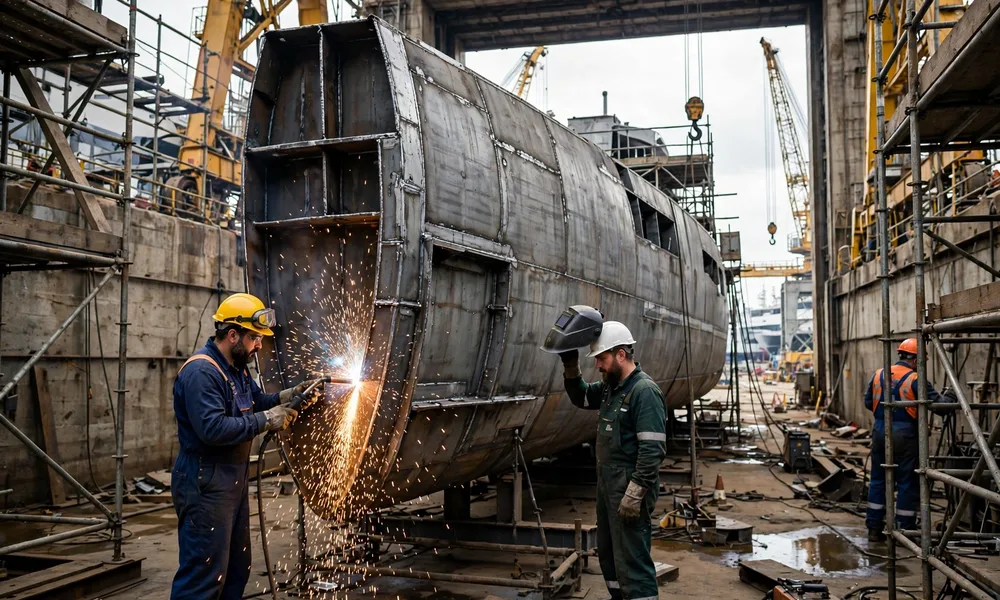
An explorer yacht starts with steel, not the fibreglass used on most pleasure yachts. Thick steel plates are cut by computer-guided machines, bent into curved sections and welded together in a dry dock to form the hull. The steel is heavier than fibreglass, but it can take a knock from floating ice or a submerged log that would crack a lighter hull. Builders add extra plating around the bow and the waterline, and the hull is divided into watertight compartments so that flooding in one section cannot sink the ship. The finished hull is blasted clean, coated with layers of protective paint and checked with ultrasound for any flaw in the welds.
Step 2: The ice-class bow and stabilisers
Many explorer yachts are built to an ice class, which means the bow is shaped and strengthened to push through thin sea ice. The stem is sloped so the hull rides up onto the ice and breaks it with its own weight, and the propellers sit in nozzles that protect them from chunks of ice. Inside the hull, large fin stabilisers fold out from the sides to keep the yacht steady in rough seas, and some yachts carry a gyroscopic stabiliser as well. These systems are fitted while the hull is still open, because once the decks are on, reaching the machinery spaces becomes far harder.
Step 3: Engines, fuel and range
An explorer yacht needs range above all else, so its engine room holds large, slow-turning diesel engines and fuel tanks that can hold hundreds of thousands of litres. A typical explorer yacht can travel 5,000 to 7,000 nautical miles without refuelling, enough to cross the Atlantic and keep going. Everything has a backup, because in the middle of the Southern Ocean there is nobody to call for spare parts.
Step 4: The superstructure and decks
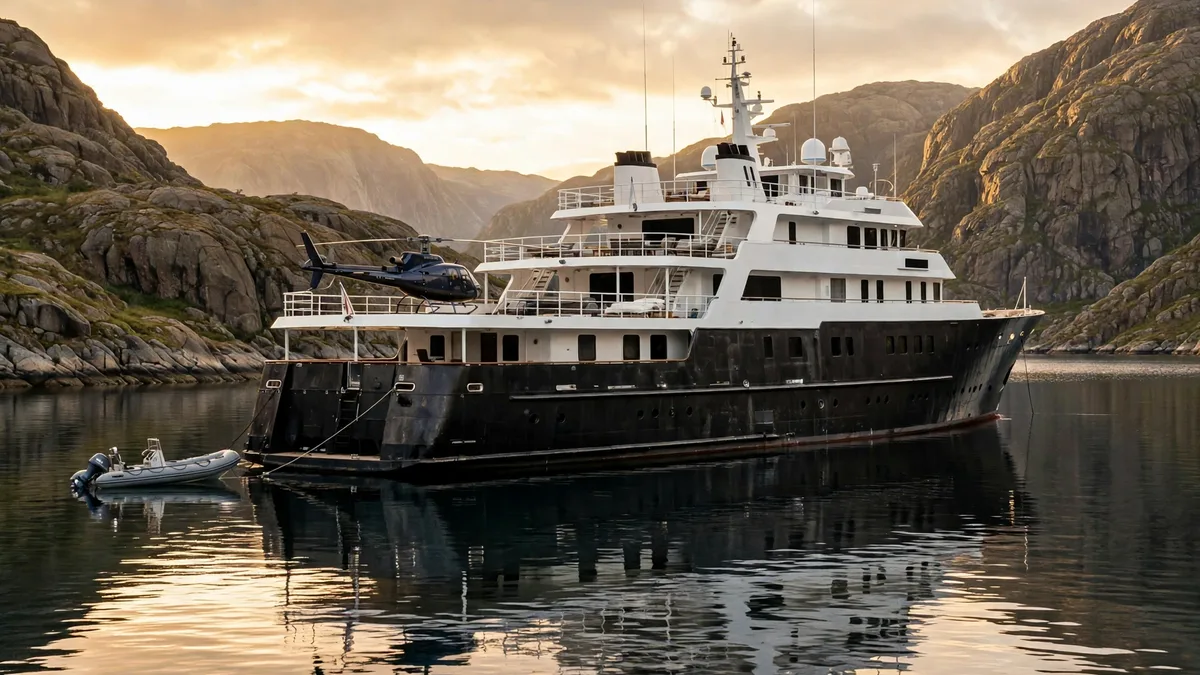
Once the hull is finished, the white superstructure is lifted on in large blocks by crane. This is where the owner lives: the bridge, the saloons, the cabins and the observation lounge with its floor-to-ceiling windows. Explorer yachts often have an enclosed garage for tenders and toys, a helipad on the top deck and a crane strong enough to launch a small submarine. The decks are finished in teak or synthetic decking, and the railings are higher than on a normal yacht, because the seas this boat is built for are bigger too.
Step 5: The interior, built for long stays
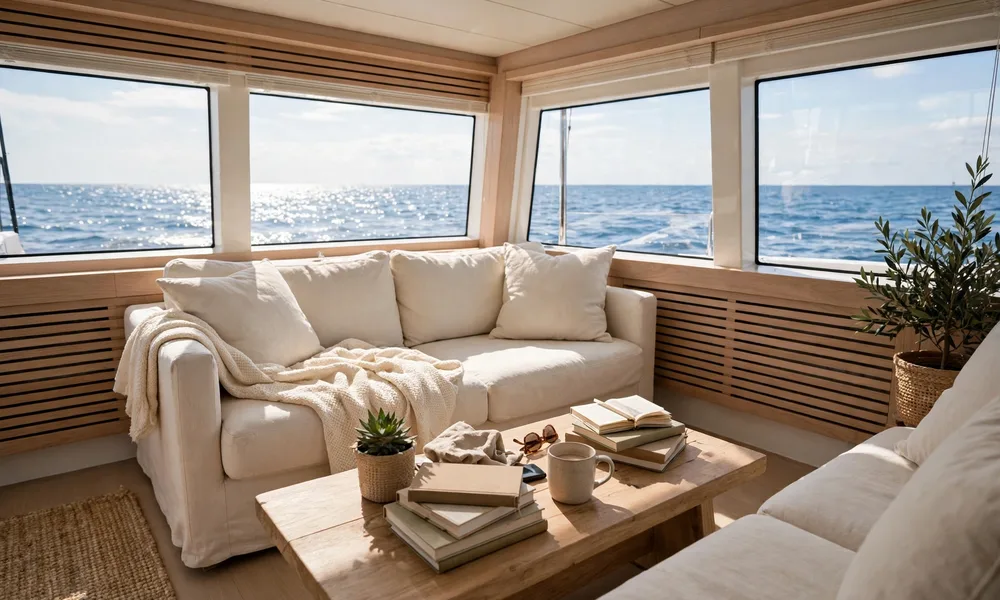
Inside, an explorer yacht feels more like a private lodge than a boat. Cabins are larger than on a conventional yacht of the same length, and there is space for a gym, a library, a cinema room and a proper galley that can store months of food in freezers and cold rooms. The joinery is made from oak, walnut or teak, fitted by hand in a workshop and then installed piece by piece. Sound insulation is taken seriously, with floating floors and padded panels, so the hum of the engines never reaches the cabins. The best luxury yacht interiors ranked guide shows how designers balance comfort and space on yachts like this, where every square metre has to earn its place.
Step 6: Toys, tenders and the helicopter
An explorer yacht carries more equipment than a small resort. There are usually two or three tenders, jet skis, diving gear, kayaks and sometimes a submersible that can take two people down hundreds of metres. The helipad needs a certified deck, fuel storage and a firefighting system, and the crew includes a pilot when the owner flies. All of this is loaded and tested in the yard, with the crane lifting each tender in and out of its garage to prove it works in a swell. The best superyacht helipads ranked guide explains what makes a safe landing deck, from the tie-down points to the lighting that guides a pilot in at dusk.
Step 7: Sea trials in real weather
Before delivery, the yacht goes to sea for trials that are deliberately tough. The crew runs the engines at full power, tests the stabilisers in a beam sea, practises man overboard drills and checks that the water makers and generators hold up under full load. The yacht is taken into rough water on purpose, because a boat built for remote places must be proven in them. Only then does the yacht sail away, often straight to its first expedition. The best superyacht pools ranked guide covers the deck pools many explorer yachts carry, built to stay full and safe even when the sea is moving.
Explorer Yacht Specifications
| Specification | Typical Explorer Yacht |
|---|---|
| Length | 50 to 90 metres |
| Hull material | Steel, ice-class reinforced bow |
| Range | 5,000 to 7,000 nautical miles |
| Cruising speed | 12 to 15 knots |
| Guests and crew | 12 guests, 16 to 20 crew |
| Key features | Helipad, tender garage, submersible, water makers |
| Build time | Around 3 to 4 years |
The Price
A luxury explorer yacht costs an estimated $50 million to $150 million to build, depending on its size and specification, and running it costs an estimated $5 million to $10 million a year in crew, fuel, maintenance and insurance. The steel hull and long-range systems add cost compared with a normal yacht, and a helicopter and submersible can add millions more. Yet for owners who want to visit places no other yacht can reach, the price is the point of entry to a kind of travel that cannot be bought any other way. An explorer yacht is not a floating hotel. It is a private base for going where almost nobody else goes.
A Rare Fact
Some explorer yachts carry their own submarine, and a few can launch it through a moon pool, a hole in the bottom of the hull that opens directly into the sea. The submarine is lowered through the pool while the yacht stays still, which means it can be launched even in rough weather when a crane would be unsafe. The largest private submersibles carried by explorer yachts can dive to around 1,000 metres, deep enough to reach places sunlight has never touched.
An explorer yacht is the most independent machine on the water. It makes its own fresh water, carries months of food and fuel, and can look after its owner and crew thousands of miles from the nearest port. It is built slowly, in steel, by people who understand that the ocean does not forgive shortcuts. When it finally sails over the horizon, it carries everything it needs, and that is exactly the idea.