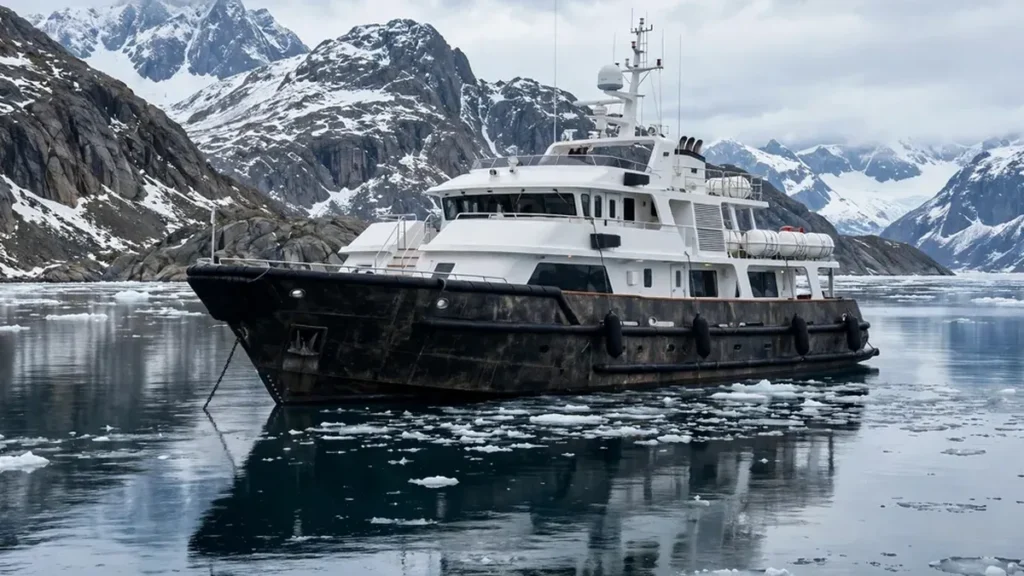
An ocean liner is a city that floats. It carries thousands of people, feeds them in a dozen restaurants, entertains them in theatres and pools, and keeps the lights on and the water running while it crosses an ocean. The largest liners weigh more than 200,000 tonnes, stretch longer than three football fields and take three or four years to build. Nothing else made by human hands is quite like them.
Building a liner is less like building a ship and more like building a neighbourhood, then teaching it to sail. The hull is welded together in a dry dock, the cabins arrive as finished boxes and are slotted into place, and thousands of workers spend years fitting out the theatres, kitchens and engine rooms. Here is how a luxury ocean liner is made, from the first steel plate to the day it sails away with its first passengers.

How It’s Made
Step 1: The hull in blocks
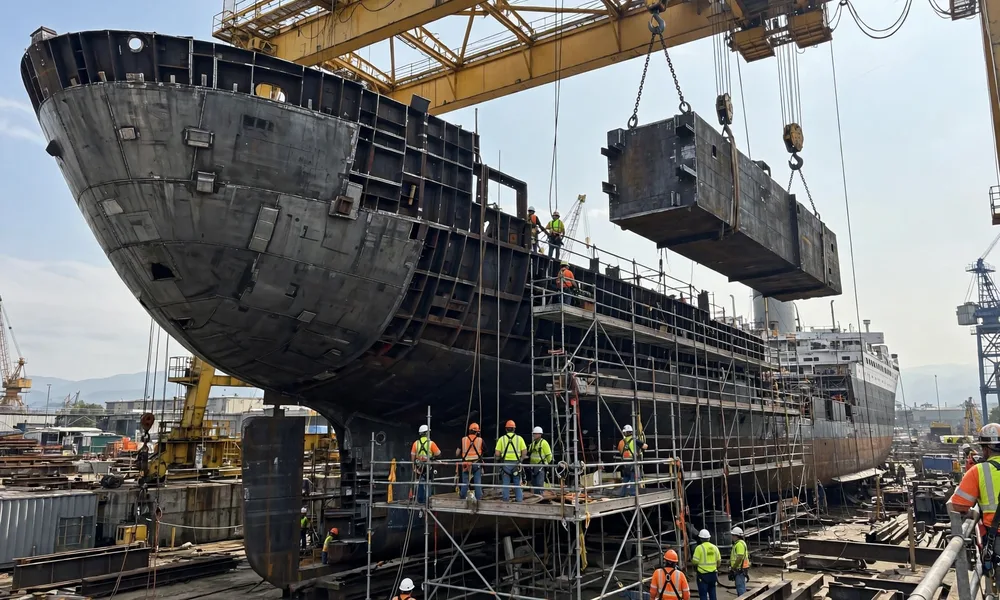
A modern liner is not built in one piece. It is built in blocks, huge steel sections that can weigh hundreds of tonnes each, made in workshops around the yard and then lifted into the dry dock by giant cranes. The blocks are welded together to form the hull, which is divided into watertight compartments and strengthened with a double bottom. The hull is then painted with special coatings that resist rust and marine growth, because it will spend its whole life in salt water. At this stage the ship already looks enormous, even though it is still an empty steel shell.
Step 2: The power plant
Inside the hull, the engine room holds diesel-electric generators that produce enough power for a small town. The electricity drives electric motors connected to propellers, or to pods that hang below the hull and can rotate to steer the ship. This diesel-electric system is quieter and more flexible than direct drive, and it lets the ship run on fewer engines when it is sailing slowly. The engine room also holds the systems that make fresh water from the sea, treat waste water and manage the air conditioning for thousands of cabins. Everything is built with spares in mind, because a liner cannot stop mid-ocean for repairs.
Step 3: Cabins arrive as boxes
One of the cleverest parts of liner building is the cabin module. Each cabin is built as a complete box in a factory, with its bed, bathroom, lights, television and air conditioning already fitted, and then lifted into the ship by crane and slotted into place. A large liner needs more than 2,000 of these boxes, and fitting them this way saves months compared with building each cabin inside the hull. Workers connect the plumbing and wiring, seal the joints and move on to the next one. The best cruise ship suites ranked guide shows what the largest of these cabins become, with balconies, living rooms and private dining space.
Step 4: Theatres, restaurants and pools
Once the cabins are in, the public spaces take shape. Theatres with two or three decks of seating, restaurants with open kitchens, swimming pools on the top deck, spas, gyms and children’s clubs are all built inside the steel shell. The atrium is often the centrepiece, a space several decks high with glass lifts and a sweeping staircase. Building these spaces inside a ship is a puzzle, because every wall, pipe and cable must fit around the structure of the hull, and fireproofing rules are strict. Teams of carpenters, electricians and artists work side by side for months. The best cruise ship restaurants ranked guide explains how the galleys behind these dining rooms feed thousands of people at every sitting.
Step 5: The bridge and navigation
The bridge sits at the front of the ship, high above the water, with windows that stretch across its full width. Inside are the controls for steering, speed and navigation, radar and satellite systems that show the ship’s position to within a few metres, and communications that link the bridge to the engine room and to shore. Modern liners use dynamic positioning and computer-assisted docking, so a ship the size of a skyscraper can be parked alongside a quay with great precision. The captain and officers train for months on simulators before they ever take a new ship to sea.
Step 6: Fitting out and furnishing
The final stage of building is fitting out, when the ship is filled with furniture, carpets, artwork, cutlery, linen and food. A large liner takes on thousands of tonnes of supplies, from mattresses to wine glasses, and every item has a place. The crew moves in during this stage, learning the ship deck by deck, and the galleys are tested by cooking for the yard workers. The best superyacht spas ranked guide covers the spa and wellness spaces that liners now copy, with treatment rooms, saunas and thermal suites that rival the best hotels ashore.
Step 7: Sea trials and the maiden voyage
Before a liner carries passengers, it goes to sea for trials. The crew tests the engines at full speed, turns the ship hard to check its handling, runs the stabilisers in rough water and practises emergency drills with the lifeboats. Inspectors check the fire systems, the watertight doors and the evacuation routes. If anything fails, the ship returns to the yard for fixes and the trials are repeated. When the ship finally passes, it sails to its home port for a naming ceremony, and the first passengers board for the maiden voyage, a moment the yard and the cruise line have worked towards for years.
Ocean Liner Specifications
| Specification | Typical Large Ocean Liner |
|---|---|
| Length | 300 to 360 metres |
| Gross tonnage | 150,000 to 230,000 tonnes |
| Passengers | 4,000 to 6,000 |
| Crew | 2,000 to 2,400 |
| Cruising speed | 20 to 24 knots |
| Power | Diesel-electric, around 70 megawatts |
| Build time | Around 3 to 4 years |
The Price
A large luxury ocean liner costs an estimated $1 billion to $1.5 billion to build, making it one of the most expensive objects ever made. The steel hull is only a fraction of the cost; most of the money goes into the cabins, theatres, restaurants and systems that keep thousands of people comfortable at sea. Running the ship costs hundreds of thousands of dollars a day in fuel, food, crew wages and port fees. Yet a full liner can earn its keep, carrying thousands of paying passengers on every voyage and sailing almost every week of the year.
A Rare Fact
The largest ocean liners have a park in the middle of the ship, an open-air garden with real trees, grass and plants growing several decks above the sea. The plants are kept alive with sunlight, fresh air and a dedicated team of gardeners, and the garden sits in a space open to the sky, so passengers can sit under a tree while the ocean passes by below. It is one of the strangest sights at sea, a piece of land floating in the middle of a ship.

An ocean liner is proof that a ship can be a world of its own. It is built block by block in a yard, filled with cabins that arrive as boxes, and finished with theatres, gardens and restaurants that would be impressive on land. When it sails, it carries a small town with it, across an ocean, in comfort. Few machines ask so much of their builders, and few repay it so completely.