At first light, a white yacht slips out of the marina and heads for open water, its cockpit already busy. A crew member is rigging rods in the holders along the stern, another is checking the bait in the livewell, and the captain is watching a coloured screen that shows the shape of the seabed far below. The yacht looks like a cruiser, all polished wood and comfortable seats, but its stern is a working deck, and by midday it will have caught fish, iced them down and be heading home in comfort.
This is how a luxury fishing yacht works, a boat built to be two things at once: a comfortable yacht for the journey and a serious fishing platform when it arrives. Every part of it, from the hull to the bait well, is designed to serve both jobs without getting in the way of the other.
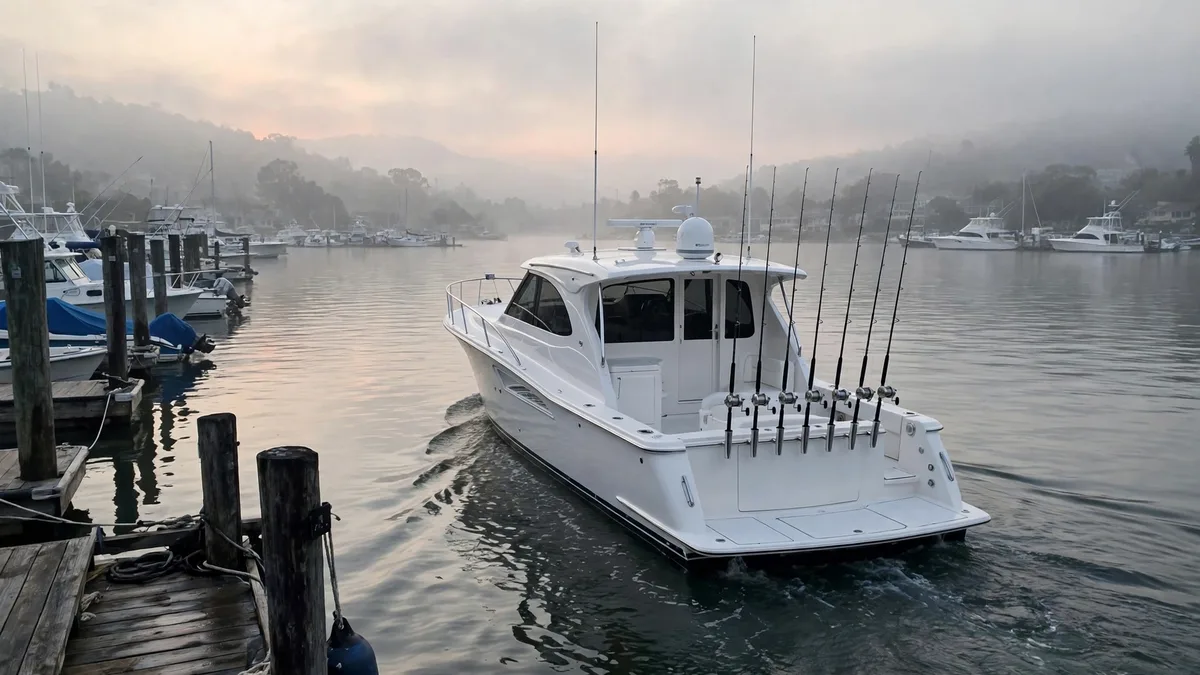
Step 1: The hull carries speed and a steady deck
A fishing yacht needs a hull that can do two opposite things: run fast to the fishing grounds and sit steady while the crew fishes. The answer is a deep-V hull with a sharp bow that cuts through waves at speed, and a wide beam at the stern that gives the cockpit room to work and keeps the boat stable at rest. Two diesel engines drive the yacht through shafts or pods, and the captain trims the boat with tabs at the stern, lifting or lowering the bow to suit the sea.
Step 2: The cockpit is a working deck
The heart of a fishing yacht is its cockpit, the open deck at the stern. It is finished in non-slip decking that can be hosed clean, with rod holders set into the gunwales, a bait preparation table, and a fighting chair or a harness for the angler. Below the deck lie the fish boxes, insulated holds packed with ice where the catch is stored, and a tuna door in the transom, a wide opening that lets a large fish be hauled aboard without lifting it over the side. The smaller fishing boats work the same deck in miniature, and the guide to how a luxury fishing boat works shows how the same ideas fit into a boat half the size.
Step 3: The livewell keeps the bait alive
Live bait is the secret of a good day’s fishing, and keeping it alive is a machine in itself. The livewell is a round tank set into the deck, filled with seawater that is pumped in fresh and circulated constantly, with a light inside that keeps the bait calm and a drain that carries the waste away. The water is oxygenated and kept at the sea’s temperature, and the well is sized to hold enough bait for a full day without crowding, because crowded bait dies quickly and dead bait catches nothing. The livewell is the one piece of equipment that must never fail, and it has its own pump and a spare.
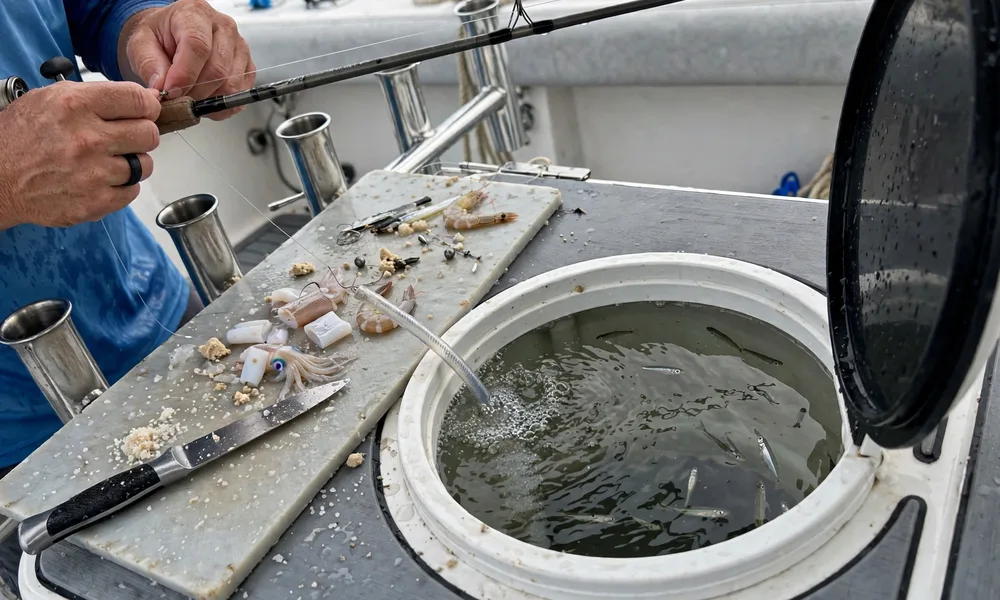
Step 4: The sonar finds the fish below
A fishing yacht does not guess where the fish are; it looks for them. A transducer under the hull sends sound pulses down through the water and listens for the echoes, painting a picture of the seabed, the bait balls and the fish themselves on a screen at the helm. The captain reads the screen like a map, steering over a reef edge or a drop-off where fish gather, and marking each good spot so the yacht can return to it. The yacht’s other systems, the engines, the generator and the air conditioning, are the same as any luxury yacht, and the guide to how a luxury yacht works sets out how they all run together.
Step 5: The rods, reels and the fight
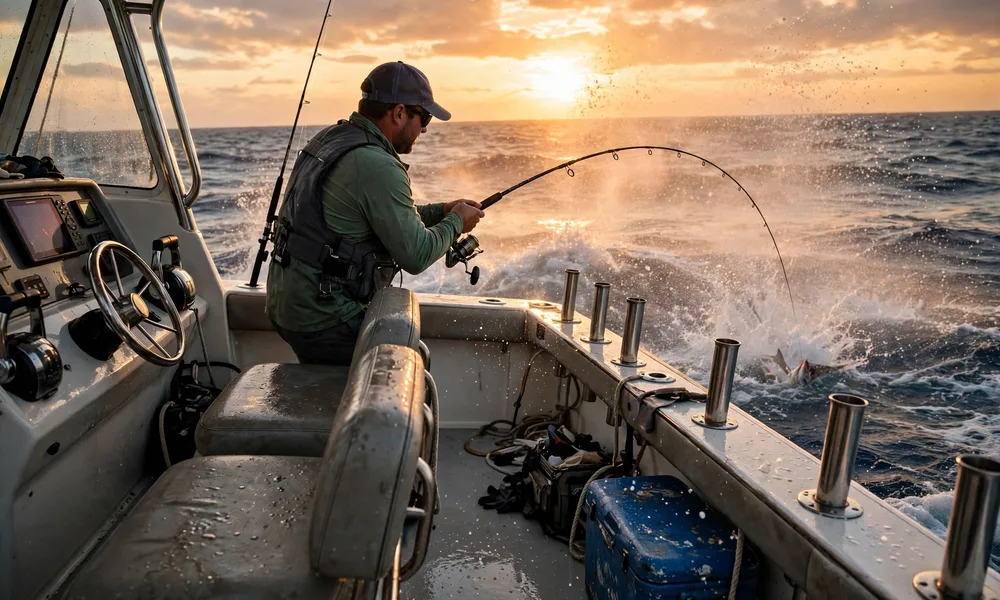
When a fish takes the bait, the yacht’s fishing gear does the work. The rods are long, strong and flexible, stored in holders along the gunwales and the tower, and the reels are big saltwater models with a drag, a brake that lets line out when the fish runs and takes it back when the fish tires. The angler works from the fighting chair or stands braced against the gunwale, pumping the rod while the captain uses the throttles to keep the stern to the fish and the line clear of the propellers. The tournament boats take this same fight further, and the story of how a luxury sportfishing yacht works shows how a yacht built purely for competition differs from one built for a day out.
Step 6: The catch, the ice and the run home
Once a fish is landed, it is bled, gutted and packed into the insulated fish boxes on ice, where it stays cold and fresh until the yacht reaches port. The cockpit is hosed down, the rods are rinsed with fresh water and stowed, and the livewell is drained and cleaned. A fishing yacht that only fishes is a workboat, and one that only cruises is a yacht; the luxury of this one is that it does both, and does both well.
The spec sheet at a glance
| Specification | Typical luxury figure | What it tells you |
|---|---|---|
| Length | 12–25 metres | How much room it has aboard |
| Hull | Deep-V fibreglass, foam core | How it rides at speed and at rest |
| Engines | Two diesels, 600–2,000 hp total | How fast it reaches the grounds |
| Cruising speed | 25–35 knots | How quickly it gets there |
| Livewell | 150–400 litres, circulated | How much live bait it carries |
| Rod holders | 10–20 around the cockpit | How many lines it can fish |
| Fish boxes | Insulated, iced holds | How the catch is kept fresh |
| Sonar | Fishfinder plus wide-scan sonar | How it finds the fish below |
| Range | 300–600 nautical miles | How far it can go and return |
Keeping it in good shape
A luxury fishing yacht lasts longest when it is washed with fresh water after every trip, because salt left on the rods, the reels and the deck fittings will corrode them within weeks. Rinse the livewell and the fish boxes with fresh water too, and run the pumps briefly so they flush clean. Service the engines and the generator on schedule, and have the sonar transducer checked each season, because a fouled transducer sees nothing below.
What it costs
A luxury fishing yacht typically costs an estimated $1 million to $8 million, depending on the length, the engines and the finish. The estimate covers the yacht alone, not the tender, the fishing gear or the crew. The hull, the twin diesels and the fishing systems are where most of the money goes, and a yacht built for both cruising and fishing costs more than a plain cruiser of the same size.
A luxury fishing yacht works by refusing to choose between comfort and the catch, carrying a working cockpit, a livewell and sonar inside a boat that is also a pleasant place to spend a day. It is a yacht in the morning, a fishing boat at midday and a yacht again on the way home, and that double life is the whole point of it.


