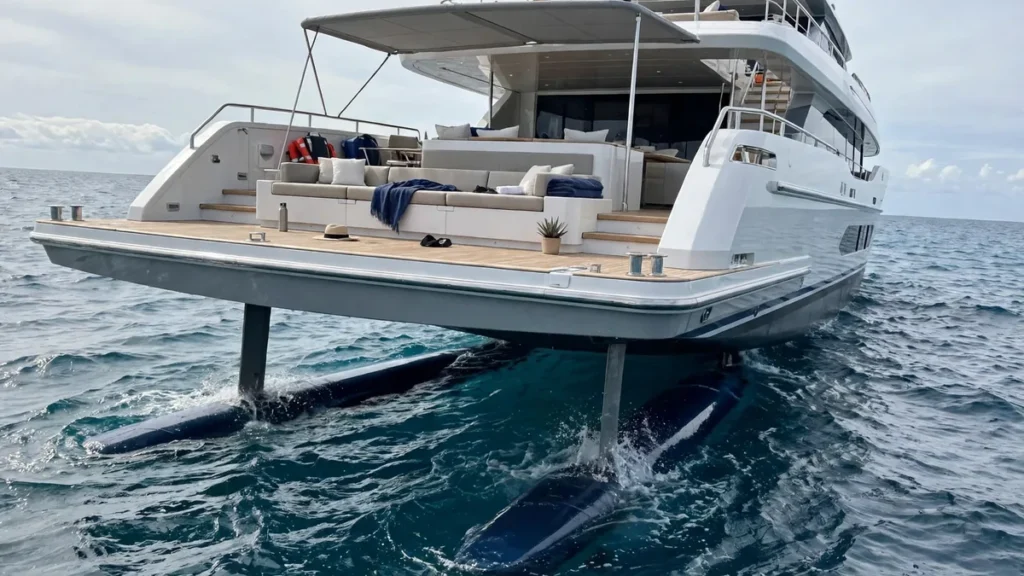
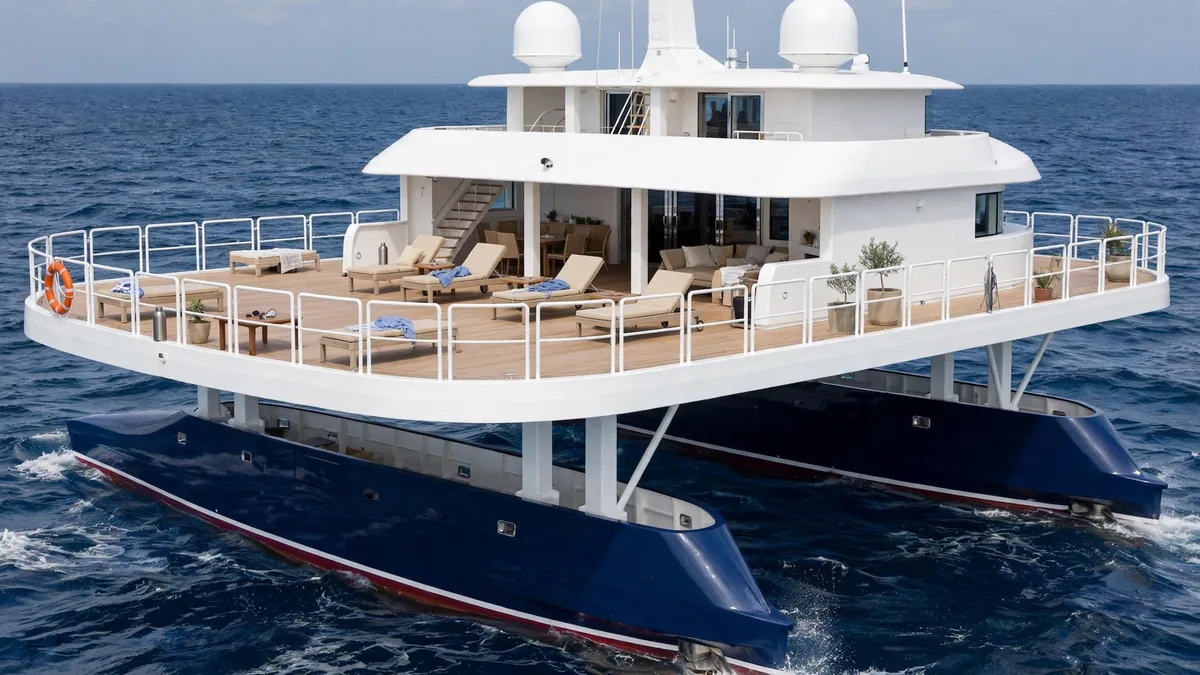
From the harbour wall, the vessel looks wrong. Two slim hulls float low in the water, joined by thin struts to a wide deck that sits high above the waves, and the whole thing looks less like a ship than a table standing in the sea. A fisherman mending nets on the quay shakes his head at it, because it breaks every rule he knows about how a boat should sit. Then a swell rolls in, the other boats in the harbour rock and pitch, and the strange vessel barely moves at all.
The spec sheet for a luxury SWATH vessel is where that stillness is measured, and it reads very differently from an ordinary yacht sheet. It lists waterplane area, strut thickness, and displacement in places where other sheets list cabins and sunpads, and most of those numbers mean little until you know what each one does to the ride. This guide reads the sheet number by number, so you can tell which figures make the vessel steady and which are only there to fill the page.
The spec sheet at a glance
| Specification | Typical luxury figure | What it tells you |
|---|---|---|
| Length overall | 25 to 45 metres | How much deck and cabin it carries |
| Beam | 12 to 18 metres | How wide and stable the deck is |
| Displacement | 200 to 800 tonnes | How much ship is in the water |
| Waterplane area | Small, by design | Why waves barely move it |
| Draft | 3 to 5 metres | How deep the hulls sit |
| Cruising speed | 12 to 18 knots | How fast it travels in comfort |
| Range | 2,000 to 4,000 nautical miles | How far it goes between fuel stops |
| Guest cabins | 4 to 8 cabins | How many guests it sleeps |
Waterplane area: the number that makes it steady
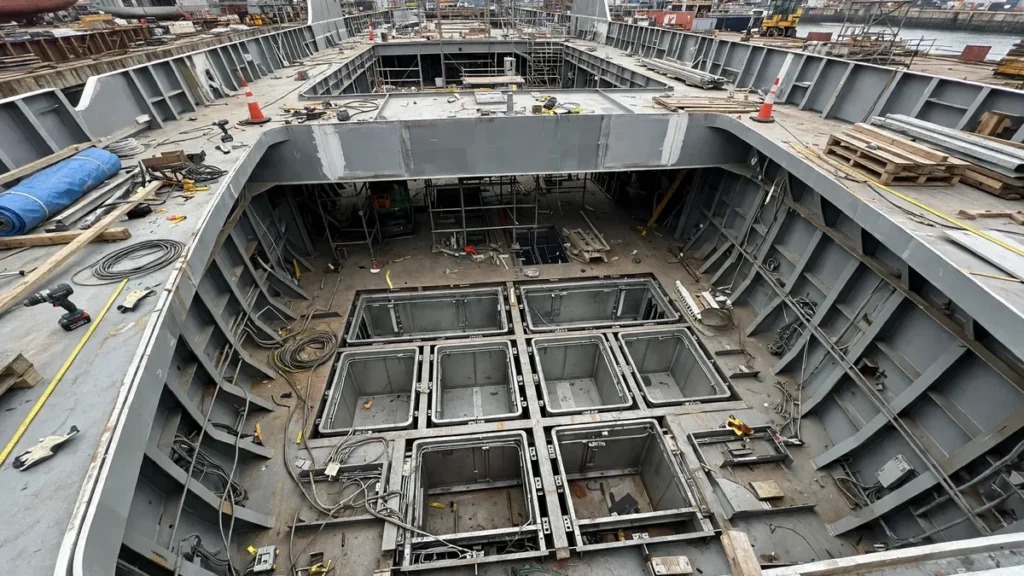
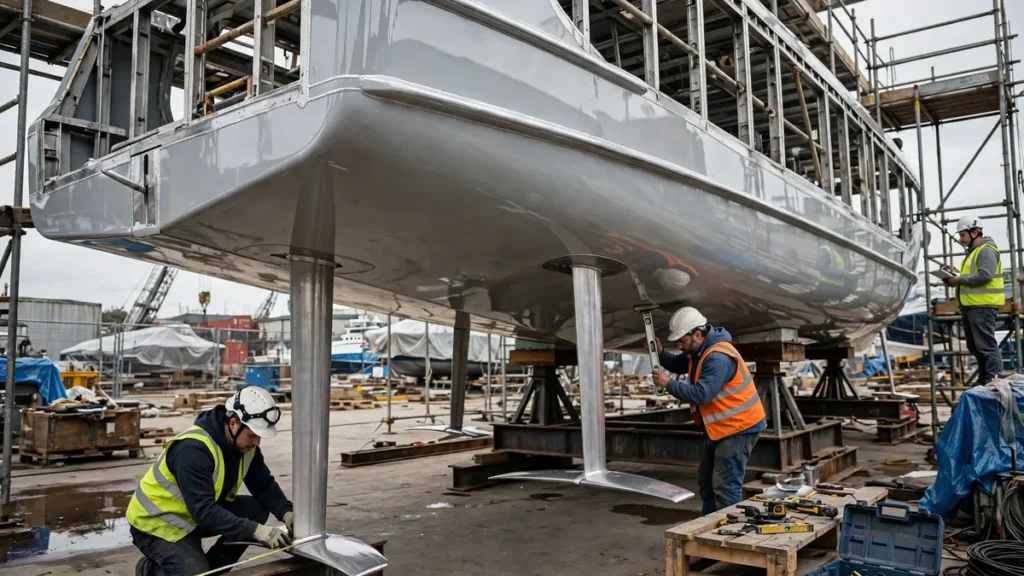
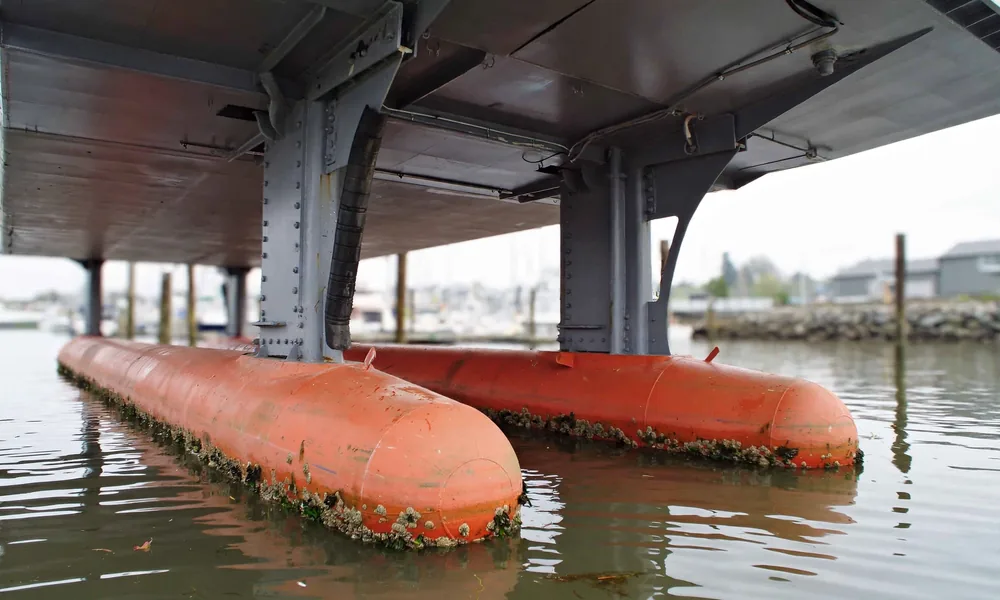
The first number to read is the waterplane area, and it is the whole idea of the vessel. SWATH stands for Small Waterplane Area Twin Hull, and it means that almost all of the buoyancy sits deep underwater in two torpedo-shaped hulls, while only thin struts pierce the surface to hold up the deck. A wave can only push on the part of a ship that meets the water, so a vessel with a small waterplane area feels very little of the wave at all, and the deck stays level while ordinary hulls roll around it. The guide to how a luxury SWATH vessel is made follows those hulls from the yard to the water, and it shows why the struts are the most carefully shaped part of the ship.
Beam and displacement: width that works for you
Next comes the beam, and on a SWATH vessel it is generous, often half the length of the ship, because the two hulls sit far apart and the deck spans the gap between them. That width gives the cabins and saloons a floor plan no single-hull yacht of the same length can match, and it gives the deck room for sunpads, tenders, and a dining table that does not need to be bolted down. The price of that width is paid in harbours, where a wide vessel needs a wide berth and a careful approach, and in canals, where it may not fit at all.
Draft: how deep the hulls sit
Draft is the depth of the hulls below the water, and on a SWATH vessel it runs from three to five metres, which is deeper than a yacht of the same length. The hulls have to sit deep, because the buoyancy must stay below the waves rather than riding on them, and that depth is what keeps the deck calm in a swell. It also limits where the vessel can go, because shallow anchorages and river mouths are closed to it, and a captain who forgets the draft in a tidal harbour will learn the lesson quickly.
Speed and range: slow, steady and far
Cruising speed on a luxury SWATH is modest, usually 12 to 18 knots, and the sheet will not apologise for it. The twin hulls and struts push more water aside than a single sleek hull, so the vessel trades speed for stillness, and a captain who tries to hurry will pay for it in fuel and noise. What it loses in speed it gains in range, because a steady hull at a steady speed burns fuel evenly, and the sheet’s range of 2,000 to 4,000 nautical miles is a serious ocean-crossing figure.
Look for whether the range was measured at cruising speed or at a slower economical speed, because the two figures can differ by a third. A luxury vessel is meant to arrive rested rather than early, and the sheet’s speed and range together tell you which kind of travelling the maker had in mind. The guide to luxury expedition yacht specs explained reads a long-range sheet in the same way, and the same questions apply.
Cabins and deck: what the width buys
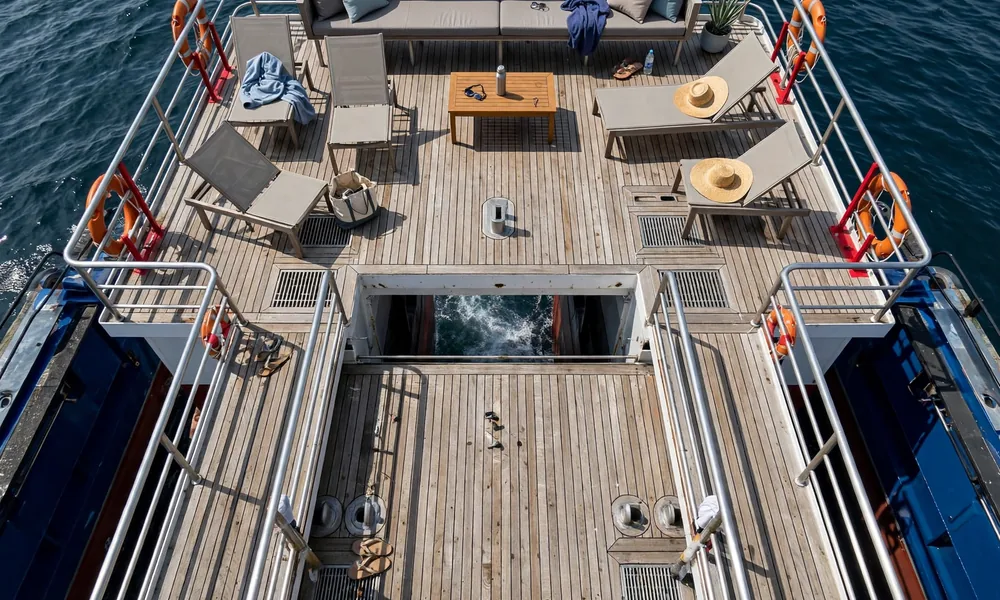
Check the deck figures as well, because the open deck is the vessel’s best room. A sheet that lists sunpads, a tender garage, and a swim platform is describing a vessel meant to be lived on outdoors, while a sheet that hides the deck behind cabin counts is describing a vessel meant to impress in port. The guide to how a luxury catamaran works shows how a twin-hull deck is used, and much of it holds true here.
Stability and seakeeping: reading between the lines
Stability is the number the sheet is shyest about, and it is often given as a roll period or a maximum roll angle rather than a plain figure. A long roll period means the vessel moves slowly and gently, which is comfortable, while a short one means it snaps back quickly, which is tiring, and a luxury SWATH should roll slowly in a way that lets guests forget the sea entirely. If the sheet gives no stability figure at all, ask for the seakeeping report, because a maker proud of the ride will have one ready.
A rare fact to keep
Here is a detail the spec sheet will never print: the first SWATH vessels were not yachts at all, but workboats built to carry pilots out to big ships in rough weather, because a pilot who arrives seasick is no use to anyone. The design was so steady that the pilots could step from the workboat onto a moving ship in waves that kept every other boat in harbour, and it was only later that yacht builders realised the same stillness would let guests drink coffee on deck in a swell. When you read the waterplane area and the draft on the sheet, remember that both numbers were first written for working sailors, not for holidaymakers, and the luxury version is a workboat that learned manners.