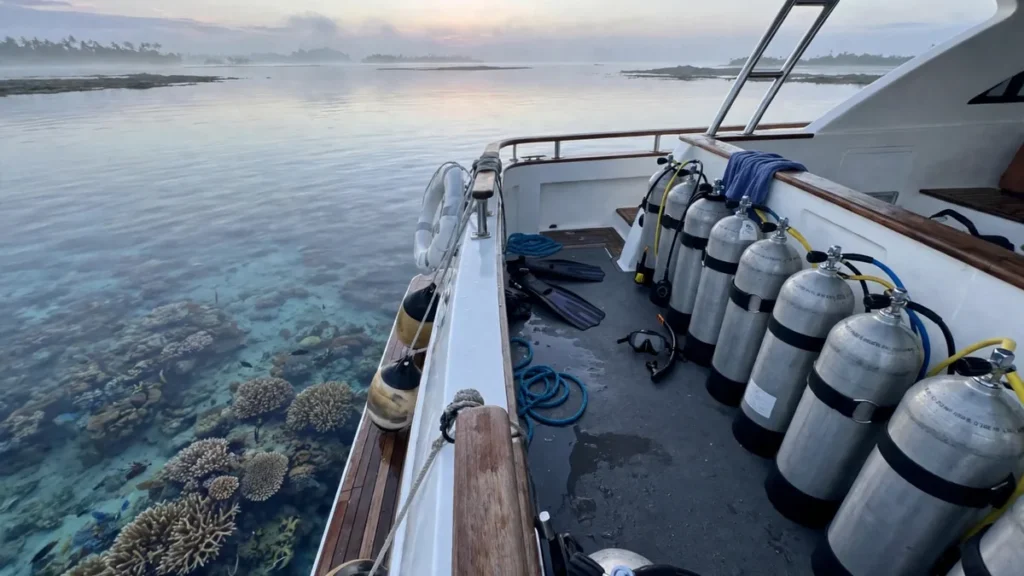
The harbour is busy at dawn, but one boat stands out. It is not the biggest yacht in the marina, and it is not the fastest, but its deck is laid out like a workshop: tanks in neat rows, a compressor humming, a dive platform at the stern that lowers into the water. A luxury dive boat is a working boat dressed in yacht clothes, built to carry divers and their gear to reefs and wrecks in comfort, and a visitor who asks the price learns quickly that comfort on a working boat is not cheap.
A luxury dive boat costs far more than an ordinary boat of the same size, and the reasons are hidden below the deck as much as above it. The price is built from dive systems, a tough hull, safety equipment, and a small market that cannot share its costs widely, and each of those adds its own layer. As an estimate, a luxury dive boat typically sells for around $2 million to $8 million, depending on size and fit-out, and here are the seven costs behind that figure.
1. The dive systems below deck
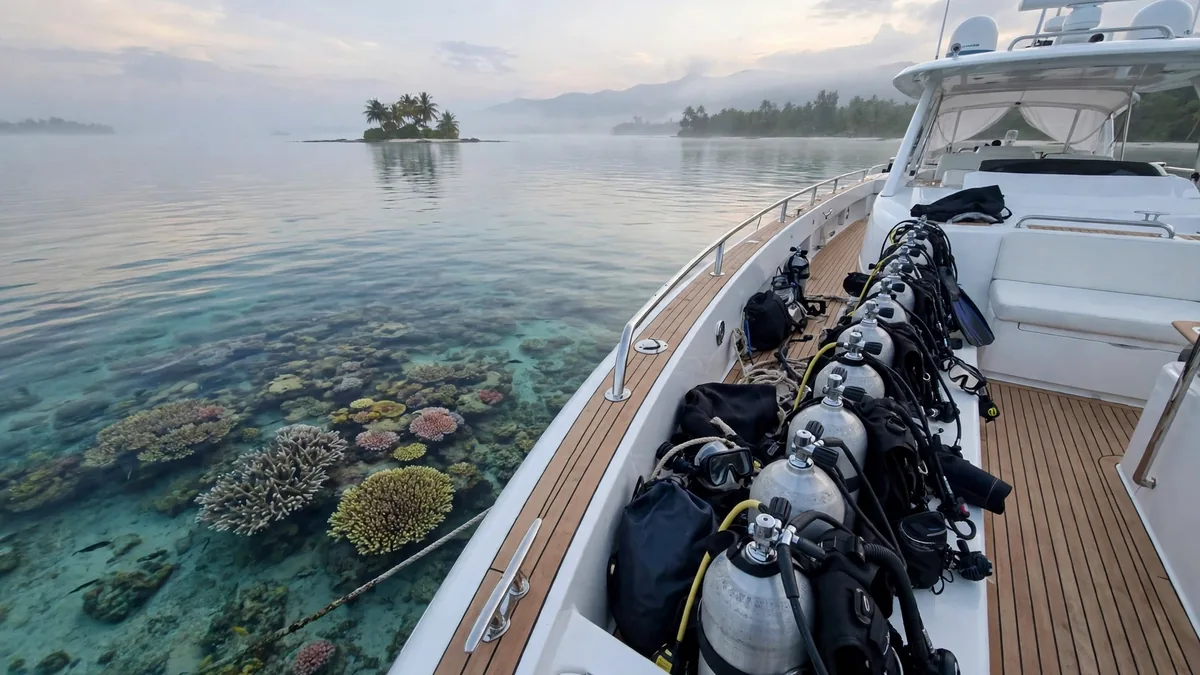
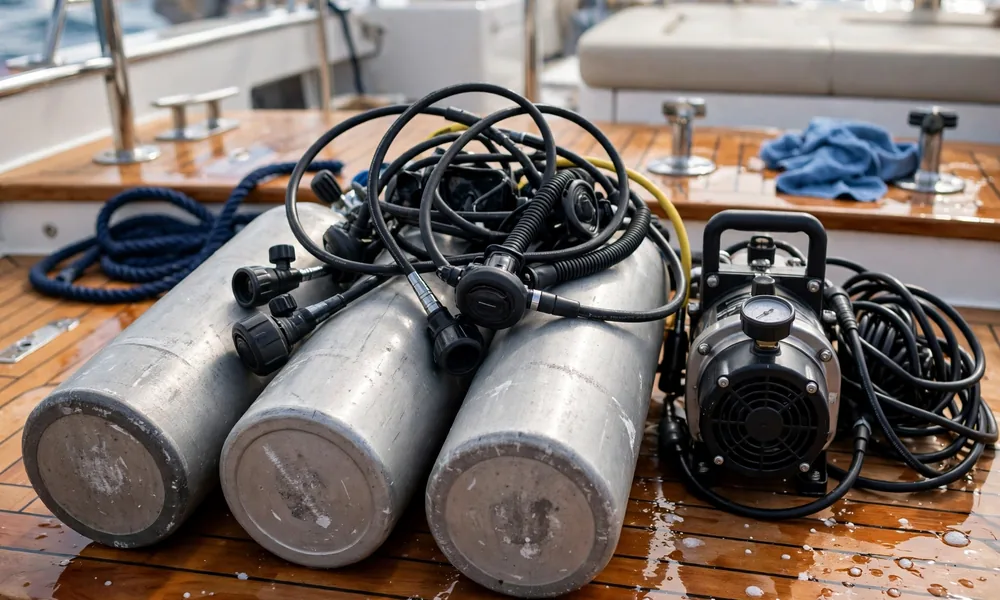
The first cost is the dive system, and it is the heart of the boat. A luxury dive boat carries compressors that fill tanks on board, banks of high-pressure air storage, nitrox blending equipment, and a charging station for dive computers and torches, and all of it must work reliably far from shore. A compressor that fails at sea ends the diving for everyone on board, so the equipment is built to commercial standards and serviced by specialists, and it is installed with redundancy that an ordinary boat never needs. The guide to how a luxury dive boat is made follows those systems from the yard to the water, and it shows how much of the boat is really a floating dive shop.
2. A hull built for heavy loads
The second cost is the hull, which must carry far more weight than a pleasure boat of the same length. Tanks, compressors, weights, and a dozen divers in full kit add tonnes to the load, and the hull is built thicker and stronger to carry it without flexing. The deck is reinforced where the tanks stand, the stern is built to take the weight of a lowering dive platform, and the whole structure is designed for a working life of daily loading and unloading. A hull that flexes under load will crack its fittings and tire its crew, so the yard builds strength in from the start and charges for it.
3. The dive platform and tender
The third cost is the way divers get in and out of the water. A luxury dive boat has a wide dive platform at the stern that lowers to the waterline, so a diver in full kit can step in without climbing a ladder, and a tender or small chase boat for picking up divers who surface away from the boat. The platform must be strong, non-slip, and easy to wash down, and the tender needs its own engine, fuel, and storage, which together add a second small boat to the price of the first. The guide to how a luxury dive boat works explains how the platform, the tender, and the deck layout are planned together, because a dive boat that is awkward to board is a dive boat nobody enjoys.
4. Safety equipment and medical kit
The fourth cost is safety, and on a dive boat it is not optional. The boat carries oxygen kits, a first-aid station, a defibrillator, emergency beacons, and communications that work far offshore, and the crew are trained in dive medicine as well as seamanship. Some luxury boats also carry a small recompression chamber or have a standing arrangement with one ashore, because a diver with decompression sickness needs treatment quickly and the sea does not wait. All of that equipment must be inspected, serviced, and replaced on a strict schedule, and the cost of keeping it ready is part of the price of every trip.
5. Cabins and comfort for tired divers
The fifth cost is comfort, and it matters more on a dive boat than on most yachts, because divers come back from the water cold, tired, and hungry. A luxury dive boat has warm showers on deck, a drying room for wetsuits, comfortable cabins with proper beds, and a galley that can feed a dozen hungry people three times a day. The cabins are soundproofed against the compressor, the air conditioning is sized for wet guests, and the saloon is built for briefings as well as dinners. None of this makes the boat dive better, but all of it makes guests come back, and a dive boat that guests do not return to is a very expensive mistake.
6. A specialist crew
The sixth cost is the crew, and a dive boat needs more of them than a yacht of the same size. Alongside the captain and the engineer, it carries dive guides, a divemaster, and often a chef, and every one of them must hold professional qualifications that take years to earn. Dive guides are paid for their knowledge of reefs, currents, and marine life as well as for their seamanship, and a good guide is the difference between a memorable dive and a missed one. The crew also work long days, because diving starts at dawn and the tanks must be filled again before the next morning, and that labour is priced into the boat from the first day.
7. A small market that shares few costs
The seventh cost is the size of the market. Luxury dive boats are built in small numbers, because few buyers want a boat that is half yacht and half workshop, and the yard cannot spread its design and tooling costs across hundreds of hulls. Every mould, every drawing, and every hour of engineering has to be paid for by a handful of buyers, and spare parts are made in small batches that cost more per piece. The guide to how a luxury fishing yacht works describes a similar small-market problem, because specialist boats of every kind share it, and the buyer of a rare machine always pays for its rarity.

A rare fact to keep
Here is a detail the price list will never print: the earliest dive boats were converted fishing boats, and their crews filled tanks with compressors borrowed from garages and workshops, because no proper dive compressor existed yet. Divers would surface, hand their empty tank up to the boat, and wait while it was filled by a machine that had spent the week inflating lorry tyres, and a day of diving depended on a piece of equipment that had never been near the sea. When you look at the price of a modern luxury dive boat, remember that you are paying for a vessel whose ancestors were fishing boats with borrowed machinery, and which has become a floating dive centre that can fill a tank, feed a dozen people, and find a reef in the open ocean without ever touching land.