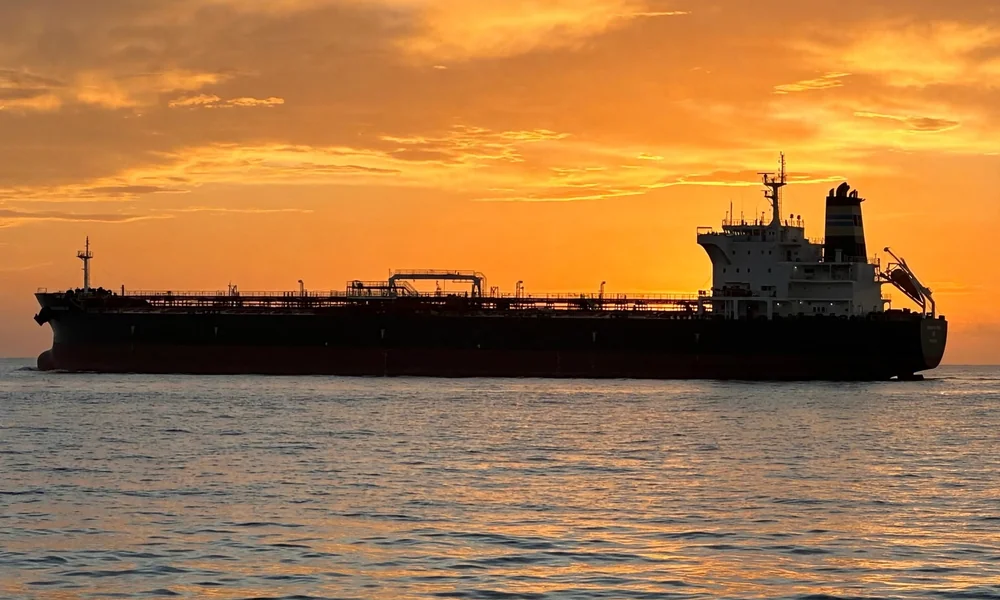
At dawn the harbour is still, and the ship at the far berth looks less like a vessel and more like a building that has floated in overnight. It is longer than three football fields, its hull black below the waterline and red above, its deck a flat expanse of pipes and valves with a white accommodation block at the stern. Cranes are swinging, hoses are being connected, and in a few hours this floating warehouse will take on enough crude oil to fill a small town’s fuel tanks for a year.
A luxury oil tanker is not a passenger ship. Its luxury is in the engineering: a double hull, a crew of twenty in comfortable cabins, and systems that move millions of litres of oil without spilling a drop. It is one of the largest moving machines ever built, and it runs on routine, checklists and patience.

How a Luxury Oil Tanker Works, Step by Step
Step 1: The double hull and the cargo tanks
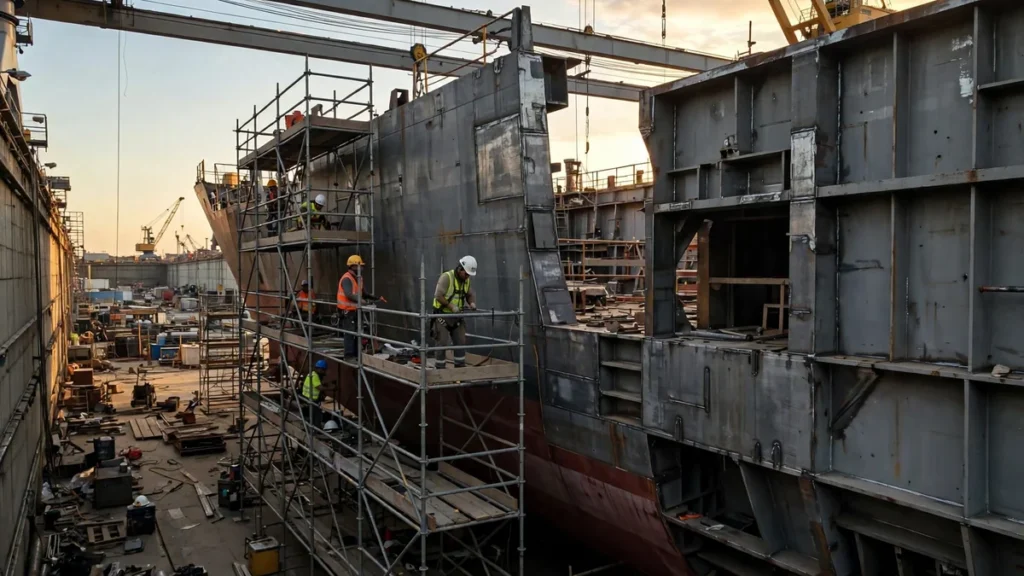
An oil tanker is built around its cargo tanks, a row of steel compartments down the middle of the ship, surrounded by a second, outer hull. The gap between the two hulls is the tanker’s great safety feature: if the outer hull is damaged in a grounding, the inner hull still holds the oil. The tanks are coated against corrosion, and each has its own pipes, valves and heating coils, because some crude oil is thick and must be warmed before it will flow. The number and size of the tanks are the ship’s real specification, and the full figures are in the guide to luxury oil tanker specs explained.
Step 2: Loading the cargo
Loading is done through a manifold on the deck, where hoses from the shore are connected to the ship’s pipework. The cargo is pumped aboard, tank by tank, and the crew watches the levels, balancing the load so the ship stays level. A tanker must never be loaded unevenly, because a ship that leans will stress its hull and handle badly at sea. The loading takes a day or more for a large ship, and every valve is checked twice, because a mistake can spill oil into the harbour. When the tanks are full, the hoses are disconnected and the ship is ready to sail.
Step 3: The engine and the propeller
The engine of a large oil tanker is a single, slow-running diesel, as tall as a house. It turns at about a hundred revolutions a minute, driving a single propeller, often six metres across, directly, with no gearbox in between. The engine is efficient rather than fast, burning heavy fuel oil and pushing the ship at fifteen knots, which is walking pace on the water. The engine room is manned around the clock, and the engineers know every sound the engine makes.
Step 4: The bridge and navigation
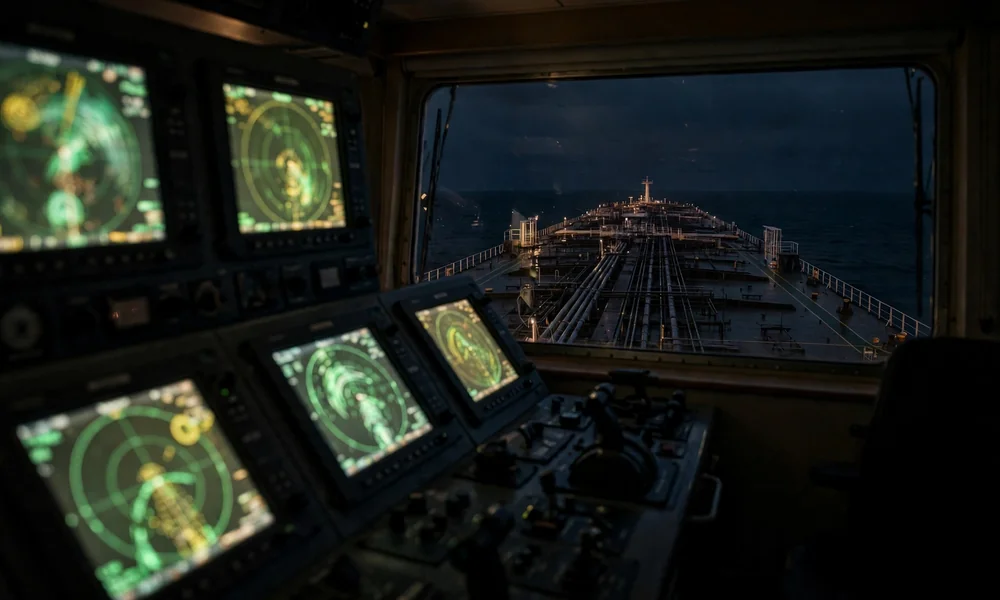
The bridge sits at the top of the accommodation block, with windows on all sides and a view over the whole length of the ship. From here the captain and officers steer, using radar, satellite navigation and electronic charts, with an autopilot holding the course for days at a time. The bridge is quiet and dimly lit at night, and the watch changes every four hours. The ship is so large it takes kilometres to stop and turn, so the officers plan manoeuvres hours ahead, because a tanker cannot swerve.
Step 5: Keeping the cargo safe at sea
At sea, the cargo needs constant care. The tanks are kept under a blanket of inert gas, a gas with no oxygen in it, so the oil cannot catch fire even if a spark gets in. The cargo temperature is monitored, and the heating coils are switched on if the oil starts to thicken. The crew checks the tanks for leaks, measures the levels, and shifts ballast water to keep the ship level as fuel is burned. It is quiet, repetitive work, and the most important job on the ship.
Step 6: Unloading at the far end
Unloading is the mirror image of loading. The ship is tied up at a terminal, hoses are connected to the manifold, and the cargo is pumped ashore, tank by tank, over a day or more. The pumps sit deep in the ship, and they can move thousands of tonnes of oil an hour. As the tanks empty, ballast water is taken on to keep the ship stable. The slow, careful rhythm of loading and unloading is shared by other great cargo ships, including the vehicle carriers whose figures are set out in the guide to luxury car carrier specs explained. When the last tank is empty, the tanks are washed with hot water and the washings are kept aboard, because nothing from a tanker is ever pumped into the sea.
Step 7: Life aboard and the crew
A modern oil tanker sails with a crew of about twenty, and their accommodation is comfortable by the standards of a working ship. The cabins are single, with en suite bathrooms, the mess room has a television and a library, and the food is good. The crew works in watches, four hours on and eight off, and the days at sea are long and quiet, filled with maintenance, drills and paperwork. The luxury of a modern tanker is not in marble and gold, it is in a quiet cabin, a good meal, and a ship that does its job without drama. The same attention to a working ship’s inner life shapes the build of smaller craft too, as the guide to how a luxury sailboat is made shows on a different scale.
Specifications at a Glance
| Feature | Typical Luxury Oil Tanker |
|---|---|
| Length | 250 to 330 metres |
| Deadweight | 150,000 to 320,000 tonnes |
| Cargo capacity | Up to 2 million barrels of crude oil |
| Hull | Double hull, steel |
| Engine | Single slow-speed diesel, 25,000 to 35,000 horsepower |
| Speed | 14 to 16 knots |
| Crew | About 20 |
| Cargo tanks | 10 to 15, with inert gas system |
What a Luxury Oil Tanker Costs
As an estimate, a new large crude oil tanker might cost roughly $80 million to $120 million to build, depending on its size, the quality of its steel, and its cargo and safety systems. Chartering a tanker for a single voyage could cost an estimated $30,000 to $80,000 a day, depending on the market, the route and the size of the ship. Those are estimates, and the running costs are large too: fuel, crew wages, insurance, maintenance and port fees run to millions of dollars a year. The economics are simple: the ship earns its keep by moving more oil, more safely, than any other way of carrying it.
A Rare Fact
The largest oil tankers ever built were so big that they could not fit through the Suez Canal or the Panama Canal, and they were too large to enter most ports. The biggest, the Seawise Giant, was longer than the Empire State Building is tall, and it carried more than four million barrels of oil. It took more than five kilometres to stop from full speed, and its turning circle was wider than a small town. Modern tankers are smaller by design, because a ship that cannot enter a port cannot earn its keep. The luxury of the modern tanker is not its size, it is that it fits the world it works in.
A luxury oil tanker is a machine built for one job, and it does that job with a patience no smaller ship can match. It loads slowly, sails slowly, and unloads slowly, and the crew measure success in the most modest way possible: a voyage where nothing happened, and the oil arrived exactly as it left.