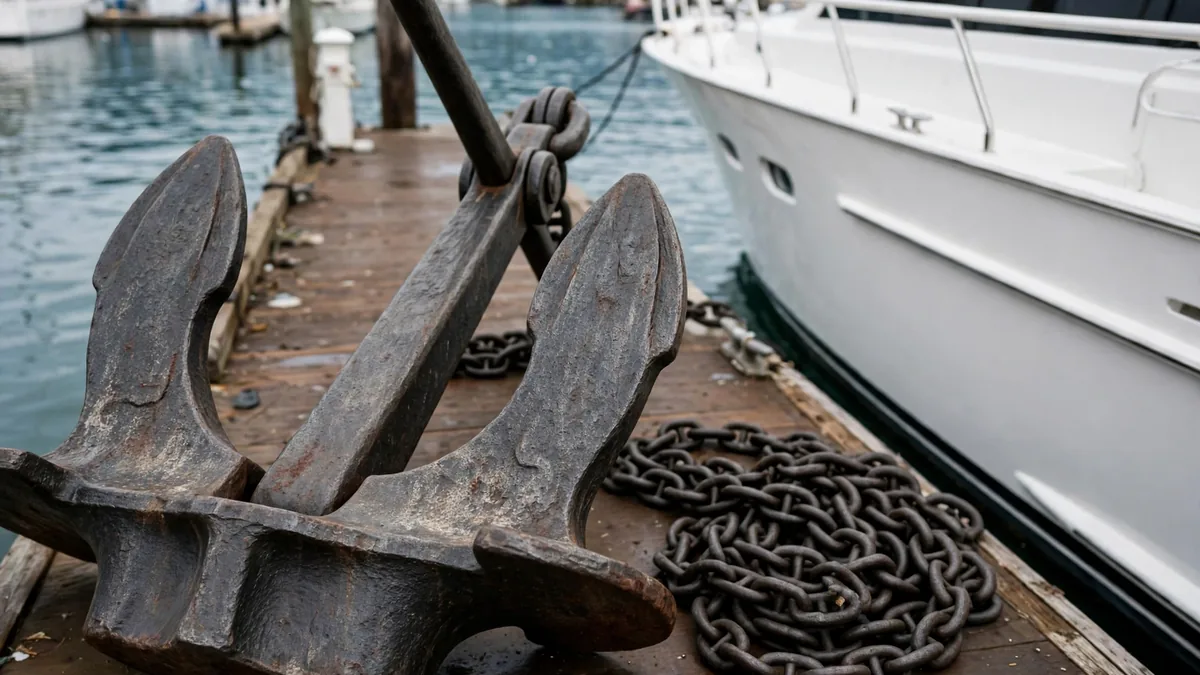
On the foredeck of a luxury yacht, the anchor sits in a pocket in the bow, painted, polished and easy to miss. It looks like a piece of decoration, a nod to the sea. Then the wind rises, the engines stop, and that quiet piece of steel becomes the only thing between a hundred-million-dollar ship and the rocks. It is expected to hold, in the dark, in a storm, with no one watching it work.
An anchor is not a weight that simply drags on the bottom. It is a shaped tool, designed to dig itself into the seabed and grip harder the more it is pulled. Making one means forging huge pieces of steel, shaping them so they bite and set, and testing them far beyond anything they will ever face at sea. This is how a luxury ship anchor is made.
How It Is Made
Step 1: The steel is chosen and cut
A luxury anchor starts as high-strength steel plate and bar, chosen for toughness rather than hardness, because an anchor must bend slightly under shock loads instead of snapping. The plates are cut to shape with plasma torches, following patterns for the shank, the long central bar, and the arms that carry the flukes. Each piece is marked and checked against the design, because an anchor is a balanced tool, and a fluke a few centimetres out of place will not set properly on the seabed.
Step 2: The shank and arms are forged
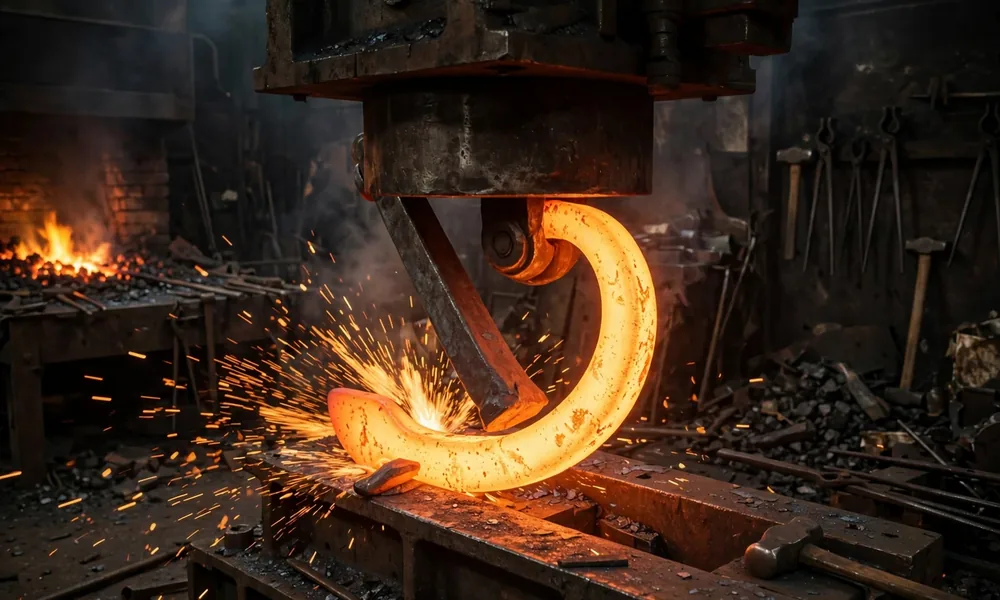
The heaviest parts are heated in a furnace until they glow orange, then shaped under a forging press that strikes with thousands of tonnes of force. Forging squeezes the steel’s grain into line, which makes it far stronger than the same shape cut from a flat plate. The shank is drawn out long and straight, the arms are bent to their angle, and the crown where they meet is built up thick, because that joint takes the full pull of the ship.
Step 3: The flukes are shaped and welded
The flukes, the broad pointed blades that dig into the seabed, are shaped from plate and welded to the arms, with welders working in layers to build up strong, deep joints. The leading edges are sharpened so they cut into sand and mud instead of skating across it, and the angle of each fluke is set with jigs so both sides match exactly. A finished fluke looks simple, but its curve is the result of years of testing in tanks and on real seabeds.
Step 4: The anchor is heat treated
Once welded, the whole anchor goes back into a furnace for heat treatment, a slow cycle of heating and cooling that relieves the stresses left by welding and forging. Without this step, hidden stresses could crack the steel the first time the anchor took a shock load in a storm. The anchor is cooled slowly, checked for distortion, and then inspected with magnetic particles that reveal any hairline crack the eye would miss.
Step 5: It is coated and finished
A bare steel anchor would rust in weeks, so the surface is blasted clean and coated, usually with hot-dip galvanising or a tough marine paint system, sometimes both. On a luxury ship the visible parts are finished to match the yacht, with the anchor painted or polished so it looks at home in its bow pocket. The coating is checked thickness by thickness, because a thin spot is where the rust will start, years later, far from any shipyard.
Step 6: It is tested and fitted
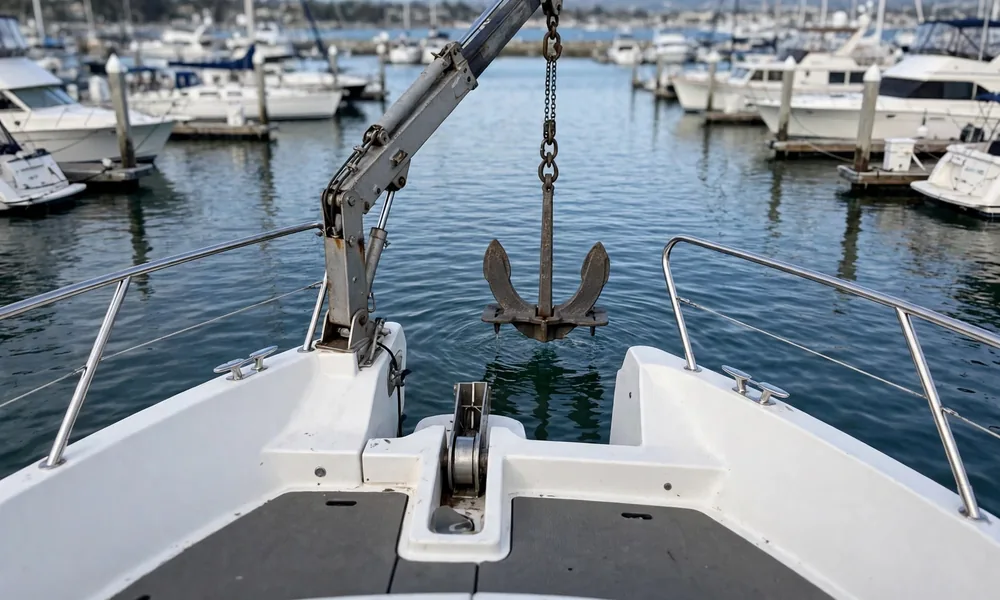
Before delivery, the anchor is proof tested, pulled with a force well above anything it will face in service, while engineers watch for any movement or deformation. Then it is lifted aboard, fitted to its chain in the chain locker, and tried in its hawse pipe, the tube it travels through in the bow. The crew lower it and raise it several times, checking that it seats cleanly and releases without jamming, because the first real test should never be in a storm.
| Specification | Typical figure |
|---|---|
| Material | High-strength forged steel, heat treated and coated against rust |
| Weight | An estimated 200 to 2,000 kg on a large luxury ship, sized to the ship |
| Chain | Heavy stud-link chain, often weighing more than the anchor itself |
| Holding power | Many times its own weight once the flukes have dug into the seabed |
| Fluke span | Around 1 to 2.5 metres across on a large yacht anchor |
| Time to make | Several weeks from cutting steel to proof testing and delivery |
Choosing an anchor is a matter of matching the tool to the ship and to the seabed it will meet. Sand and mud hold well, rock holds badly, and weed can defeat even a good anchor by clogging the flukes, so experienced crews carry knowledge of each anchorage along with their charts. The chain matters as much as the anchor: the rule of thumb is to let out several times the depth of water, so the chain lies flat and pulls the anchor horizontally into the bottom. Too little chain and the pull lifts the flukes out; too much and the ship swings wide in a crowded bay. On a luxury yacht the crew practise this until it is routine, because anchoring is usually done at sunset, in a bay full of other boats, with the owner watching from the deck.
What One Costs
A large luxury ship anchor typically costs an estimated $20,000 to $150,000, and the chain that goes with it can cost as much again. The price is set by the weight of steel, the forging work and the testing, and a bigger ship needs a disproportionately bigger anchor, so the cost climbs fast with size. The anchor is only half the system, and how a luxury ship anchor winch is made covers the machine that hauls it up, while how a luxury yacht anchor winch works explains the winch from the operator’s side.
A Rare Fact
Most of an anchor’s holding power does not come from the anchor itself. When a ship anchors, the heavy chain lies along the seabed, and it is the weight and friction of that chain, plus the angle it creates, that keeps the pull on the anchor low and horizontal, which is exactly how a fluke digs in best. Lift the chain off the bottom in a storm and the anchor can break out, which is why experienced crews let out far more chain than seems necessary.
An anchor is the most old-fashioned thing on a luxury ship, a lump of forged steel doing a job that has barely changed in a thousand years. No software runs it, no screen controls it, and when it is needed there is no second chance to get it right. It is made slowly, tested hard and then mostly forgotten, which is exactly what its makers want. From the bridge, where the order to drop it is given, how a luxury ship bridge works shows the room that commands the whole ship. And when the anchor is finally needed, after years of sitting quietly in its pocket, it is expected to work the first time, in the dark, with the wind rising and the crew moving fast. That is the bargain every anchor makes with its ship, years of being ignored in exchange for one perfect moment of holding fast.