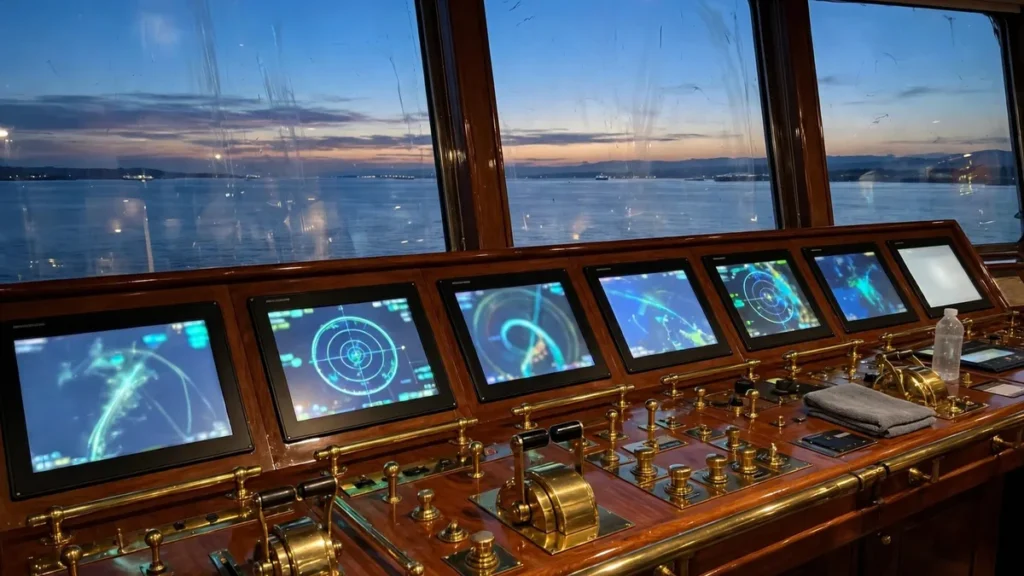
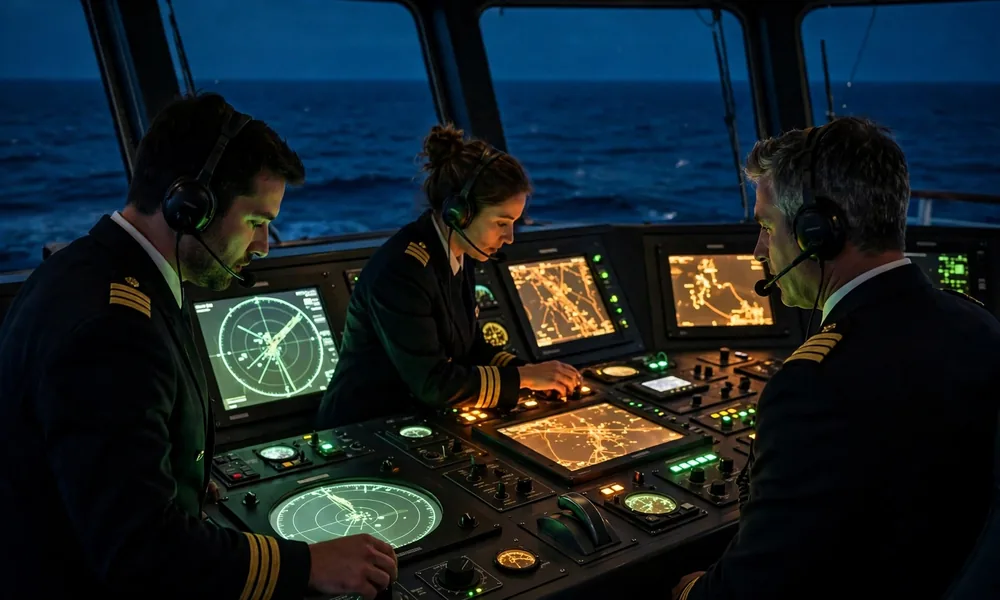
It is two in the morning, and the bridge of the cruise ship is almost silent. The sea outside the windows is black except for the white line of the bow wave. Inside, the lights are dimmed to red so nobody’s night vision is spoiled, and two officers watch glowing screens while the captain stands at the window, saying nothing, just looking. Somewhere below them, three thousand sleeping passengers trust that this quiet room knows exactly where it is going.
That quiet room is the bridge, the command centre of the ship, and it is one of the most carefully designed workspaces on the water. Every screen, every control and every window is placed so that a small team can steer a vessel the size of a tower block through crowded seas, storms and narrow channels, day and night. Here is how it works.
The bridge is also the most expensive room on the ship per square metre, and the reason is not the equipment but the design. Naval architects spend years getting the sightlines right, so that an officer standing at the centre console can see every screen without turning their head and every window without standing up. The chairs are built for twelve-hour watches, the lighting is tuned so screens stay readable in bright sun and total dark, and the whole room is kept cool and quiet so the crew stays alert. Passengers almost never see it, yet it is the room their safety depends on most, which is why no expense is spared on getting it right.
How It Works
Step 1: The windows give the officers their eyes
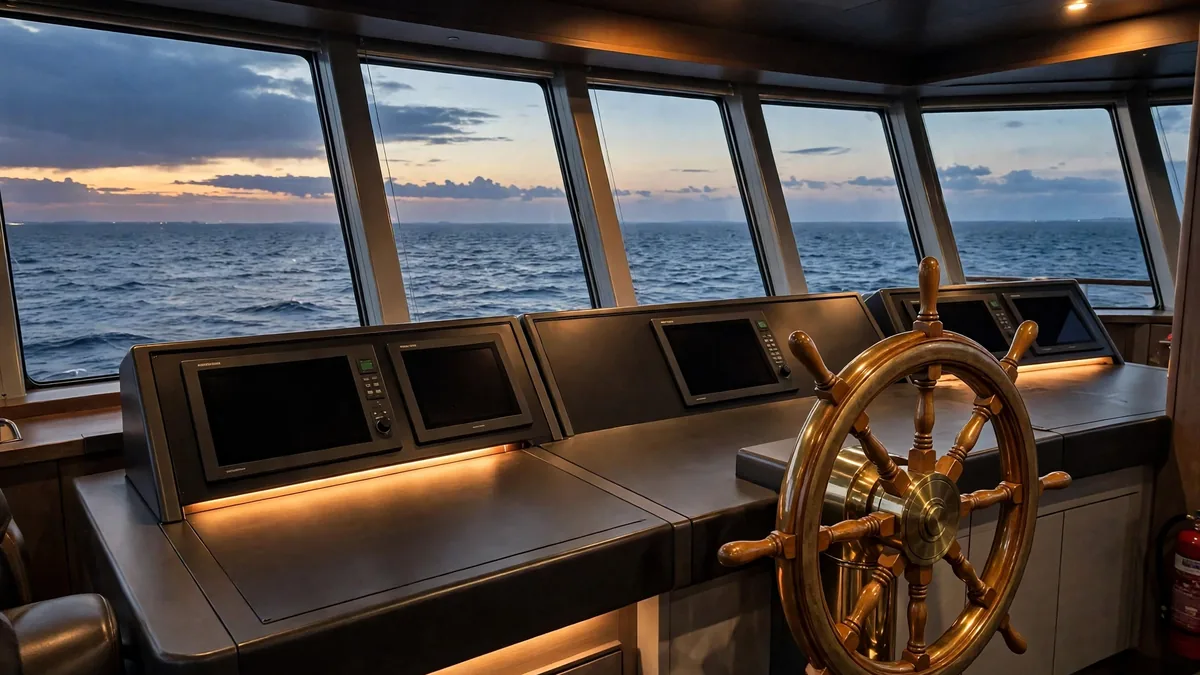
A luxury ship bridge is built around its windows, a wall of glass that wraps around the front and sides so the officers can see from one horizon to the other. The glass is heated to stop it fogging, tinted to cut glare, and angled so it never reflects the instruments back at the crew. The bridge wings extend out over the sides of the ship, letting the captain look straight down at the waterline when the ship is docking, which is the moment a few centimetres of error matter most.
Step 2: Radar and charts show what eyes cannot
Windows are not enough at night or in fog, so the bridge carries radar that sweeps the sea for other vessels, buoys and land, painting them on a screen even in pitch darkness. Electronic charts show the ship’s exact position from satellite navigation, with the planned route drawn across them, and the depth of the water beneath the keel. The two systems are layered together, so an officer sees the radar picture laid over the chart, with every nearby ship labelled by its course and speed. The system also sounds an alarm if another vessel is on a collision course, giving the officer time to change course or speed long before the danger becomes real, and it records every contact so the voyage can be replayed later.
Step 3: The helm and engines answer to a touch
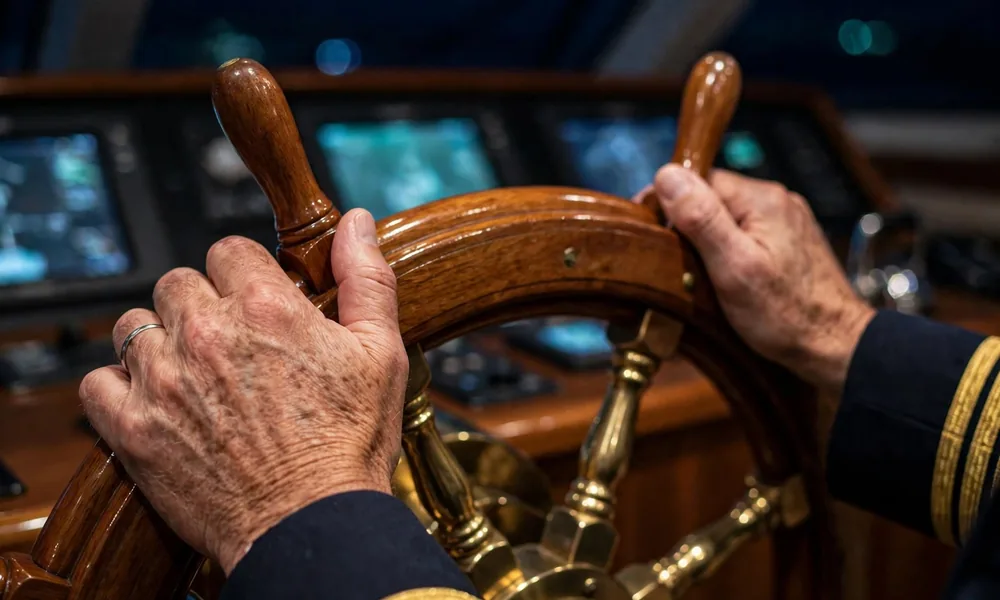
Steering a ship this size is done with a small wheel or joystick, not the great wooden wheels of old, though many luxury bridges keep a polished wheel as a showpiece. A touch on the controls sends a signal to the steering gear far below, which moves the rudder, and the engines answer through a telegraph that sets the propeller speed. The ship responds slowly, taking its time to turn, so the officer must think minutes ahead, planning each manoeuvre long before the ship begins it.
Step 4: The crew works in a strict watch system
The bridge is never empty. Officers work in watches, usually four hours on and eight off, so that a fresh team is always in charge. The captain sets the orders for the watch, the officer of the watch carries them out, and a lookout stands at the window with nothing to do but watch and listen. Every order is repeated back aloud, and every change of course is written in the logbook, so there is never any doubt about who said what and when.
Step 5: Communications keep the ship connected
From the bridge, the ship talks to the world. Radios link it to other ships, to port authorities and to coastguards, while satellite links carry weather forecasts, route updates and messages from the company ashore. The bridge also controls the ship’s horn, its navigation lights and its internal announcements, so the same room that steers the ship is the room that speaks for it, to the crew below and to the sea around it.
Step 6: Emergencies are rehearsed until they are routine
The final part of bridge work is preparation. The crew drills for fires, for a person overboard, for losing power and for steering failure, until each officer knows their job without thinking. If the steering fails, a backup system in the steering gear room takes over; if the power fails, batteries keep the navigation lights and radios alive. The aim is that no single failure, however sudden, should ever leave the ship without someone in control. New officers shadow experienced ones for weeks before taking a watch alone.
Luxury Ship Bridge Specifications
The figures below describe a typical bridge on a large luxury cruise ship. Smaller yachts carry simpler bridges, but the way they work is the same.
| Specification | Typical figure | What it means |
|---|---|---|
| Bridge width | 15 to 30 metres | Glass wrapping the front and sides, with wings over the water. |
| Radar range | Up to 96 nautical miles | Sweeps the sea for vessels, buoys and land, day and night. |
| Navigation accuracy | Within a few metres | Satellite positioning layered over electronic charts. |
| Watch team | 3 to 5 officers and crew | Working four-hour watches, around the clock. |
| Steering response | Minutes to turn | A giant ship thinks ahead; the rudder answers slowly. |
| Backup power | Batteries and emergency generator | Keeps lights, radios and steering alive if main power fails. |
What It Costs
A luxury ship bridge costs an estimated $5,000,000 to $20,000,000 to build and fit out, including the radar, navigation systems, consoles and glass, depending on the size of the ship and the level of automation, with the most advanced cruise ship bridges costing more. Those are estimates, not quotes, and they reflect instruments that must work perfectly in storms, in darkness and thousands of kilometres from help. The radar that is the bridge’s sharpest eye is covered in how a luxury ship radar is made, and the numbers behind it are explained in luxury ship radar specs explained.
A Rare Fact
Here is a detail most people never guess. The lights on a ship bridge are red at night for a reason. Red light does not spoil night vision, so officers can step from the glowing screens to the dark windows and still see the sea clearly, while white light would blind them for twenty minutes. That is why the bridge feels like a darkroom after sunset, and why the captain’s favourite tool at night is still a pair of plain binoculars, a habit shared with smaller craft, as how a luxury flybridge yacht works shows.