A ship’s hull spends its whole life in salt water, and salt water wants to eat steel, grow weed on it and slow it down, yet a luxury ship glides through the sea year after year with a hull that still looks new. The secret is not the steel alone, but the paint on it: a system of layers, each with its own job, that together act as armour the eye barely notices.
From the dock a painted hull looks like a single smooth coat of colour, but under that colour sit primers, barriers and slick top coats, each applied at a measured thickness and each doing work the others cannot. This is how luxury ship hull paint works, from the steel it protects to the smooth skin that lets the ship slip through the water.
How It Works
Step 1: The primer grips the steel
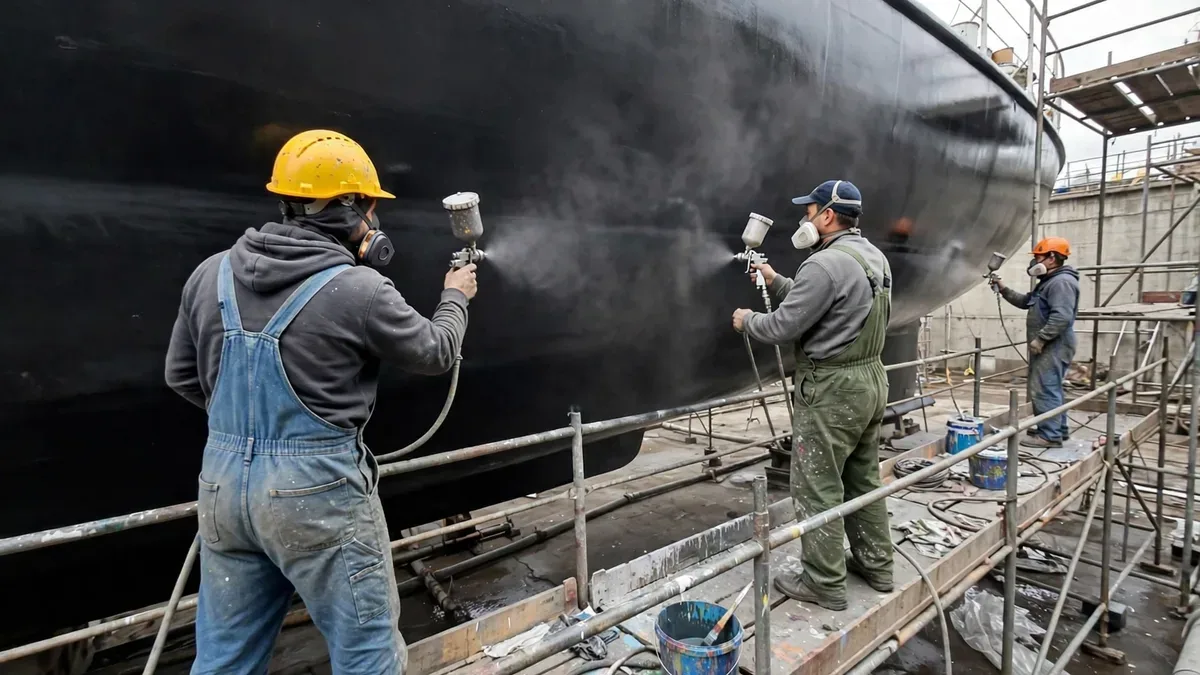
The first coat is the primer, and its job is to stick. Bare steel is blasted clean with grit until it shines, then the primer is sprayed on within hours, before rust can form on the fresh surface. The primer is rich in zinc, a metal that corrodes in place of steel, so even if the paint is scratched, the zinc gives its own life to protect the hull beneath.
Step 2: The barrier coats keep water out
Over the primer go the barrier coats, thick layers of epoxy paint that act like a raincoat for the steel. Epoxy is hard and tough, and water moves through it so slowly that the steel beneath stays dry for years. Two or three barrier coats are applied, each one allowed to cure before the next, until the total thickness is measured in millimetres rather than microns.
Step 3: The antifouling coat fights growth
Below the waterline the hull faces a different enemy: barnacles, weed and tiny shellfish that want to settle on any surface in the sea. The antifouling coat stops them, either by slowly releasing a substance that keeps growth away, or by being so smooth and slippery that nothing can hold on. A fouled hull is a slow hull, and a slow hull burns far more fuel.
The antifouling layer is the softest coat in the system, and it wears away slowly as the ship moves, polishing itself smooth as it goes. Painters choose the type to match where the ship will sail, since warm tropical waters grow weed far faster than cold northern seas. The coat is checked at every docking, and a hull that comes out clean is proof the paint has done its job.
Step 4: The top coat gives colour and shine
Above the waterline the top coat does the showing off, giving the hull its deep colour and its gloss. It is a hard polyurethane paint, tough enough to take sun, salt spray and the knocks of fenders, yet smooth enough to shine like a polished car. The colour is mixed to an exact shade, and on a luxury ship the finish is checked under bright lights for any dust or dull patch.
Step 5: The waterline is where it all meets
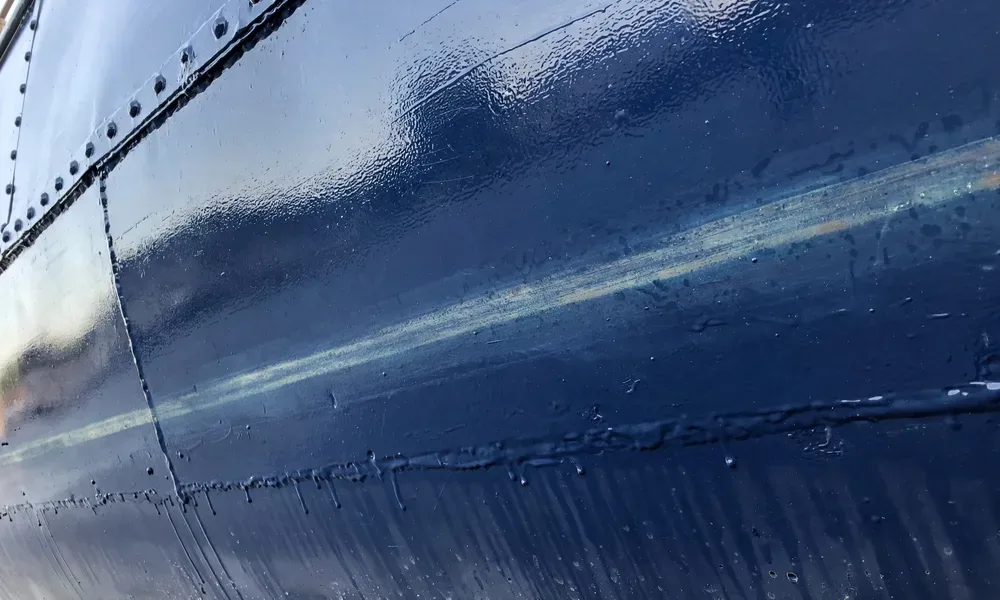
The waterline is the hardest working strip on the hull, sitting half in the water and half in the air, where the paint is wet and dry in turn and the sun beats down on it. Here the painters lay a special boot-top stripe, a band of tough paint in a contrasting colour, which takes the wear of waves and fenders so the coats beneath do not have to. It is the line the eye follows along the ship, so it must be straight and crisp.
The stripe is painted with a steady hand and a long straight edge, and its width is measured from the design waterline, so the ship sits true in the water when she is loaded. A crooked boot-top is the first thing a visitor notices, and a straight one is the mark of a careful yard. The way a luxury ship bow is made shows the curved steel this paint must follow, bending around a shape that no flat brush could cover.
Step 6: The paint is cured, checked and kept smooth
Once every coat is on, the paint must cure, hardening over days in a dry dock while the yard keeps the hull warm and free of dust. Curing is not drying: the paint is still changing inside, linking up into a tough skin, and a ship that sails too soon will wear her paint away in weeks. The yard checks the hardness with a pencil test and measures the thickness one last time before the dock is flooded.
At sea the crew keep the paint working by washing the hull, touching up small chips before rust can start, and polishing the topsides so the sun cannot dull them. The paint is a living part of the ship, and a hull that is cared for will stay fast and fair for years, while one that is left will grow rough and slow. The way a carbon fibre yacht hull is specified shows how the surface beneath the paint matters too, since the smoothest paint cannot hide a rough hull.
| Spec | Detail |
|---|---|
| Primer | Zinc-rich primer sprayed onto blasted steel within hours, gripping the rough surface and protecting scratches |
| Barrier coats | Two or three thick epoxy coats that keep water away from the steel for years between dockings |
| Antifouling | Slow-wearing coat below the waterline that stops barnacles and weed, or stays too slick to hold them |
| Top coat | Hard polyurethane above the waterline, giving deep colour, gloss and protection from sun and spray |
| Boot-top | Tough contrasting stripe at the waterline that takes the wear of waves and fenders |
| Thickness | Checked coat by coat with a gauge, with extra paint on edges, welds and corners where wear is worst |
What One Costs
Painting a luxury ship hull is an estimated 500,000 to 2,500,000 dollars, depending on the size of the ship, the number of coats and how much old paint must be blasted away first. A smaller yacht hull sits near the bottom, while a large ship with a full blast, zinc primer, epoxy barriers and a hand-finished gloss top coat costs far more. The paint itself is only part of the price; the dry dock, the scaffolding and the skilled painters working for weeks all add up, and the way a titanium hull earns its price shows why some owners pay even more for the metal beneath the paint.
A Rare Fact
A fouled hull can slow a ship so much that she burns a third more fuel to hold the same speed, which is why owners spend so much on paint that looks, to a guest, like nothing at all. The fastest thing on a ship may be the coat of paint no one notices.

Luxury ship hull paint is armour you can barely see: a zinc primer that grips the steel, epoxy barriers that keep the water out, an antifouling coat that fights growth, and a gloss top coat that shines in the sun. Together they keep a great ship fast, fair and free of rust, and they do it so quietly that the only sign of their work is a hull that still looks new after years at sea.


