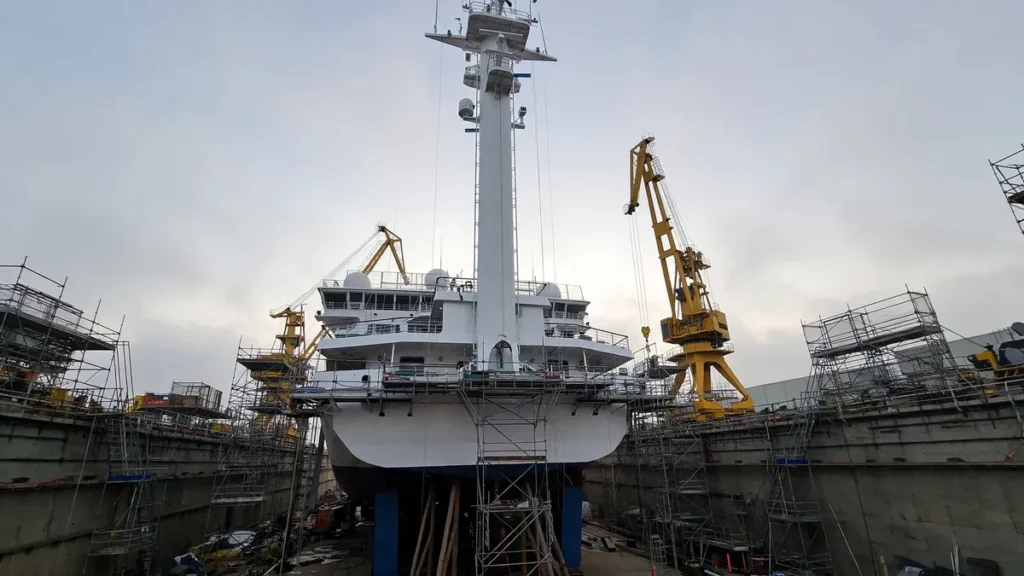
Stand on the dock beside a luxury ship at dawn and the first thing you meet is the bow. It rises out of the water like the blade of a knife, painted white, curving back from a point that looks sharp enough to cut the sea. It is the part of the ship that meets the water first, and it decides how quietly she moves, how much fuel she burns, and how dry the foredeck stays in a swell.
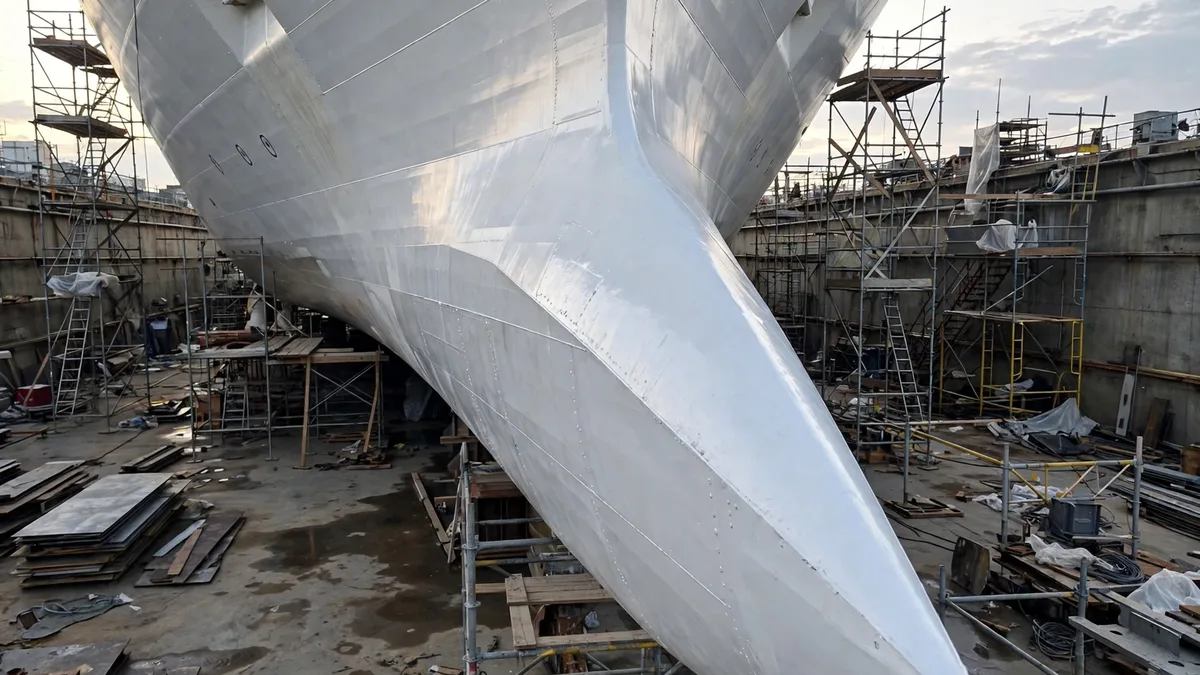
A bow is not bent into shape in an afternoon. It is drawn, cut, curved, welded and faired over many weeks, from plates of steel that arrive flat and leave the yard as a smooth, sweeping point. This is how a luxury ship bow is made.
How It Is Made
Step 1: The shape is drawn and the stem is set
Every bow starts as a drawing, a set of smooth curves worked out by naval architects who balance two things that pull against each other. A sharper bow cuts through waves more cleanly, but it gives up space inside for cabins and stores. A fuller bow carries more weight forward, but it pushes more water aside and burns more fuel.
Once the shape is settled, the yard sets the stem, the strong steel bar that forms the very front edge of the ship. The stem is the backbone of the bow, and every plate that follows is fitted to it.
Step 2: The steel plates are cut and rolled
The bow is skinned in steel plates, each one cut to a pattern taken from the drawing. A luxury ship uses thicker plate at the bow than along the middle of the hull, because the bow takes the hardest knocks from the sea, from floating ice, and from the anchor chain dragging across it.
Flat plate cannot follow a curve, so each plate is passed through great rollers that bend it in two directions at once, a little at a time, until it matches the shape of the drawing. A plate that is bent too far cannot be bent back cleanly, so the work is slow and careful.
Step 3: The plates are welded to the frames
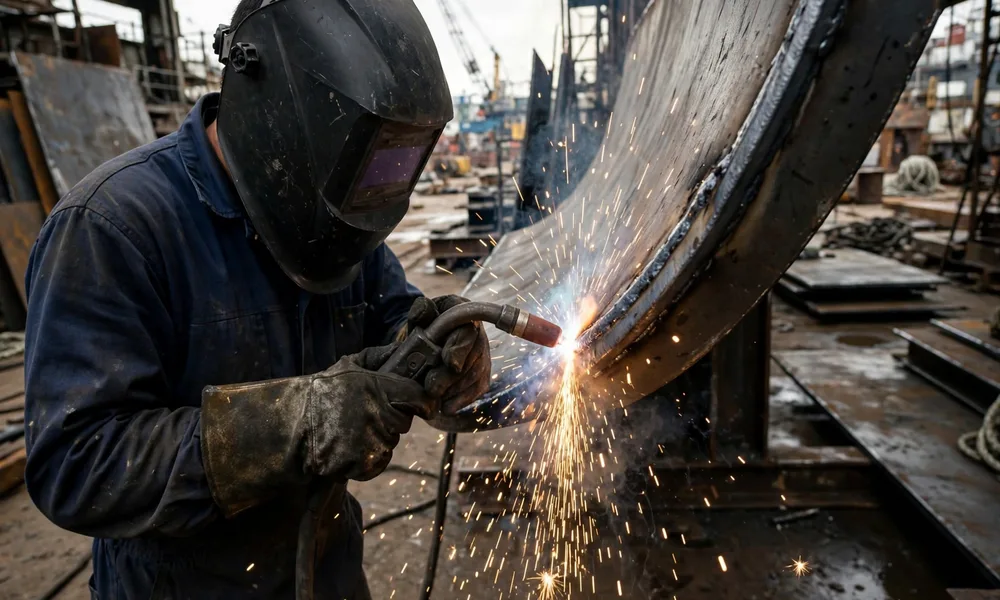
Inside the bow stands a skeleton of steel frames, curved ribs that give the skin its shape and carry the loads of the sea into the rest of the hull. The rolled plates are lifted into place by crane, held against the frames with clamps and wedges, and tacked in position before the full welds begin.
Welding a bow is long, hot work. The welders work in pairs, one on each side of a seam, so the heat stays balanced and the plate does not pull out of shape.
Step 4: The bulbous bow is fitted below the waterline
Below the waterline, most luxury ships carry a bulbous bow, a great steel bulb that sticks out forward from the stem like the nose of a whale. It looks odd, but it does a clever job: the wave it makes cancels out part of the wave made by the bow itself, and the ship slips through the water with less resistance.
The bulb is built as a separate steel torpedo shape, rolled and welded in the same way as the bow plates, then lifted into place and welded to the stem. Its size and position are fixed by the drawing, and a bulb fitted a metre too high or too low would do more harm than good, so the yard checks its position twice before the welds are closed.
Step 5: The anchor pockets and hawse pipes are cut in
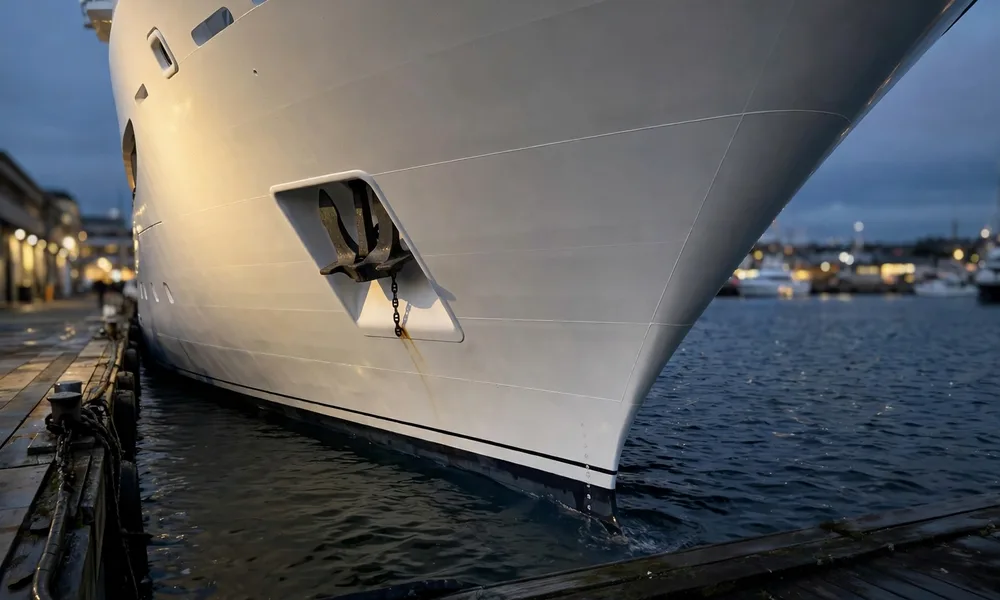
A bow is also a working end of the ship. On each side, the yard cuts the anchor pockets, the shaped recesses where the anchors sit flush against the hull when they are raised, so they do not spoil the smooth flow of water past the bow.
Through the deck above each pocket runs a hawse pipe, the steel tube the anchor chain slides down into the chain locker below. The pipes are welded in, ground smooth inside, and fitted with covers that keep seawater out when the ship is under way. A rough hawse pipe would chew through a chain in a season, so the inside is finished as carefully as the outside.
Step 6: The bow is faired, coated and tested
When the last plate is welded, the bow is faired, which means the surface is checked for bumps and hollows and ground smooth until water will flow over it without tripping.
Then the bow is blasted clean, coated with primer and several layers of paint, including the antifouling paint below the waterline that stops weed and barnacles from growing on the steel. Before the ship leaves the dock, the bow is checked once more, the welds are inspected, and the anchor is raised and lowered to prove the pockets and pipes work as drawn.
| Part | Detail |
|---|---|
| Stem | The strong steel bar forming the front edge, set first and checked with lasers |
| Plates | Thicker steel than mid-hull, rolled in two directions to match the drawn curves |
| Frames | Curved steel ribs inside the bow that hold the skin and carry sea loads aft |
| Bulbous bow | A steel bulb below the waterline whose wave cancels part of the bow wave |
| Anchors | Shaped pockets on each side, with hawse pipes running down to the chain locker |
| Finish | Faired smooth by hand, then primed, painted and antifouled below the waterline |
The hardest part of making a bow is the fairing. Steel plate springs back when it is rolled, welds pull as they cool, and a curve that looks perfect from ten metres away can hide a hollow that will trip the water and cost fuel for the life of the ship, so the fairing crew work by hand and by eye until the surface is truly smooth.
What One Costs
Building a luxury ship bow typically costs an estimated $4 million to $12 million, set mostly by the size of the ship, the thickness of the plate and the hours of fairing and welding. A smaller bow with a simple bulb sits near the bottom, while a large bow with a big bulb, heavy anchor gear and long fairing time costs far more. The figures behind the shape are a different story, and luxury ship bow specs explained walks through the angles and sizes on the specification sheet, while how a luxury ship bridge is made covers the room the bow is steered from.
A Rare Fact
Old wooden ships carried a figurehead on the bow, a carved figure that was part decoration and part luck, and the largest ones were so heavy that they changed how the ship trimmed. When iron and steel took over, the figureheads went, but the habit of giving the bow a name board and a badge never did.
A luxury ship bow is drawn to a compromise between sharpness and space, built up from rolled steel plates on a frame of ribs, fitted with a bulbous bow below the waterline and anchor pockets on each side, then faired by hand and painted. It is the first part of the ship the sea meets, and the part that decides how she cuts through it. The spine it hangs from runs the whole length of the ship, and why a luxury ship keel costs so much explains what that backbone is worth.