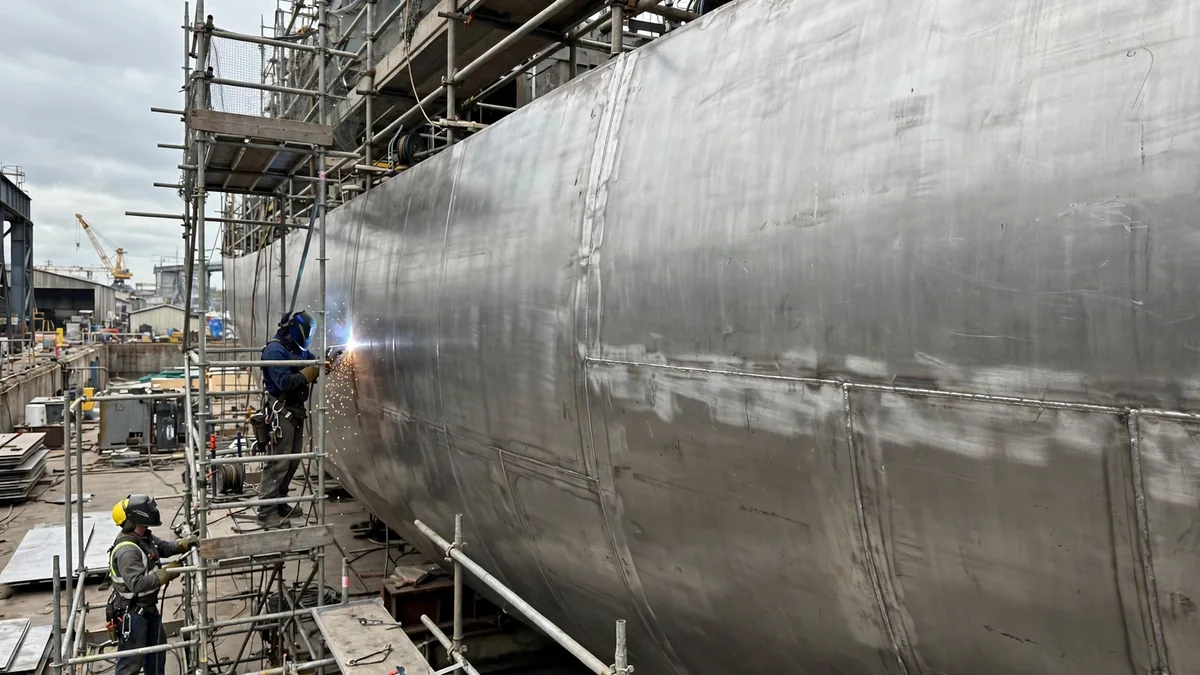
Stand beside a titanium hull in a shipyard and it does not look like a fortune. It is grey, dull, almost plain, a great curved wall of metal with weld seams running across it like stitches. There is no shine, no polish, no obvious luxury, and a visitor could walk past it thinking it was ordinary steel. Then the yard manager names the price, and it is enough to buy a fleet of steel yachts, for a hull that looks, to the untrained eye, like the cheapest one in the yard.
The reason is not the size of the hull. It is the metal itself, and everything the metal demands from the people who work it. Titanium is light, strong and almost immune to seawater, which makes it the finest hull material a yacht can have, and it is also one of the hardest metals on earth to buy, to cut and to weld. A titanium hull is a triumph of engineering that happens to be ruinously expensive, and every part of its price has a reason behind it.
The Metal Itself Costs a Fortune
Titanium is the ninth most common element in the earth’s crust, which makes its price seem strange until you learn how hard it is to get out of the rock. The ore must be turned into a sponge, the sponge melted in a vacuum, and the metal rolled into plate, and each step needs furnaces, inert gas and power on a scale that few plants can manage. The plate that arrives at the yard has already passed through more hands and more heat than a steel plate ever will, and it costs many times more per tonne.
The plate is also wasteful to use. Titanium plate is cut to shape, and the offcuts cannot simply be melted down in the yard, because titanium picks up oxygen and nitrogen from the air when it is hot, and contaminated metal is brittle metal. The luxury titanium bolt specs show the same care on a small scale, where even a bolt must be made from clean metal, and a hull needs tonnes of plate, with every offcut accounted for and much of it sold back at a loss.
Supply is the other half of the price. The best marine-grade titanium plate comes from a small number of mills, and those mills also supply aircraft makers, who order in huge quantities and pay whatever it takes. A yacht yard ordering plate for one hull is a small customer in that market, and it waits its turn, pays the going rate, and cannot haggle the way it could with a steel supplier who has a dozen competitors.
Welding Titanium Is Slow, Clean Work
Welding is where the price really grows. Titanium must be welded in an atmosphere of argon gas, with no air allowed near the hot metal, because hot titanium grabs oxygen and nitrogen from the air and turns brittle in seconds. The welder works inside a tent or a glove box, or behind a trailing shield that floods the weld with argon, and the work is slow, with each pass checked before the next begins.
The welders themselves are rare. A titanium welder needs years of training, a clean record and a steady hand, and there are far fewer of them than there are steel welders. The why the luxury ship keel is so expensive story shows the same scarcity in the keel, where the welding is the most skilled work on the ship, and the titanium hull is that idea spread across the whole vessel, with every seam needing the same rare hands.

Inspection is relentless. Every weld is X-rayed or ultrasound-tested, and a weld that fails is cut out and done again, with the whole area cleaned and re-shielded before the repair begins. A single bad weld in a hull can sink a yacht, so no yard takes a chance, and the cost of the testing is a large part of the bill. The hull is not finished when the last plate is welded, it is finished when the last weld has passed its test.
Design, Tools and the Yard Itself
A titanium hull needs a different yard. The tools must be kept separate from steel tools, because a speck of steel dust on titanium can cause corrosion, and the workshop must be kept clean, dry and free of the iron filings that fill an ordinary shipyard. Some yards build a separate clean room for titanium work, with its own tools, its own storage and its own welders, and that room sits idle between titanium jobs, costing money all the while.
Design is slower, too. Titanium is strong but springy, and it behaves differently from steel when it is bent, welded and loaded, so the naval architect must design the hull for titanium from the start, not simply copy a steel design in a lighter metal. The yacht hull fairing specs show how much of a hull’s quality is in its shape, and a titanium hull’s shape must be fair and true, because the metal is too dear to waste on a hull that drags in the water.
As an estimate, a luxury titanium hull costs about $5 million to $30 million, the titanium plate about $2 million to $10 million of that, the welding and inspection about $2 million to $10 million more, and the design, clean yard and fairing about $1 million to $5 million on top. These are estimated ranges, not quotes, and the final figure depends on the size of the hull, the yard and the finish. What never changes is that the hull is built by a small team of rare specialists, and a hull built by rare hands can never be cheap.
A Rare Fact From the World of Titanium Hulls
Here is a detail few owners ever learn: a titanium hull is almost silent in the water. Steel hulls ring and hum, and aluminium hulls creak as they flex, but titanium damps vibration in a way that makes the whole yacht quieter, and guests notice it without knowing why. The silence is not why anyone buys a titanium hull, but it is the first thing owners mention when they come back from their first voyage, a quiet ship that feels as though it is gliding rather than ploughing through the sea.
What the Price Means for You
If you are wondering why a luxury titanium hull costs so much, look at four things: the metal, the welding, the yard and the rarity. A metal that costs a fortune to make, welding that must be done in argon by rare hands, a yard kept clean enough for titanium and a hull designed from scratch for the metal are the marks of a hull worth its price. The weight matters less than the brochures suggest, and the silence matters more than anyone admits, because a hull that never rusts and never rattles is the one that keeps its value for decades. The best titanium hull is the one you never have to think about, strong, light, and quietly carrying the yacht through every sea it meets. Ask to see the weld test records before you buy, because a hull with clean records is worth far more than one with only a low price.


