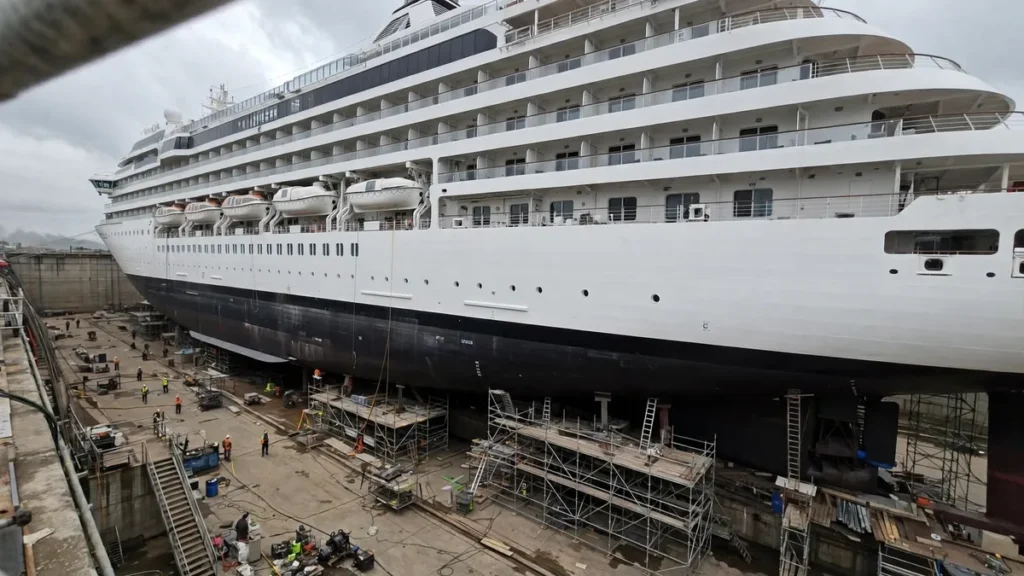
A luxury ship at the dock looks as if it is simply parked. The hull sits still, the gangway is down, and guests come and go as if the ship were a building that happens to float. What you do not see is the argument going on between the ship and the sea, as wind pushes at the tall white superstructure and the tide tugs at the hull. The mooring gear is what wins that argument, and it is built to hold a thousand tonnes of ship exactly where it belongs.
Luxury ship mooring gear is the set of winches, ropes, bollards and fairleads that tie a ship to the dock. Building it means forging heavy steel, splicing enormous ropes and fitting machines that can pull with the force of a dozen cars, all of it exposed to salt, spray and storms. This is how luxury ship mooring gear is made, from the first steel casting to the final pull test.
How It’s Made
Step 1: Forging the deck fittings and bollards
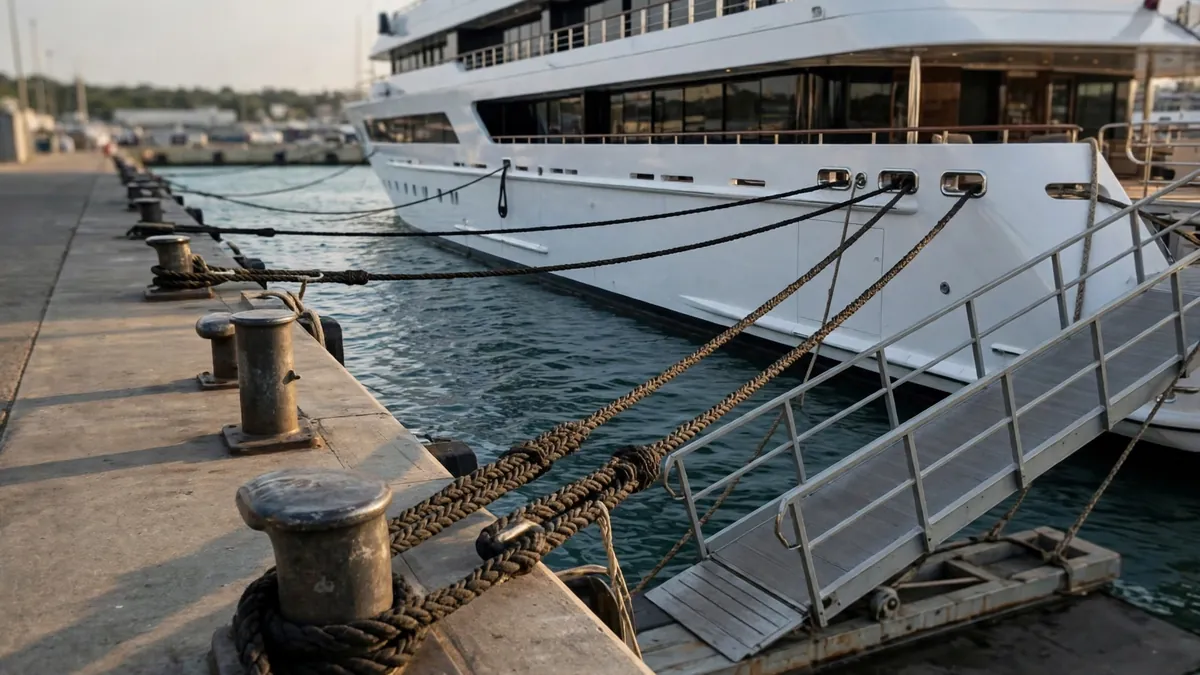
Every mooring system starts with the fittings the ropes pull against. Bollards, the great steel posts on the quay and on the ship’s deck, are cast in foundries from tough steel, then machined smooth so a rope can slide around them without snagging.
The fairleads, the smooth rollers and guides that lead the rope from the winch to the edge of the ship, are fitted at the same time. Each one is placed so the rope leaves the ship at a fair angle, without chafing on a sharp deck edge. The way the finished gear is used at the dock is a separate story, and the way luxury ship mooring works explains how the crew lay out the lines to hold the ship still.
Step 2: Building the mooring winches
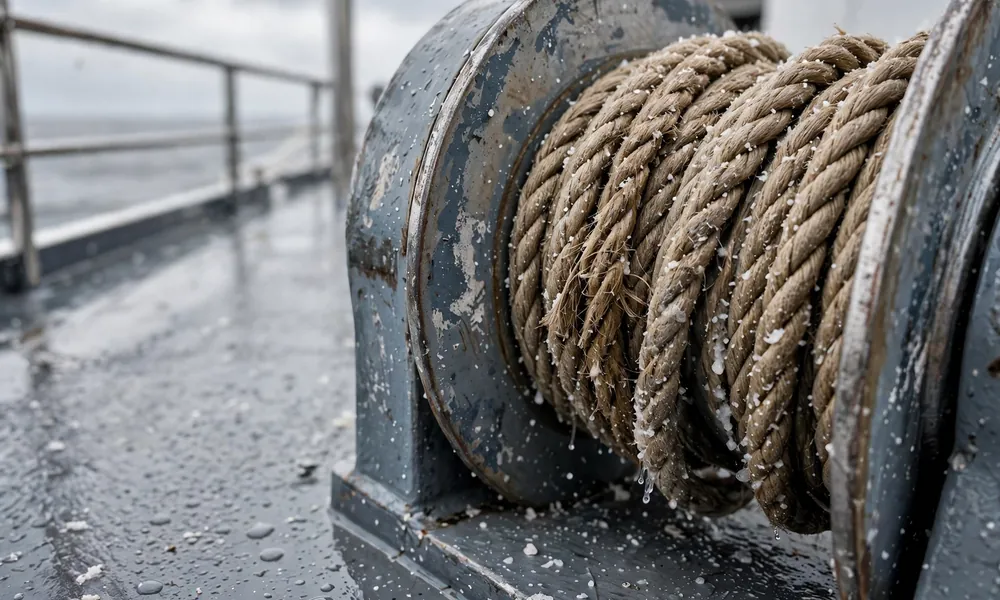
The winches are the heart of the system. Each one is built around a steel drum on a heavy frame, driven by a hydraulic motor and fitted with a brake that can hold the full load of a line in a storm.
The brake is the part the builders obsess over. It is a band or a set of discs that grips the drum, and it must hold without slipping yet release smoothly when the crew need to pay out line. The pull figures the winch is built to are the ones a buyer checks first, and the way luxury ship mooring specs are explained shows what each winch and line rating actually means.
Step 3: Making the mooring lines
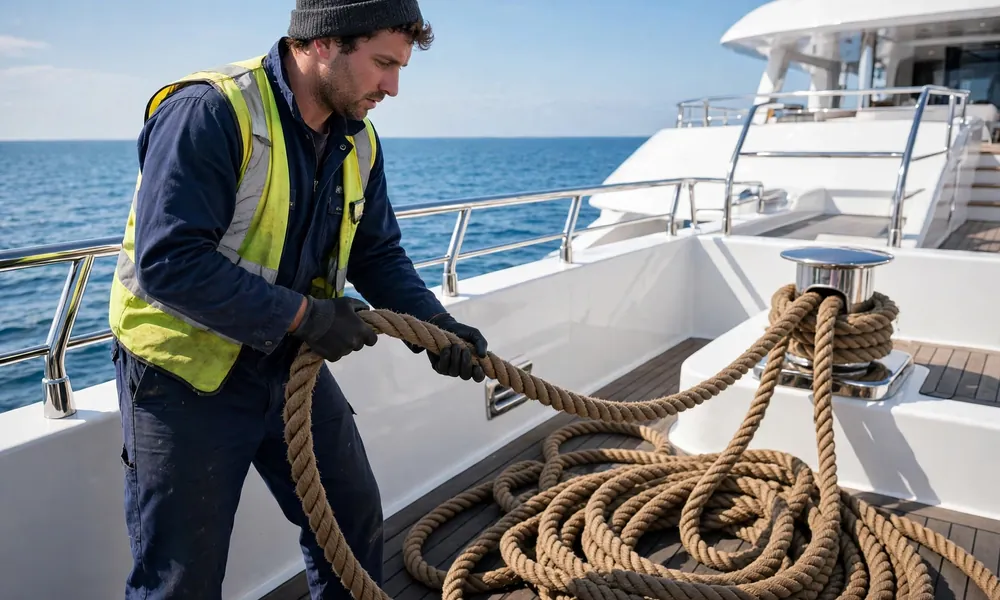
The ropes are made in ropeworks, where synthetic fibres are twisted into yarns, the yarns into strands and the strands into a rope as thick as a man’s wrist. Modern mooring lines are usually a blend of polyester and polypropylene, strong enough to hold tens of tonnes yet light enough for a crew member to handle.
Each line is then finished by hand. The ends are spliced into eyes, the loops that drop over the bollards, and the splices are whipped with twine and sealed against fraying. The lines are coiled and stowed in lockers beside the winches, each one labelled with its length and breaking load.
Step 4: Fitting the windlass and the anchor gear
At the bow, the mooring gear shares the deck with the anchor windlass, the machine that raises and lowers the anchor. The windlass is built like a mooring winch but with a gypsy, a grooved wheel that grips the anchor chain link by link. It is fitted on the same heavy foundation as the mooring winches, and its brake must hold the full weight of the anchor and chain hanging in deep water.
The crew wash the chain as it comes up, and the locker is inspected for rust each time the ship is in dry dock.
Step 5: Wiring the controls and the safety brakes
Each winch gets a control stand on deck, with a lever for hauling, a lever for paying out and a big red button that applies the brake. The controls are wired to the hydraulic system below deck, and every control is tested by hauling against a fixed load while the crew watch the pressure gauges.
The safety systems are fitted at the same time. A tension alarm warns the bridge if a line is loaded close to its limit, and the brakes are set to hold automatically if the hydraulics fail. The crew practice the failure drill in the yard, hauling a line, cutting the power and watching the brake hold.
Step 6: Pull testing and the first mooring
The final test is a pull test. Each winch is hauled against a load cell on the dock until it reaches its rated pull, and the brake is left holding the load for an hour while the surveyors watch for any slip. The bollards and fairleads are checked for movement, and the deck around each fitting is inspected for cracks in the paint that would betray flexing steel.
The ship is then moored for the first time, brought alongside a quiet berth with tugs standing by, and the crew lay out the lines exactly as the mooring plan demands. The officers watch how she sits against the dock as the tide turns, and the crew adjust the tension line by line. Only when the ship holds still through a full tide is the gear signed off. The cost of all this steel and rope is easy to miss beside the suites above, and the way luxury ship mooring earns its price explains why holding a ship still costs as much as it does.
| Specification | Typical ship |
|---|---|
| Mooring winches | Hydraulic drum winches with holding brakes, bow and stern |
| Winch pull | 12 to 40 tonnes on the first layer, depending on ship size |
| Mooring lines | 8 to 14 synthetic lines, 48 to 88 millimetres thick |
| Line breaking load | 45 to 130 tonnes when new, tested in a breaking machine |
| Bollards and fairleads | Cast steel, welded to backing plates through the deck |
| Windlass | Hydraulic anchor windlass with a grooved gypsy and brake |
| Controls | Deck levers with a tension alarm and automatic brake hold |
| Line stowage | Labelled lockers beside each winch, drained and vented |
Luxury ship mooring gear is an estimate of $1.5 million to $5 million as part of a new ship, depending on the size of the ship, the number of winches and the quality of the lines. The winches and the windlass are most of the cost, and the lines are replaced every few years as sun and salt wear them down. The lines alone cost thousands each, and a full set for a large ship runs into the tens of thousands.
Here is a rare fact worth knowing. The word mooring comes from an old Dutch word for tying up, and the first mooring lines were made of hemp, tarred against the sea and so heavy when wet that a crew of six could barely lift one. A modern synthetic line of the same strength weighs a fraction as much and floats, yet it still ends in the same place: a loop dropped over a steel post, holding a whole ship against the wind with nothing but friction and good seamanship.