A luxury ship at the dock looks simply parked. The hull sits still, the gangway is down, and people come and go as if the ship were a building that happens to float. What you do not see is the price of keeping her there. A full mooring outfit for a large luxury ship, lines, winches, bollards and deck fittings, is estimated to cost between $2 million and $6 million, before a single night in port.
Mooring is the one system that must hold the whole ship against wind, tide and passing wash, every night, in every port, for thirty years. Every part is built to a higher standard than ordinary rope and steel, and every part wears out and must be replaced, which is where the money goes.

The Lines: Rope That Costs More Than Steel
The first cost driver is the lines themselves: modern mooring lines are not rope in any ordinary sense. A luxury ship increasingly uses lines of synthetic fibre that float, stretch far more than steel wire, and weigh less than the natural fibre ropes they replaced, yet a single one can hold the weight of several dozen cars. A line for a large ship can be 70 millimetres across and over a hundred metres long, each costing thousands of dollars, with a ship carrying a dozen or more.
The stretch is the secret, and it is also the cost. A line that lengthens under load acts like a spring, smoothing out the snatch of a gust instead of passing it to the bollard, but that stretch wears the fibres, and sun, chafe and salt wear them faster. The lines are inspected constantly and replaced on a schedule, not when they break, because a parted line recoils with frightening speed. The how luxury ship mooring works guide shows the lines in action, but the price comes from a ship buying a new set again and again.
The Winches: Muscle, Brakes and Tension Control
The second cost driver is the winches: great steel drums on the fore and aft decks that wind the lines in and hold them tight. A mooring winch on a large ship can pull with 28 to 40 tonnes, and its brake must hold far more, typically 55 to 80 tonnes, with no power at all, which is exactly the point. Each winch is a precision machine, built from cast steel, driven by electric or hydraulic motors, and fitted with tension controls that pay out a little rope rather than let it snap when a gust hits.
A large ship carries several winches, each costing hundreds of thousands of dollars, before it is even bolted to the deck. The motors, gearboxes, brakes and control systems are all marine rated: they must work in salt air and rain, after months at sea with no maintenance, and perfectly the first time they are needed. The luxury ship mooring specifications record the pull and brake figures for each winch, but the price comes from the engineering inside, and from the fact that a winch failing in a storm can cost a ship her berth, or worse.
Bollards, Fairleads and the Steel Under the Deck
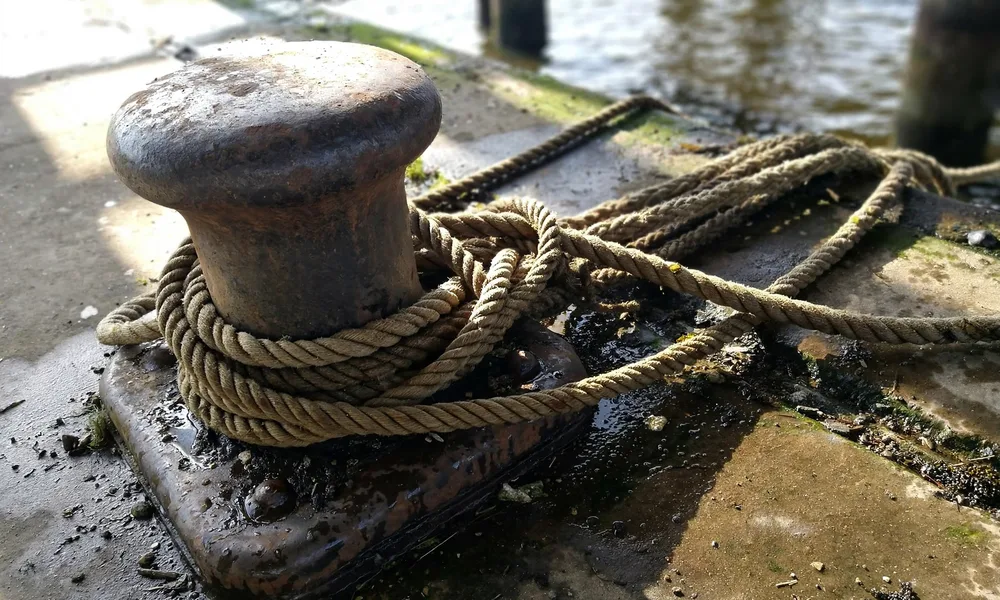
The third cost driver is the part nobody sees: steel under the deck. Every line ends at a bollard, the steel post on quay or deck that the rope is turned around, and every bollard has a safe working load of its own, running to 80 or 120 tonnes on the largest ships. A bollard rated to 100 tonnes is no help if the deck under it is not strong enough, so the builders reinforce the deck beneath every bollard and fairlead with extra steel, built into the hull from the start.
Fairleads matter just as much, though they carry no load rating of their own. A fairlead is the smooth steel guide leading a rope from deck to dock, and its size decides how much the rope bends. A tight bend weakens a rope, so the fairleads are large, smooth and carefully placed, each one a custom casting, fitted by hand. The cost of this hidden steel is easy to miss, under the deck and out of sight, but it is a large share of the mooring bill, and it cannot be replaced without cutting the ship open.
Inspection, Replacement and the Cost of Standing Still
The fourth cost never ends: inspection and replacement. Mooring lines are checked every time they are used, and the winches, brakes and fairleads inspected on a strict schedule, because a system holding a thousand tonnes cannot be allowed to fail quietly. The ropes are replaced on a schedule measured in years, the winch brakes overhauled, and the fittings tested, and each round means the ship in port, specialists, and a bill running into tens of thousands of dollars.
The cost of standing still is what makes it worth it. A ship that breaks free in a storm can damage the dock, damage herself, and endanger everyone aboard. The why a luxury ship mast costs a fortune guide shows the same thinking at the top of the ship, where every figure is a promise about surviving bad weather, and the mooring system is held to the same standard, as the system that holds the whole ship where she belongs.
The Price, in Plain Terms
Add it up, and a full mooring outfit typically costs an estimated $2 million to $6 million, whether a well-equipped outfit for a mid-size ship or a complete system for the largest vessels. The lines and their constant replacement account for the largest share over the ship’s life, the winches and brakes for the next, and the bollards, fairleads and hidden deck steel for the rest. On a ship visiting busy ports in all weathers the figure climbs higher still, because the system is worked harder, inspected more often, and replaced sooner.
A Rare Fact About Luxury Ship Mooring
Mooring has an unlikely ancestor in the age of sail, when a ship was held by hemp rope, and the crew judged the strain by the sound the rope made as it tightened. A hemp line sang as it stretched, and an experienced sailor could hear when it was about to part, the only warning anyone got. Modern synthetic lines do not sing, so the crew rely on instruments: tension gauges showing the load on every line, and alarms when a line takes more than its share. The job is the same, only now the rope is silent, the load is measured in tonnes on a screen, and the ship is held by numbers rather than by ear, which is why the numbers are worth every penny they cost.

What the Price Means for You
If you are buying, chartering or touring a luxury ship, the mooring outfit tells you how she will behave on a rough night in port. Lines with a generous breaking load, winch brakes holding far more than they can pull, and bollards rated to match the lines all point to a ship built by people who expect bad weather and planned for it.
If the numbers are vague, or the lines look old and the winches tired, ask questions. Mooring is not glamorous, but it keeps a thousand tonnes where it belongs while everyone aboard sleeps, and a good outfit is quiet, conservative and strong.


