Step onto the open deck of a luxury ship at sea and the pool looks like a small piece of a hotel that has been dropped onto a moving vessel. The water is blue and still, guests are swimming slow laps, and a waiter is carrying drinks past the edge without a second thought. Below the deck, though, the pool is a machine. Pumps, filters, heaters and balance tanks are working all day to keep that water clean, warm and level, while the ship rolls and pitches underneath it. A pool on land only has to hold water. A pool on a ship has to hold water while the ground moves.
A luxury ship pool works by circulating its water continuously through filters and heaters, treating it with chlorine or a similar disinfectant, and using balance tanks and overflow gutters to absorb the movement of the ship. When the ship rolls, the water sloshes into the gutters and the balance tank, then flows back as the ship levels, so the pool never empties and never floods the deck. The pool shell is built into the deck, the water is pumped out through drains and skimmers, cleaned and heated below deck, then returned through inlets in the pool floor and walls.

How It Works
The pool shell: a steel tub built into the ship
The pool starts as a steel shell, welded into the deck structure of the ship and lined with tiles or a waterproof coating. The shell is not a separate bath dropped into the deck, it is part of the ship, stiffened with frames so it can carry the weight of the water, often a hundred tonnes or more, without flexing as the ship works in a seaway. That gutter is the key to the whole system, because it catches the water that sloshes over the edge when the ship rolls, instead of letting it flood the deck.
The circulation pumps: moving the water all day
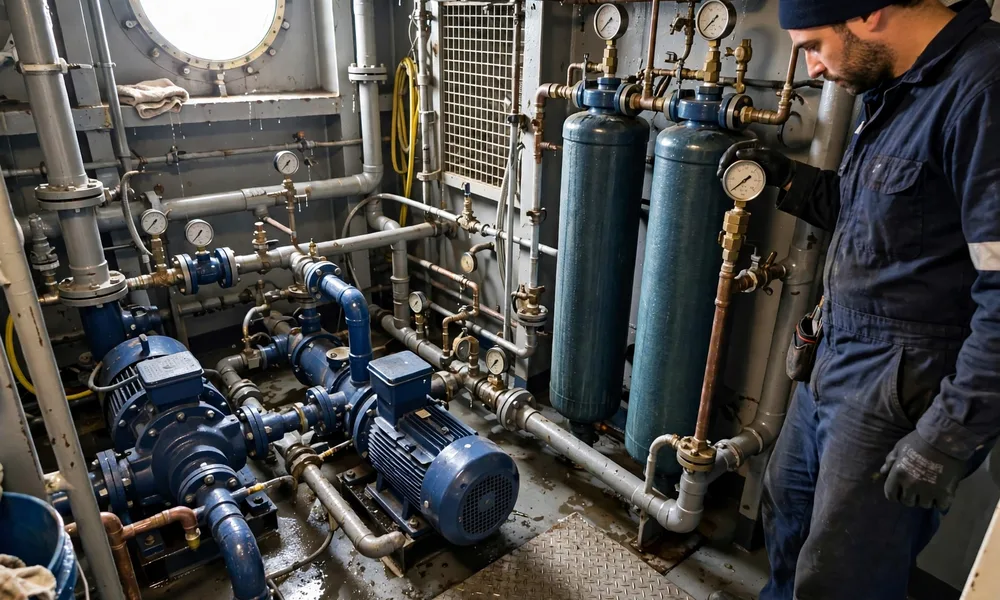
Below the deck, in a plant room beside the pool, sit the circulation pumps, the heart of the system. They draw water from the pool through the main drains in the deep end and the skimmers at the surface, then push it through the filters and heaters and back to the pool through inlets in the floor. A large ship pool turns its whole volume over every four to six hours, which means the pumps run almost continuously, day and night, whether anyone is swimming or not. The pumps are sized with a spare, so if one fails the other can keep the water moving, and they are fitted with strainers that catch hair and leaves before they reach the filter.
The filters and treatment: keeping the water clean
From the pumps, the water passes through filters, usually large sand filters, cylinders full of graded sand that trap dirt and fine particles as the water flows through. The filters are backwashed regularly, the flow reversed to flush the trapped dirt to waste, and the sand itself is changed every few years. After filtering, the water is disinfected, most often with chlorine dosed automatically by a controller that measures the chlorine level and the acidity of the water many times an hour. Some ships use ultraviolet light as well, which kills germs without adding chemicals, and the combination keeps the water clear and safe even when the pool is full of swimmers.
The heaters: warm water in cold seas
A ship pool has to stay warm even when the ship is sailing through cold water, so the heaters are a serious piece of kit. The temperature is controlled automatically, with sensors in the return pipe, and the crew can raise it for an evening swim or lower it on a hot day in the tropics.
Staying level in a swell: gutters and balance tanks
The cleverest part of a ship pool is how it handles the motion of the ship. From the gutter, the water drains into a balance tank below the deck, a holding tank that stores the extra water until the ship rolls the other way. As the ship levels, the pumps pull the water back from the balance tank and return it to the pool, so the level stays steady and the deck stays dry. The balance tank is sized to hold the water from a heavy roll, and in very rough weather the crew may lower the pool level or drain it entirely, because even the best balance system has its limits. The yacht deck around a smaller pool uses the same gutter idea, just on a gentler scale.
Emptying, cleaning and refilling the pool
Every so often, the pool has to be emptied and cleaned, and on a ship that is a planned operation, not a weekend job. The pool is then refilled from the ship’s fresh water makers, which turn seawater into drinking water, and the treatment is brought back into balance before anyone is allowed in. A clean pool, a balanced test and a full tank of warm water is the signal that the deck is open again, and the best superyacht pools are judged on exactly that, water so clear and steady that guests forget they are at sea.
Ship Pool Specifications
| Pool size | Typically 10 to 25 metres long and 5 to 8 metres wide, holding 50 to 150 tonnes of water |
| Pool shell | Steel shell welded into the deck structure, tiled or coated, with a wide overflow gutter around the rim |
| Circulation | Pumps turn the whole volume over every four to six hours, running day and night |
| Filtration | Large sand filters with regular backwashing, plus strainers before the pumps |
| Treatment | Automatic chlorine dosing with acidity control, often with ultraviolet light as well |
| Heating | Heat exchangers fed from the ship’s engines, holding the water at 26 to 30 degrees Celsius |
| Motion control | Overflow gutters drain to a balance tank below deck, which returns the water as the ship levels |

How Much Does a Ship Pool Cost?
Prices are estimates and vary with ship size, pool size and finish. Building a large outdoor pool into a luxury ship typically costs an estimated $1,000,000 to $3,000,000, including the steel shell, tiling, pumps, filters, heaters and balance tank, while a smaller pool or a plunge pool can run an estimated $300,000 to $800,000. The running cost is large too, with chemicals, filter sand, heating energy and crew time adding an estimated $50,000 to $150,000 a year, and a full drain, clean and refill can cost an estimated $10,000 to $30,000 in water and labour. The pool is built as part of the ship, not added later, which is why the luxury yacht builders say the same thing about their smaller pools, the shell has to be in the drawings before the steel is cut.
A Rare Fact About Ship Pools
Here is a detail most swimmers never guess: in heavy weather, some ships deliberately drain their pools, not because the pool is broken, but because a hundred tonnes of water sloshing from side to side can make the ship roll worse. The water in a half-full pool moves out of step with the ship, a phenomenon engineers call the free surface effect, and it can add to the roll instead of damping it.


