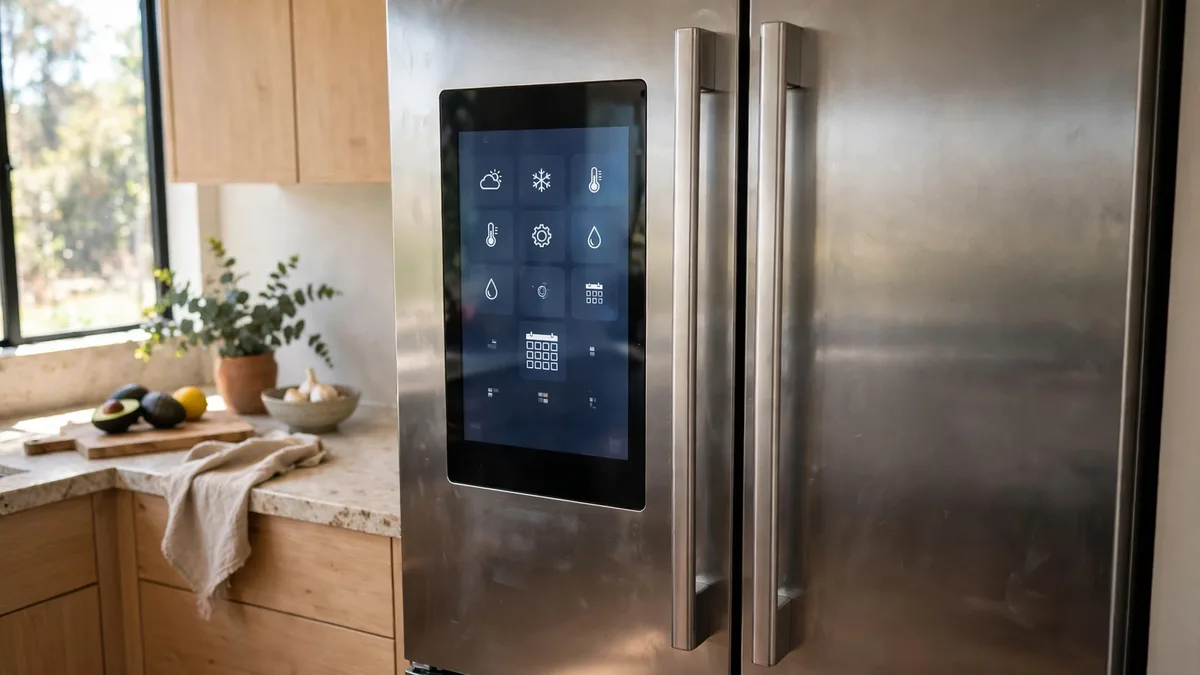
A luxury smart fridge does not look like a machine when it stands in a kitchen. It looks like a wall of brushed steel with a screen in the door, quiet, cold, and faintly glowing, and the only sound it makes is the soft click of the ice maker late at night.
The price of the best of them runs into five figures, and most of that money is not in the steel. It is in the insulation, the compressors, the sensors and the software, and in the slow, careful assembly that keeps a cabinet airtight for decades. A cheap fridge is stamped out and filled with foam in minutes. A luxury smart fridge is built in stages, tested at every step, and given a brain that learns what a household eats. This is how it is made.
How It’s Made
Step 1: The cabinet is shaped from a single skin of steel
Everything starts with the cabinet, because a fridge is only as good as its box. Sheets of stainless steel are cut, folded and welded into an outer shell and an inner liner, and the two are joined so that the gap between them is exactly even all the way around. That gap matters more than it looks, because it will be filled with insulation, and a thin spot means a warm patch, condensation, and a compressor that never rests.
Step 2: Insulation is injected and left to cure
With the shell assembled, liquid insulation foam is injected into the gap between the outer skin and the inner liner. The foam expands as it sets, filling every corner and hardening into a solid layer that traps cold air inside and keeps warm air out. In a luxury fridge this layer is thicker and denser than in an ordinary one, and the curing is done slowly, at a controlled temperature, so the foam does not crack or shrink away from the steel.
Step 3: The cooling system is fitted and charged
The heart of the fridge is its cooling system, and it is fitted by hand. A variable-speed compressor, copper refrigerant lines, a condenser and an evaporator are mounted into the back and base of the cabinet, then connected with brazed joints that are checked for leaks under pressure. Luxury models often use two separate cooling circuits, one for the fridge and one for the freezer, so the air in each compartment never mixes and the food in the fridge never dries out.

Step 4: Sensors, cameras and the screen go in
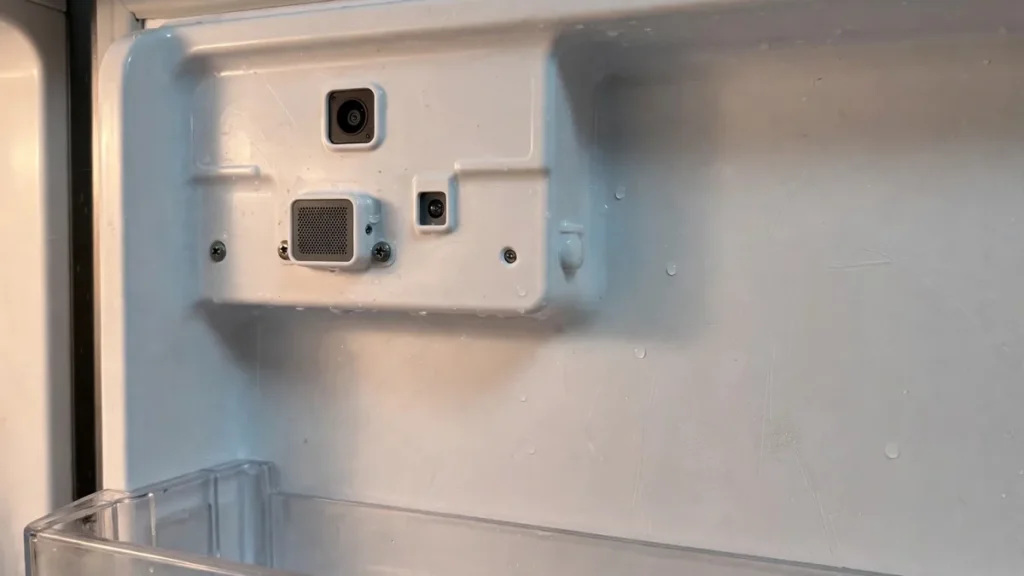
What makes the fridge smart is fitted next, and it is the most delicate stage of the build. Small cameras are mounted inside the cabinet so the fridge can see its own shelves, temperature and humidity sensors are placed in each zone, and a touchscreen is set into the door, sealed against moisture and fingerprints. Wiring runs through the door hinge in a flexible loom that has to survive being opened and closed tens of thousands of times without a single wire breaking.
Step 5: Doors, drawers and seals are hung and adjusted
The doors are the part a family touches every day, so they get the most attention. Heavy hinges are bolted on and adjusted until each door swings smoothly and closes with a soft, certain thud, and the magnetic gaskets are fitted so they press evenly against the cabinet all the way around, with no gap a sheet of paper could slip through. Inside, drawers glide on soft-close runners, shelves are set at heights that can be changed with one hand, and the ice maker and water dispenser are connected and flushed. A technician opens and closes every door dozens of times, checking the seal, the alignment and the feel, because a luxury fridge should close like the door of a good car.
Step 6: Software is loaded and the fridge is tested for days
The last stage is invisible, and it takes the longest. The fridge’s software is loaded, its wireless connection is tested, and its food-recognition system is trained on images of the groceries it will be asked to identify. Only when the data shows a flat, steady line does the fridge get its badge, its packaging and its place on a truck, ready for a kitchen it may serve for the next twenty years.
| Specification | Typical figure |
|---|---|
| Cabinet | Brushed stainless steel shell with a thick injected-foam insulation layer |
| Cooling | Variable-speed compressor, often with separate fridge and freezer circuits |
| Smart features | Interior cameras, temperature and humidity sensors, door touchscreen |
| Capacity | Around 500 to 700 litres across fridge, freezer and flexible zones |
| Noise | About 35 to 40 decibels, quieter than a normal conversation |
| Testing | Run for days in a test room before it leaves the factory |
The most expensive part of a smart fridge is not the screen or the steel, but the patience of the build. Every stage is a chance for a small error to become a twenty-year problem, a foam gap that wastes power, a hinge that sags, a sensor that drifts, and the factory’s job is to catch each one before the fridge ever reaches a kitchen. That is why the line moves slowly and the testing takes days, and why the finished fridge feels so solid when its door closes, because it was built by people who knew it would be judged every single day.
What One Costs
A luxury smart fridge typically costs an estimated $8,000 to $20,000, and the price is set mostly by the cooling system, the insulation and the electronics rather than the size of the cabinet. A large model with two cooling circuits, interior cameras and a full touchscreen sits at the top of the range, while a simpler smart model with a smaller screen and a single compressor costs far less. The price is in the engineering, not the badge, and how a luxury yacht galley is built shows what happens when a whole kitchen is engineered to the same standard, while how a luxury smart lock works explains the sensors and software inside another device that guards a home.
A Rare Fact
Some luxury smart fridges can tell their owner that the milk is about to run out without anyone scanning a barcode, because their interior cameras photograph the shelves every time the door closes and compare the new picture with the last one. The system learns the shape of a household’s usual bottles and cartons, and when one disappears it quietly adds it to a shopping list. It is a small trick, but it depends on everything else in the fridge being right, the lighting, the camera angle, and a door that closes exactly the same way every time, which is why the factory spends so long on hinges and seals.
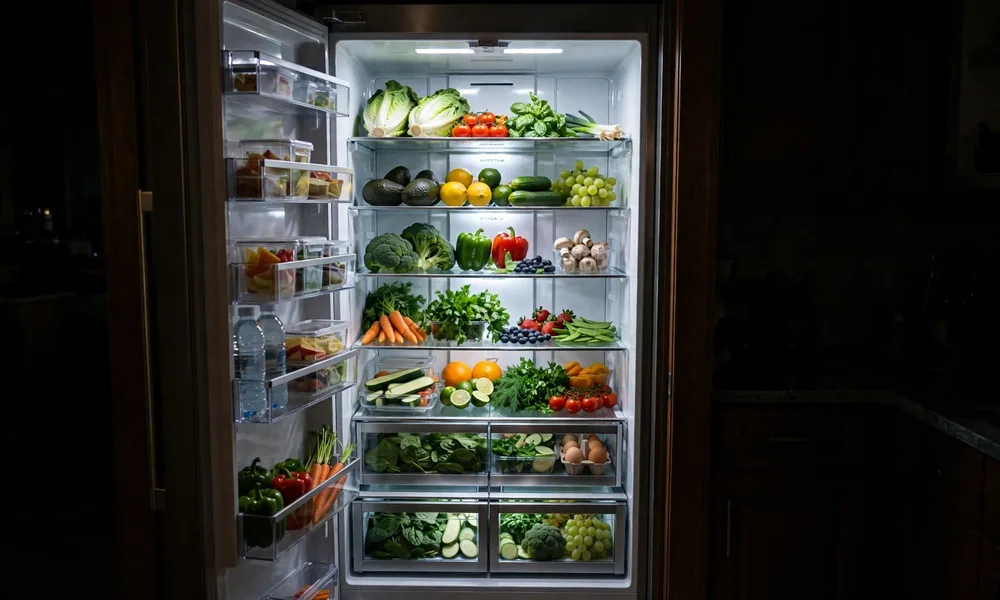
A luxury smart fridge is a steel cabinet, a cooling system, a set of cameras and a computer, built slowly and tested for days so it can run quietly for twenty years. It keeps food cold, watches its own shelves, and tells its owner what is missing, all from a box that looks like nothing more than a wall of steel. For the price of the room it usually stands in, why a luxury yacht galley costs so much explains what a kitchen built to yacht standards really adds up to.